Mastering AI Observability with LangSmith
Introduction to AI Observability
What Is AI Observability?
Think about the dashboard in a car. It tells you your speed, fuel level, and if the engine is overheating. This is traditional software monitoring: it tracks known, predictable metrics. But what if the car could suddenly decide to take a scenic route, compose a poem about the journey, or misunderstand a turn? You'd need a much more sophisticated system to understand what's happening under the hood.
This is where AI observability comes in. It's the practice of gathering and analyzing data from every stage of an AI application's lifecycle. It goes beyond simple metrics like uptime or response time. Instead, it provides deep insights into the behavior of complex systems, particularly those using Large Language Models (LLMs). The goal is to understand not just if the application is working, but how and why it's producing certain outputs.
AI observability is the discipline of instrumenting, tracing, evaluating, and monitoring AI agents across their full lifecycle—from planning and tool calls to memory writes and final outputs.
Without this level of insight, maintaining and improving LLM applications becomes a guessing game. Observability makes it possible to debug issues, evaluate performance, and ensure the application behaves reliably and predictably, which is crucial for building trust with users.
The Challenges of Monitoring LLMs
Monitoring LLMs isn't like monitoring traditional software. The core challenges stem from their inherent nature. Firstly, LLMs are non-deterministic. The same input can produce slightly different outputs on subsequent runs. This variability makes it difficult to write simple pass/fail tests.
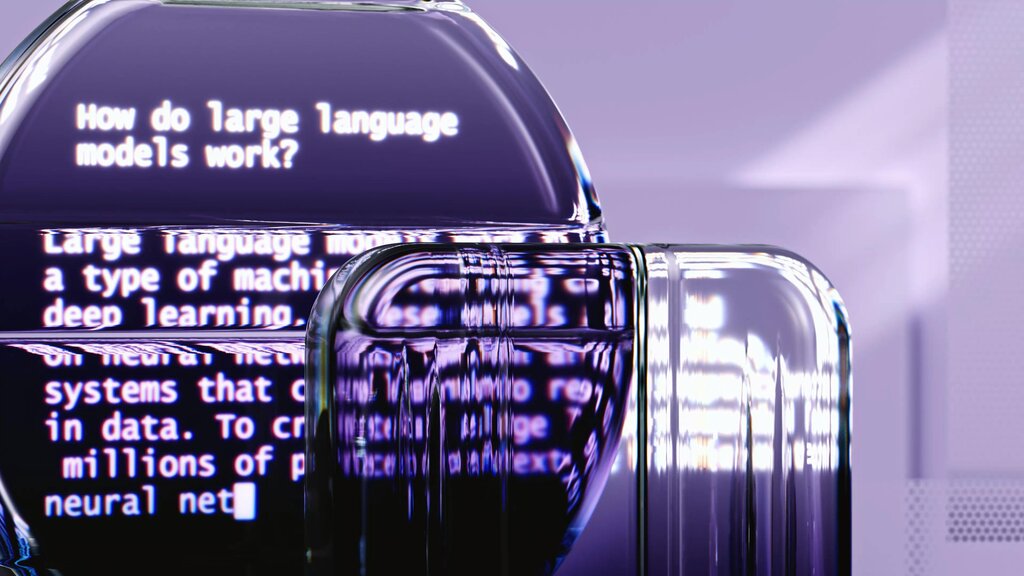
Secondly, LLMs can be a "black box." While we understand the architecture, the exact reasoning path for a specific output is often hidden within billions of parameters. You can't just set a breakpoint and step through the model's "thought process." This opaqueness makes debugging errors in logic or factual accuracy particularly tricky.
Finally, modern AI applications are rarely just a single call to an LLM. They are often complex chains of actions, including retrieving data from a database, calling external tools or APIs, and then synthesizing a final answer. A failure could occur at any point in this chain, and without proper tracing, pinpointing the source of the problem is nearly impossible.
These issues of non-determinism, opacity, and complexity are why standard monitoring tools fall short. They can tell you a request failed, but they can't tell you why the LLM generated a factually incorrect statement or followed a flawed reasoning path.
Key Observability Practices
To address these challenges, AI observability relies on a few core practices that provide a comprehensive view of the application's behavior.
One of the most fundamental practices is tracing. A trace follows a single request through its entire journey, from the initial prompt to the final output. It captures every step, including any database queries, API calls, and interactions between different model components. This gives developers a complete, step-by-step record, which is invaluable for debugging.
Next is evaluation. Because there's often no single "correct" answer, we need ways to score the quality of an LLM's output. Evaluations can check for things like toxicity, helpfulness, conciseness, or whether the response is grounded in the provided source documents. These checks can be run automatically to flag poor-quality responses.
Finally, monitoring involves tracking key metrics over time. This includes operational metrics like latency and cost per request, but also quality metrics derived from evaluations. Monitoring helps teams spot performance degradation, identify trends, and understand how changes to the application affect user experience.
Together, these practices provide the necessary tools to move beyond the "black box" problem, turning unpredictable AI systems into reliable, maintainable applications.
What is the primary goal of AI observability, as distinct from traditional software monitoring?
Which concept best describes the challenge of not knowing the exact reasoning path an LLM took to arrive at a specific output?
Now that we've covered the basics of AI observability, you can see why it's a critical component for anyone building with LLMs.