Mastering AI LLM Prompt Engineering
Introduction to LLMs
What Are Large Language Models?
A Large Language Model, or LLM, is a type of artificial intelligence designed to understand and generate human language. Think of it as a super-powered autocomplete. Instead of just guessing the next word, it can predict and create entire sentences, paragraphs, or even complex computer code.
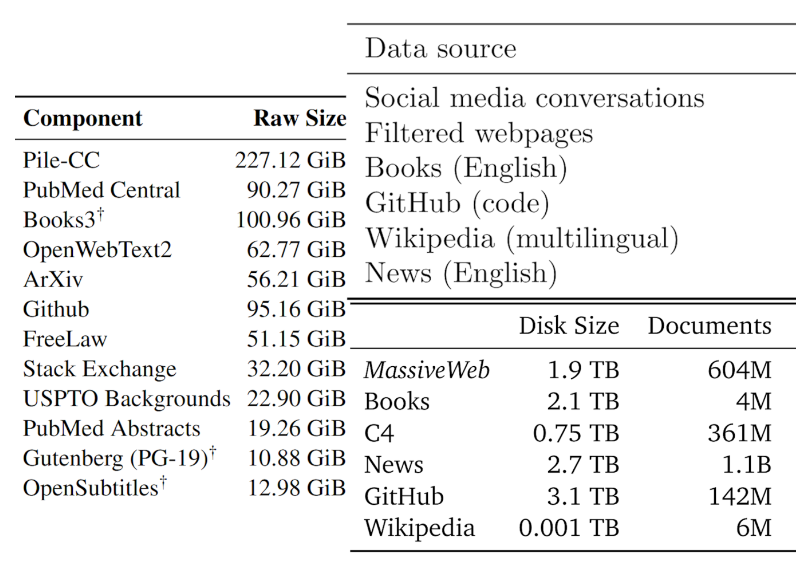
At their core, LLMs are pattern-recognition machines. They are trained on vast amounts of text from books, articles, and websites. By analyzing this data, they learn the intricate patterns of language: grammar, style, facts, and even how to reason.
Neural Network
noun
A computing system inspired by the biological neural networks that constitute animal brains. It consists of interconnected nodes, or "neurons," that process information in layers.
How They're Built
Most modern LLMs are based on an architecture called the Transformer, introduced in 2017. Before the Transformer, models processed text sequentially, word by word. This made it difficult to keep track of context in long sentences.
The Transformer's key innovation is the attention mechanism. This allows the model to weigh the importance of different words in the input text simultaneously, regardless of their position. It can
When processing the sentence, "The robot picked up the red ball because it was heavy," the attention mechanism helps the model understand that "it" refers to the "ball," not the "robot."
This ability to manage context makes LLMs incredibly powerful.
These models contain billions of variables called parameters. Think of parameters as the knobs and dials that are tuned during training. The more parameters a model has, the more complex patterns in language it can learn.
The Training Process
Training an LLM happens in a few stages. The first and most intensive stage is pre-training. During this phase, the model is shown trillions of words from a massive dataset. Its goal is simple: given a piece of text, predict the next word. It does this over and over, adjusting its parameters slightly with each prediction to get better.
After pre-training, the model has a strong grasp of language but isn't very good at following instructions. The next stage is fine-tuning. Here, the model is trained on a smaller, high-quality dataset of instruction-and-response pairs. This teaches the model to be more helpful and conversational.
Finally, many models undergo Reinforcement Learning with Human Feedback (RLHF). In this step, human reviewers rank different model responses to the same prompt. This feedback is used to train a
RLHF teaches the model to generate responses that are not only correct but also safe, helpful, and aligned with human preferences.
What Can LLMs Do?
Because of their deep understanding of language, LLMs can be applied to a wide range of tasks. They are not programmed to do one specific thing, but can instead adapt to many different kinds of requests.
Some common applications include:
- Content Creation: Writing emails, articles, and marketing copy.
- Summarization: Condensing long documents or articles into key points.
- Translation: Translating text between different languages.
- Code Generation: Writing snippets of code in various programming languages.
- Chatbots: Powering conversational agents for customer service and information retrieval.
The key to unlocking these capabilities is learning how to ask the right questions. This is where prompt engineering comes in, which is the art of crafting inputs to get the desired output from an LLM.
At their core, what is the primary function of a Large Language Model (LLM)?
What key innovation of the Transformer architecture allows an LLM to weigh the importance of different words simultaneously, regardless of their position in a sentence?
That covers the basics of what LLMs are, how they are built, and what they can do. Up next, we'll dive into the specifics of how to communicate with them effectively.