Mastering AI Applications
Introduction to Artificial Intelligence
What Is Artificial Intelligence?
Artificial Intelligence, or AI, is the science of making machines that can think and learn like humans. It's a broad field that aims to create systems capable of performing tasks that normally require human intelligence. This includes things like recognizing images, understanding speech, making decisions, and translating languages.
Artificial Intelligence
noun
The theory and development of computer systems able to perform tasks that normally require human intelligence, such as visual perception, speech recognition, decision-making, and translation between languages.
At its core, AI is not just about one single technology. It's an umbrella term that covers several different approaches and subfields. Some of the most important concepts within AI are machine learning, deep learning, and generative AI. These are nested ideas, where each is a specialized version of the one before it.
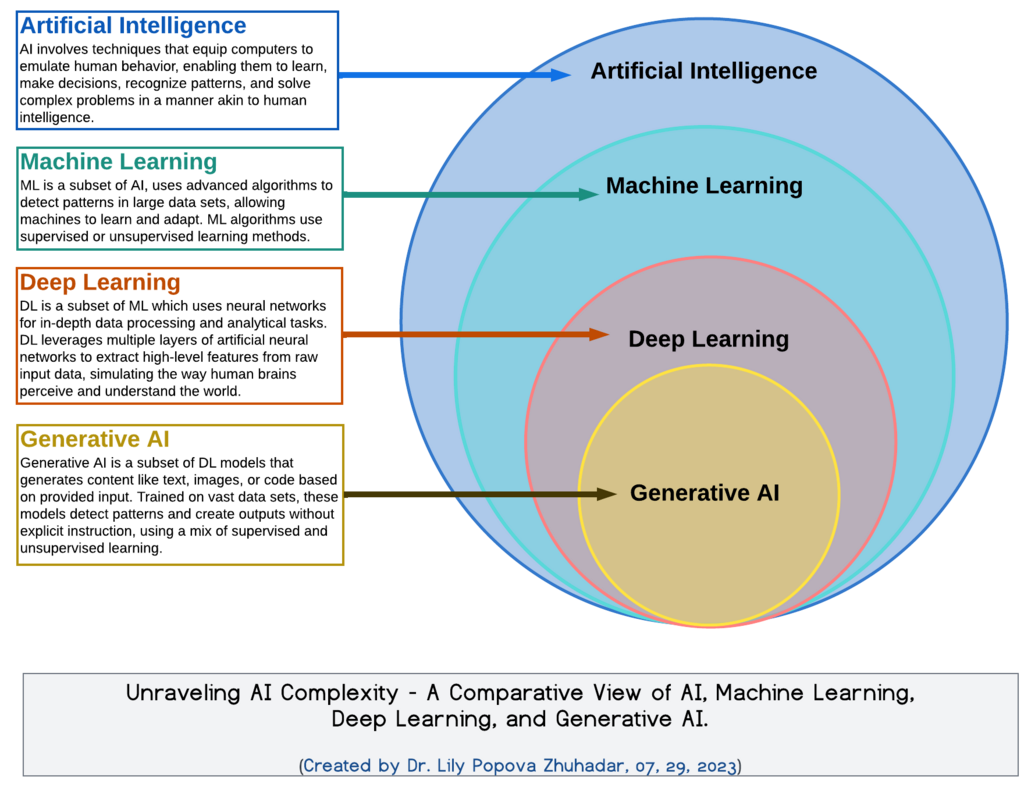
Understanding this hierarchy is key. AI is the big goal, and machine learning is one of the most powerful ways we have to achieve it.
A Brief History of AI
The dream of creating intelligent machines has been around for centuries, but the scientific field of AI officially began in the mid-1950s. Early researchers were optimistic, believing that a machine with human-like intelligence was just a few decades away. They developed programs that could solve algebra problems, prove theorems in logic, and speak simple English.
Progress wasn't always a straight line. The field experienced periods of high funding and excitement followed by “AI winters,” when progress slowed and funding dried up. Despite these challenges, key breakthroughs continued to push the boundaries of what was possible.
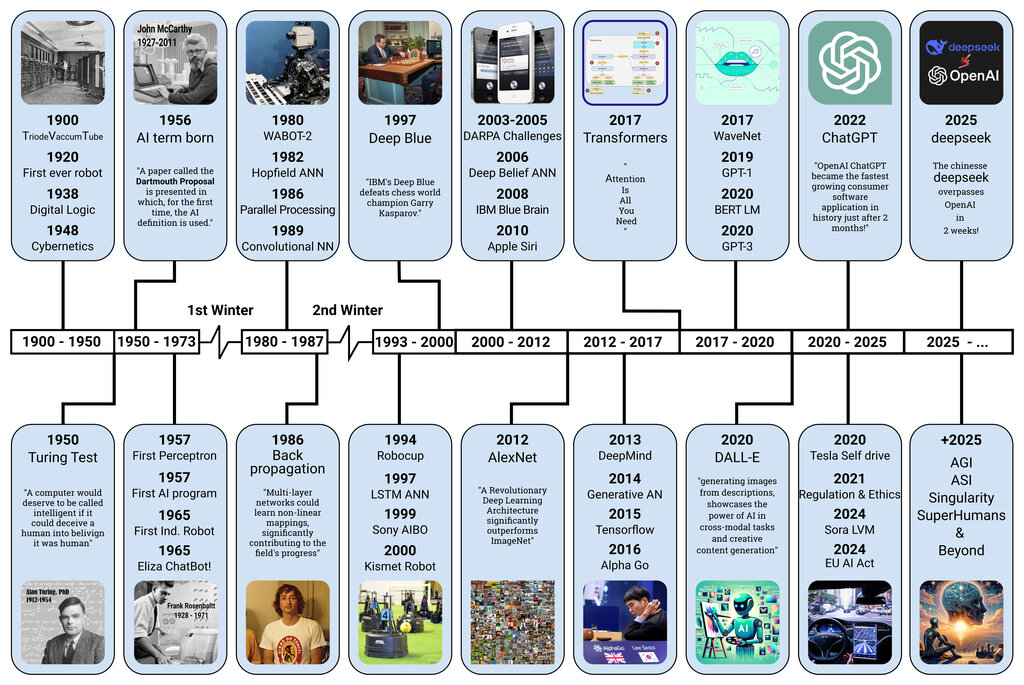
One major turning point was in 1997, when IBM's Deep Blue computer defeated world chess champion Garry Kasparov. This demonstrated that a machine could master a complex, strategic game once thought to be the exclusive domain of human intellect. In the years since, the combination of massive datasets and powerful computers has led to an explosion of progress, leading to the sophisticated AI we see today.
The Building Blocks of AI
Modern AI is built on a few core concepts. While the field is vast, understanding machine learning, neural networks, and natural language processing will give you a solid foundation.
Machine Learning (ML) is an approach to AI where a computer system learns from data, identifies patterns, and makes decisions with minimal human intervention.
Instead of writing step-by-step instructions for a task, developers create algorithms that allow the computer to learn on its own. Imagine teaching a child to recognize a cat. You don't describe a cat by its features—whiskers, pointy ears, a tail. You just show them lots of pictures of cats. Over time, they learn to identify cats they've never seen before. Machine learning works in a similar way, using vast amounts of data to train a model.
One of the most powerful types of machine learning is based on neural networks.
Neural networks are inspired by the human brain. They consist of layers of interconnected nodes, or “neurons.” Each neuron receives inputs, processes them, and passes the result to the next layer. By adjusting the connections between these neurons during training, the network learns to recognize complex patterns in data. Deep learning is simply the use of neural networks with many layers.
Another crucial area is Natural Language Processing.
Natural Language Processing
noun
A field of artificial intelligence that enables computers to understand, interpret, and manipulate human language.
NLP is what allows you to talk to your phone, use translation apps, and get summaries of long documents. It's the bridge that connects human language with computer understanding. These core technologies work together to create the powerful AI applications we interact with every day.
Which statement best describes the relationship between AI, Machine Learning, and Deep Learning?
What historical event in 1997 demonstrated that a machine could master a complex, strategic game previously dominated by human experts?
These concepts are the starting point for a much larger and rapidly evolving field. Grasping them is the first step to understanding the technology that is reshaping our world.