Mastering Agentic Applications with LLMs
Introduction to Large Language Models
What Are Large Language Models?
A Large Language Model, or LLM, is a type of artificial intelligence designed to understand and generate human language. Think of it as an incredibly advanced version of the autocomplete on your phone. While your phone might suggest the next word in a sentence, an LLM can write entire essays, answer complex questions, and even generate computer code.
The core purpose of an LLM is to process vast amounts of text data to learn the patterns, grammar, context, and nuances of language. By learning these relationships between words and ideas, it can perform a wide range of tasks that require linguistic understanding.
At their heart, LLMs work by predicting the next most likely word in a sequence, but they do so with a stunningly sophisticated understanding of context.
From Simple Rules to Seeing Context
The journey to today's LLMs began long before the recent AI boom. Early attempts at language processing relied on rigid, rule-based systems. A programmer would have to manually write rules for grammar and syntax. This approach was brittle; it couldn't handle the endless exceptions and creativity of human language.
Next came statistical models. Instead of hardcoded rules, these models analyzed large bodies of text to calculate the probability of which word would follow another. This was a significant step forward, but these models had a very short memory. They could only consider the last few words to make a prediction, missing the broader context of a paragraph or document.
It was the rise of neural networks and deep learning that paved the way for modern LLMs. These systems, inspired by the structure of the human brain, could learn complex patterns from data on their own, allowing for a much deeper understanding of language.
The breakthrough that enabled LLMs to truly excel was an innovation called the transformer architecture. Introduced in 2017, it revolutionized how AI processes sequential data like text. Its key innovation is a mechanism called "attention," which allows the model to weigh the importance of different words in the input text. This means it can focus on the most relevant parts of the context, no matter how far apart they are in a sentence or paragraph. This ability to handle long-range dependencies is what gives modern LLMs their remarkable coherence and depth of understanding.
Training Data and Scale
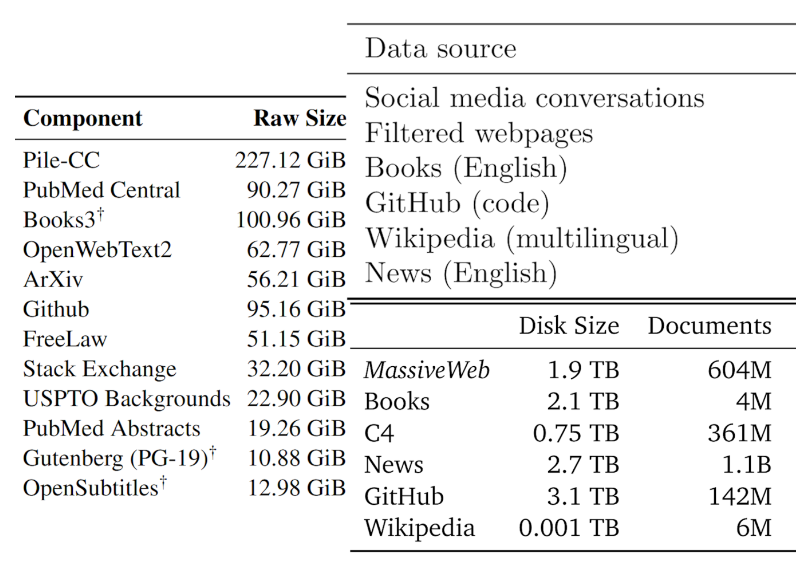
The "Large" in Large Language Model is not an exaggeration. These models are trained on colossal amounts of text data scraped from the internet, including websites, books, articles, and more. This dataset can contain hundreds of billions of words, forming the knowledge base from which the model learns everything from basic grammar to complex scientific concepts.
The scale of both the data and the model itself is crucial. More data and a larger model (meaning more internal parameters or "connections") generally lead to better performance. This massive scale is what allows an LLM to generate text that is not only grammatically correct but also contextually relevant and factually informed.
What Are LLMs Used For?
The ability to understand and generate text makes LLMs incredibly versatile. They are not single-task tools but general-purpose language engines that can be adapted to many different applications across various industries.
| Domain | Example Application |
|---|---|
| Customer Service | Powering chatbots that can answer questions and resolve issues. |
| Content Creation | Assisting with writing emails, articles, and marketing copy. |
| Software Development | Generating code snippets, explaining code, and finding bugs. |
| Healthcare | Summarizing patient notes and analyzing medical research. |
| Education | Creating personalized learning materials and tutoring aids. |
| Entertainment | Writing scripts, generating dialogue for games, and creating stories. |
From helping scientists sift through research papers to enabling developers to build apps faster, LLMs are becoming a foundational technology, changing how we interact with information and create new things.
Most recently, large language models(LLMs) have shown excellent performance in not only text generation but also language comprehension.
As we continue to explore the capabilities of these models, their role in our daily lives and work is only set to expand.