Mastering Agentic AI Systems
Introduction to Agentic AI
Beyond Following Orders
Most AI systems you've encountered are reactive. You give a command, and they execute it. A chatbot answers your specific question; a generative AI creates an image based on your prompt. They are powerful tools, but they wait for instructions.
Agentic AI represents a shift from a tool that follows orders to a partner that pursues goals. An agentic system doesn't just respond to a single prompt. You give it a high-level objective, and it autonomously breaks that goal down into smaller steps, plans a course of action, and executes it. It can use tools, access information, and adapt its strategy based on the results it gets, all without you needing to guide it at every turn.
agent
noun
In artificial intelligence, an agent is an autonomous entity that perceives its environment through sensors and acts upon that environment through actuators to achieve its goals.
The key difference is autonomy. An agentic system has the freedom to decide how to achieve a goal, not just execute a predefined command.
From Reactive to Proactive
Traditional AI excels at specific, well-defined tasks. It can classify an image or translate a sentence. This is often called a reactive model—it reacts to the input it's given. It doesn't have its own goals or the ability to create a multi-step plan.
Agentic AI, on the other hand, is proactive. It operates in a loop of perception, reasoning, and action. It assesses a situation, formulates a plan to achieve its objective, and then acts. If an action doesn't work or the environment changes, it re-evaluates and tries a new approach. This ability to strategize and adapt makes it suitable for complex, dynamic tasks that unfold over time.
| Feature | Traditional AI | Agentic AI |
|---|---|---|
| Mode of Operation | Reactive (Responds to prompts) | Proactive (Pursues goals) |
| Autonomy | Low (Requires human input for each step) | High (Operates independently) |
| Task Handling | Executes single, discrete tasks | Manages complex, multi-step workflows |
| Decision Making | Follows predefined rules or patterns | Reasons, plans, and adapts its strategy |
| Interaction | Command-based | Goal-oriented |
This proactive nature allows agentic systems to tackle problems that are too convoluted for a simple prompt-and-response model.
Traditional AI, characterized by its reactive behavior and reliance on human prompts, contrasts sharply with agentic AI’s proactive, goal-oriented architecture.
Why It Matters
The move toward agentic AI is significant because it fundamentally changes how we can use artificial intelligence. Instead of being a passive assistant we direct, AI can become an active collaborator. This unlocks new possibilities for solving complex problems that require planning, adaptation, and the use of multiple tools.
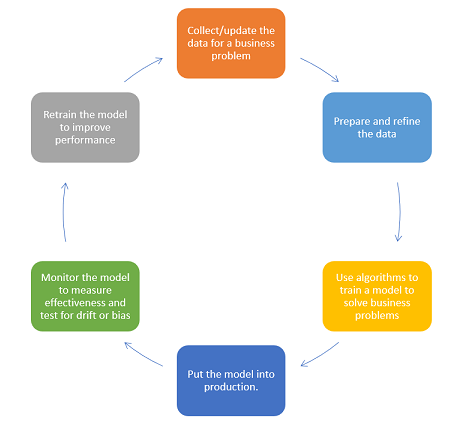
Imagine an AI that can manage your inbox not by following rigid rules, but by understanding your priorities and taking initiative to schedule meetings, draft replies, and summarize key information. Or consider a research assistant that, given a topic, can independently search databases, synthesize findings from multiple papers, and generate a comprehensive literature review.
These applications go beyond simple automation. They require a system that can understand intent, create a strategy, and execute it in a changing environment. That is the promise of Agentic AI.
This course will explore the principles and components that make these systems possible. We'll start with the core concepts and gradually build toward understanding how to design and orchestrate these intelligent agents.
What is the primary characteristic that distinguishes agentic AI from traditional AI?
Agentic AI is described as operating in a loop. What are the three core components of this loop?