Mastering Agentic AI and Next Gen Systems
Frontier Models of 2026
The 2026 LLM Landscape
By early 2026, the brute-force era of scaling Large Language Models (LLMs) has given way to a more nuanced focus on architectural efficiency and specialized reasoning. The conversation is no longer just about parameter counts, but about how intelligently those parameters are used. The industry's giants—OpenAI, Google, and Anthropic—are locked in a race to build not just bigger models, but smarter, faster, and more cost-effective ones. Their flagship models represent distinct philosophies on the path to advanced AI.
The Proprietary Giants
OpenAI's GPT-5.2 has standardized a dual-inference approach that other models are now emulating. It offers two distinct modes: 'Instant' for rapid, good-enough responses suitable for most conversational tasks, and 'Thinking' for complex, multi-step reasoning. This allows users to choose between speed and depth, optimizing for both cost and quality. When a user asks a simple question, the 'Instant' mode provides a quick, affordable answer. But for a complex task like drafting a legal analysis, a user can invoke the ' to access a much larger, more deliberative computational path.
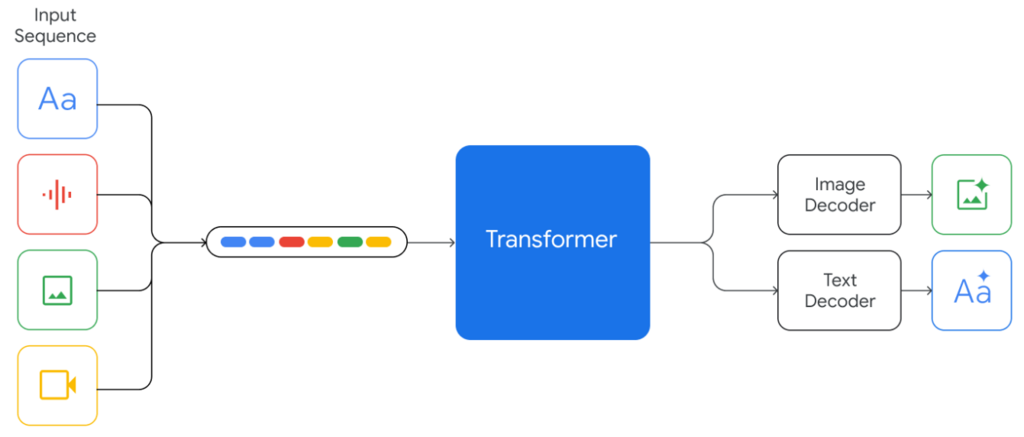
Google's Gemini 3 Pro has carved out a niche in extreme multimodal density. Its defining feature is a native 1-million-token context window that fluidly handles interleaved video, audio, and text. This isn't just a bigger bucket for data; it's a fundamental architectural advantage. A developer can feed Gemini 3 Pro an hour-long video meeting, a 500-page project specification, and a Slack channel history, then ask it to generate a fully-coded project prototype based on all three inputs simultaneously. Its ability to find subtle connections across different data types in a single pass is its core strength.
Meanwhile, Anthropic's Claude Opus 4.5 has become the gold standard for high-stakes, precision-oriented tasks, especially in software development and autonomous operations. Its key advantage is a suite of capabilities collectively known as ''. Claude can be given control of a sandboxed desktop environment, where it can write code, operate a terminal, use software with a graphical user interface, and debug its own errors in a closed loop. This makes it exceptionally powerful for tasks like migrating a complex legacy codebase to a new framework or autonomously managing cloud infrastructure.
Efficiency Is the New Scale
Underpinning these advances is a strategic shift toward 'Efficiency-First' scaling. The goal is no longer just to achieve the highest score on a benchmark, but to do so using the least amount of computation possible. This has led to the maturation of architectures like (MoE). Instead of activating an entire massive network for every token, MoE models are composed of many smaller 'expert' sub-networks. For any given input, a routing mechanism activates only the most relevant few experts.
This design principle is key: models can contain trillions of parameters but only use a few hundred billion for any given inference task, combining vast knowledge with efficient execution.
This efficiency has also fueled a renaissance in open-source models. While they may not match the absolute peak performance of the proprietary giants on every metric, models like DeepSeek v3.2 and Qwen3-Max offer incredible performance for their size. DeepSeek v3.2, for example, excels at mathematical and scientific reasoning, often outperforming older versions of GPT-4 at a fraction of the inference cost. Qwen3-Max has shown strong capabilities in multilingual tasks and creative generation. For many businesses, the trade-off is clear: a highly capable, customizable, and cost-effective open-source model is often a better choice than a closed, more expensive frontier model.
| Model Type | Key Strength | Best For... |
|---|---|---|
| GPT-5.2 | Flexible Reasoning (Thinking vs. Instant) | Complex problem-solving with variable needs |
| Gemini 3 Pro | Massive Multimodal Context | Analysis of large, mixed-media datasets |
| Claude Opus 4.5 | Autonomous Computer Use | Complex software engineering & automation |
| DeepSeek v3.2 | Open-Source STEM Reasoning | Scientific research, data analysis, math |
| Qwen3-Max | Open-Source Multilingual/Creative | Global applications, content creation |
Choosing the right model in 2026 is an exercise in matching architecture to task. For an enterprise needing an AI to analyze security footage and financial reports, Gemini 3 Pro is the obvious choice. For a software company building an autonomous coding assistant, Claude Opus 4.5 is unparalleled. And for a startup that needs a powerful, fine-tunable model for a specific domain without breaking the bank, the open-source options provide more value than ever.
According to the text, what is the defining feature of Google's Gemini 3 Pro in early 2026?
A startup needs a powerful AI to analyze hours of security footage, hundreds of pages of financial reports, and a full history of customer support chats to identify a security breach. Which model is best suited for this task?
The landscape is no longer monolithic. It's a diverse ecosystem where specialized architectures offer distinct advantages, moving the entire field toward more capable and accessible artificial intelligence.