Mastering Agentic AI
Introduction to Agentic AI
Beyond Answering Questions
Most AI we interact with today is reactive. You ask a question, it gives an answer. You give a command, it performs a single task. This is incredibly useful, but it relies on constant human guidance. A new evolution in artificial intelligence, called Agentic AI, is changing this dynamic.
Agentic AI systems are designed to be proactive, not just reactive. Instead of just responding to a prompt, they can pursue a goal on their own. You give them an objective, and they figure out the steps to get there, adapt to challenges, and take action with minimal human intervention.
Agentic AI represents a fundamental paradigm shift in artificial intelligence, moving from passive, prompt-driven systems to autonomous, goal-oriented agents that can plan, learn, and execute complex tasks with minimal human intervention.
Think of it like the difference between a calculator and a personal assistant. A calculator waits for you to input a problem and instantly solves it. An assistant, on the other hand, can take a high-level goal like "plan my business trip to Tokyo" and break it down into smaller tasks: finding flights, booking a hotel, creating an itinerary, and scheduling meetings. This ability to act independently is the core of Agentic AI.
agency
noun
The capacity of an actor to act independently and to make their own free choices.
A New Kind of AI
So what truly separates an agentic system from a traditional AI like a standard chatbot or a recommendation algorithm? The key difference lies in autonomy and initiative. Traditional AI executes well-defined, narrow tasks. Agentic AI thrives in scenarios that require planning, reasoning, and adapting to new information.
| Feature | Traditional AI | Agentic AI |
|---|---|---|
| Autonomy | Low; requires human prompts for each step. | High; can operate independently to achieve a goal. |
| Task Handling | Performs single, specific tasks. | Manages complex, multi-step processes. |
| Interaction | Reactive; responds to direct commands. | Proactive; takes initiative to pursue objectives. |
| Adaptability | Limited; operates within predefined boundaries. | High; can learn and adapt to changing conditions. |
Traditional AI is a powerful tool that follows instructions precisely. Agentic AI is more like a partner that understands the bigger picture and works towards it on its own.
The Road to Autonomy
The shift towards agentic systems is a natural step in the evolution of AI. For decades, we've been building more capable and independent systems.
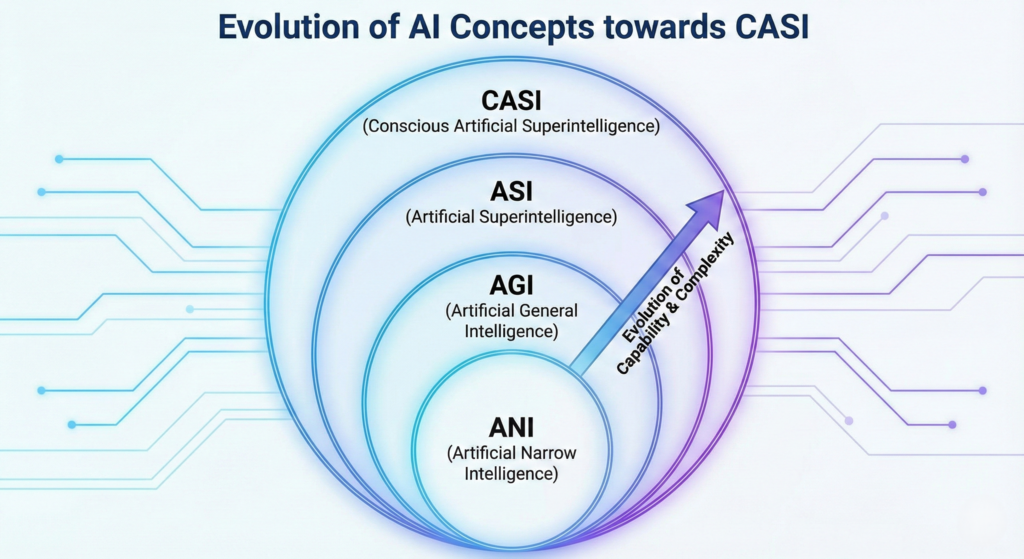
It started with Rule-Based Systems, which could only follow explicit instructions. Then came Machine Learning, which allowed systems to find patterns in data and make predictions. More recently, Generative AI gave models the ability to create new content, from text to images.
Agentic AI builds on all of these advancements. It uses the pattern-recognition of machine learning and the content-creation abilities of generative models to inform its actions. The final, crucial piece it adds is the autonomy to act on that information to achieve a goal.
This progression from simply processing information to taking independent action is what makes Agentic AI so significant. It opens the door to solving more complex, dynamic problems in fields ranging from scientific research to personal productivity, without a human needing to manage every single step along the way.
Ready to test your knowledge?
What is the primary characteristic that distinguishes Agentic AI from traditional, reactive AI systems?
Which analogy from the text best illustrates the difference between a traditional AI and an Agentic AI?
Understanding Agentic AI is the first step toward grasping where artificial intelligence is headed. It's not just about building smarter tools, but about creating systems that can work alongside us as capable, autonomous partners.