Mastering Agentic AI
Introduction to Agentic AI
Beyond Answering Questions
Most of us think of AI as a tool that responds to our commands. We ask a question, and it gives an answer. We give it a prompt, and it generates an image. This is a reactive relationship. The AI waits for our instructions and executes a specific, well-defined task. But what if AI could do more than just react? What if it could take initiative?
This is the core idea behind agentic AI. Instead of just performing a single task, an agentic system can pursue a broader goal. It can plan, strategize, and execute a series of actions to get something done, all with minimal human supervision. Think of it less like a calculator and more like an assistant you can delegate a whole project to.
Unlike traditional AI, which primarily reacts to inputs, agentic AI takes initiative – anticipating customer needs, personalizing interactions, and optimizing business processes at an unprecedented scale.
An agentic AI is defined by its autonomy. It doesn't just follow a script; it assesses a situation, breaks down a goal into smaller steps, and decides on the best course of action. It can use different tools, access information, and even correct its own mistakes along the way. This proactive, goal-driven behavior is what sets it apart.
Reactive vs Proactive
The fundamental difference between traditional AI and agentic AI comes down to agency. Traditional AI systems, like the chatbot that answers simple customer service questions, are masters of specific, repetitive tasks. They operate within clear boundaries.
Agentic AI operates in a more open-ended environment. It handles complexity and ambiguity by creating and following its own multi-step plans.
| Feature | Traditional AI | Agentic AI |
|---|---|---|
| Initiative | Reactive (waits for commands) | Proactive (takes initiative) |
| Task Scope | Executes single, defined tasks | Manages multi-step, complex workflows |
| Operation | Follows a predefined script | Plans, reasons, and adapts its actions |
| Autonomy | Requires human guidance | Operates with minimal supervision |
Imagine you want to plan a weekend trip. Using traditional AI, you might ask a chatbot for flight prices, then search for hotels, then look up restaurant reviews in separate queries. You are the project manager, directing the AI at each step.
With an agentic system, you could simply say, "Plan a relaxing weekend trip to the coast for next month, staying under a $500 budget." The agentic AI would then take over the entire process. It would research destinations, compare flight and hotel costs, check for availability, create an itinerary with restaurant suggestions, and present you with a complete plan for approval. It acts as an autonomous agent working on your behalf.
A Brief Evolution
The idea of AI agents isn't new; it has roots in early computer science research. Early agents were rule-based systems designed for specific environments, like playing a game of chess. They were intelligent, but their autonomy was limited. They could only operate within the narrow confines of their programming.
The recent explosion in large language models (LLMs) changed everything. These models gave AI a much deeper understanding of language and the ability to reason about complex problems. When you combine the reasoning power of an LLM with the ability to plan and use tools, you get the foundation for modern agentic AI.
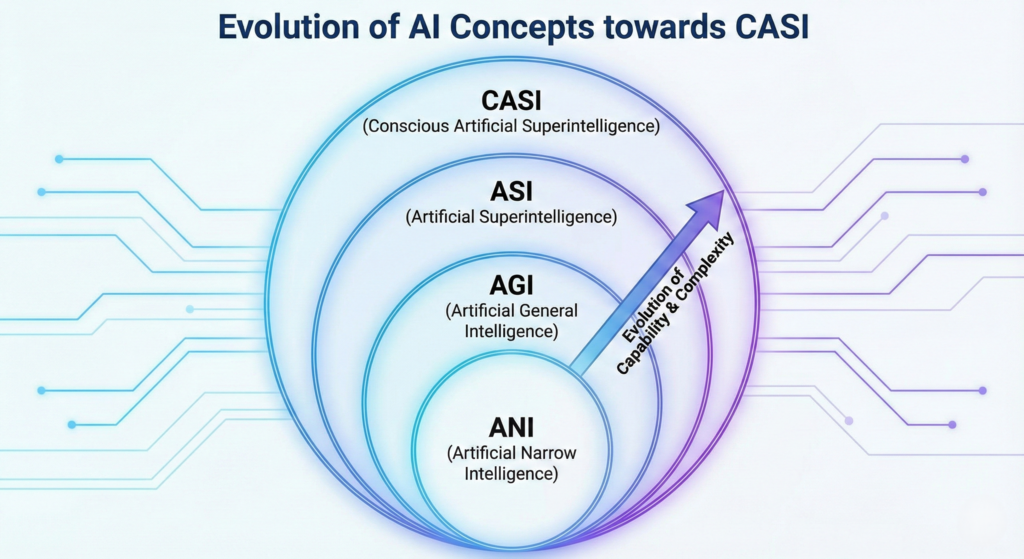
This leap forward is significant because it unlocks the potential to automate not just simple tasks, but entire workflows. This has huge implications across many industries.
Agents at Work
Agentic AI is moving from a theoretical concept to a practical tool. In customer service, an agent can do more than just answer FAQs. It can handle a complex issue from start to finish, like processing a return by checking inventory, issuing a refund, and arranging for shipping, all while keeping the customer updated.
In software development, agents can write, test, and even debug code to build a simple application based on a developer's high-level description. In e-commerce, an agent could act as a personal shopper, learning your style and budget to find the perfect outfit from multiple online stores and even managing the purchase.
Agentic AI systems can act as digital teammates rather than just tools, breaking down complex tasks into manageable steps and executing them without constant human guidance.
The common thread is a shift from human-led execution to human-led supervision. Instead of doing the work step-by-step, our role becomes defining the goals and letting the autonomous agents handle the process of achieving them. This doesn't remove humans from the loop; it elevates our role to one of strategy and oversight.
What is the primary characteristic that distinguishes agentic AI from traditional AI?
True or False: The relationship with agentic AI is best described as human-led execution, where the user directs every step of a task.
This new paradigm of proactive, autonomous AI is just beginning, but it represents a fundamental change in how we interact with technology.