Mastering Advanced Study Guide Construction
Pedagogical Frameworks
Designing a Knowledge Architecture
Creating a study guide for a complex system isn't just about summarizing documentation. It's about designing a knowledge architecture. Your goal is to build a structured pathway that guides a learner from basic awareness to deep, functional expertise. Just like designing a system architecture, you need a blueprint. For learning, that blueprint is a pedagogical framework.
The most durable framework for this is Bloom's Taxonomy. It categorizes cognitive skills into a hierarchy of six levels. By mapping your content to these levels, you define the desired learning depth for each concept and ensure you're building understanding layer by layer, not just listing facts.
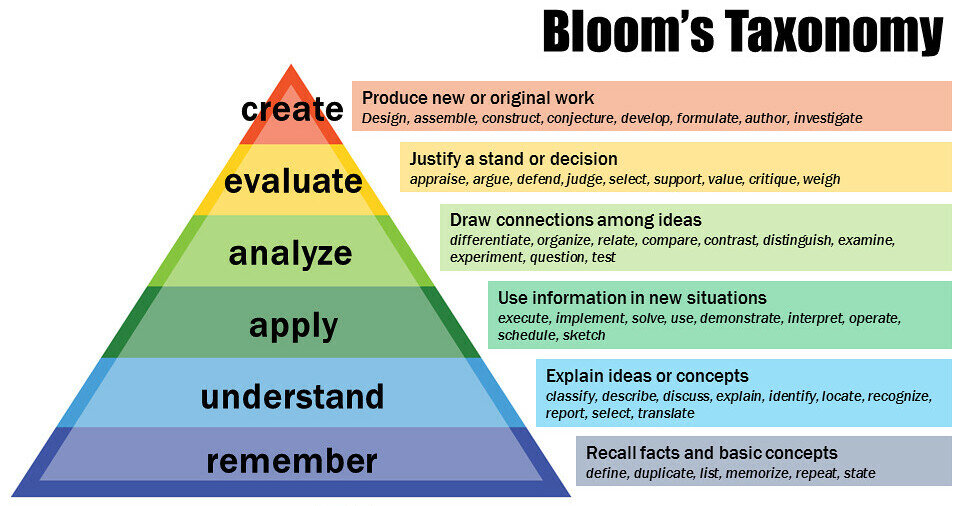
Let's break down the levels in the context of technical documentation, like explaining a Retrieval-Augmented Generation (RAG) system:
- Remember: Recalling facts and basic concepts. Can the learner define what RAG stands for or list its core components (retriever, generator)?
- Understand: Explaining ideas or concepts. Can they explain why RAG is used and how it differs from a standard language model?
- Apply: Using information in new situations. Can they follow a tutorial to set up a basic RAG pipeline with a sample dataset?
- Analyze: Drawing connections among ideas. Can they compare the performance of different vector databases within the RAG architecture and explain the trade-offs?
- Evaluate: Justifying a stand or decision. Can they critique a given RAG implementation and recommend specific improvements for a particular use case?
- Create: Producing new or original work. Can they design and build a novel RAG system optimized for a specialized domain, like legal document analysis?
The framework provides educators with a structured approach to curriculum design, instruction, and assessment by organizing cognitive processes from basic knowledge recall to complex evaluation and creation.
Managing Cognitive Load
While Bloom's Taxonomy provides the structure, Cognitive Load Theory helps you manage the delivery. It recognizes that our working memory is finite. Overwhelming it is like sending too many requests to a server—performance degrades, and information is dropped. The goal is to present information in a way that respects these limits.
Cognitive load has three components:
- Intrinsic Load: The inherent difficulty of the topic itself. A concept like vector embeddings has a higher intrinsic load than a simple variable.
- Extraneous Load: The mental effort wasted on processing irrelevant information or navigating a confusing layout. Poorly structured documentation or a cluttered UI increases this.
- Germane Load: The desirable mental effort used to process new information and construct mental models (schemas). This is where actual learning happens.
Your job as a knowledge architect is to minimize extraneous load and manage intrinsic load so the learner can dedicate their mental resources to germane load.
The primary tool for managing load is chunking. Instead of presenting a massive wall of text about an entire agentic architecture, break it down. One chunk could explain the core idea of an agent. Another could detail the ReAct framework. A third could provide a simple code example. Each chunk should be a self-contained unit that addresses a specific learning objective, making the intrinsic load manageable and allowing the learner to build their understanding piece by piece.
Setting the End Goal
Every section of your study guide must have a clear purpose. Before you write anything, you must define the learning objective. What, specifically, should the user be able to do after reading this section? A well-defined objective uses an action verb that maps directly to a level in Bloom's Taxonomy.
Vague objectives lead to unfocused content. Specific, measurable objectives derived from your knowledge architecture guide both content creation and learner expectations. Compare the weak and strong objectives for a section on RAG evaluation:
| Weak Objective | Strong Objective (Bloom's Level) |
|---|---|
| Understand RAG metrics. | Analyze the trade-offs between context precision and recall. |
| Learn about evaluation frameworks. | Apply the RAGAS framework to evaluate a pipeline's faithfulness. |
| Know how to improve RAG. | Evaluate a pipeline's output and propose three specific improvements. |
By defining the cognitive end goal first, you ensure every piece of content serves a purpose in moving the learner up the hierarchy of understanding. This transforms a simple document into an effective tool for building expertise.
Let's check your understanding of these core frameworks.
Which level of Bloom's Taxonomy does the following learning objective best represent: 'Critique a given RAG implementation and recommend specific improvements for a particular use case'?
A study guide uses a confusing layout with small fonts and irrelevant diagrams, forcing the learner to spend significant mental effort just to figure out what to focus on. This is an example of high ________ load.
With these frameworks, you have the tools to deconstruct any complex topic and rebuild it as a structured, efficient learning experience.