Mastering Advanced Skiing Techniques
Advanced Skiing Techniques
The Art of the Carve
You've moved beyond the wedge turn and can link parallel turns down a blue run. Now it’s time to truly harness the power of your skis. The perfect carve is the foundation of advanced skiing, turning your skis into precise instruments for speed and control. It’s the feeling of your edges locking into the snow, propelling you through an arc with minimal skidding.
The secret isn't brute force. It's about finessing pressure and edge angles. As you enter a turn, roll your ankles and knees into the hill. This engages the inside edge of your downhill ski and the outside edge of your uphill ski. Feel the sidecut of the ski begin to bite into the snow.
Your body position is key. Maintain a forward stance with your shins pressed against the tongues of your boots. Your upper body should remain relatively calm and face down the fall line, while your legs do the work of turning beneath you. This separation between your upper and lower body allows for quick transitions from one turn to the next.
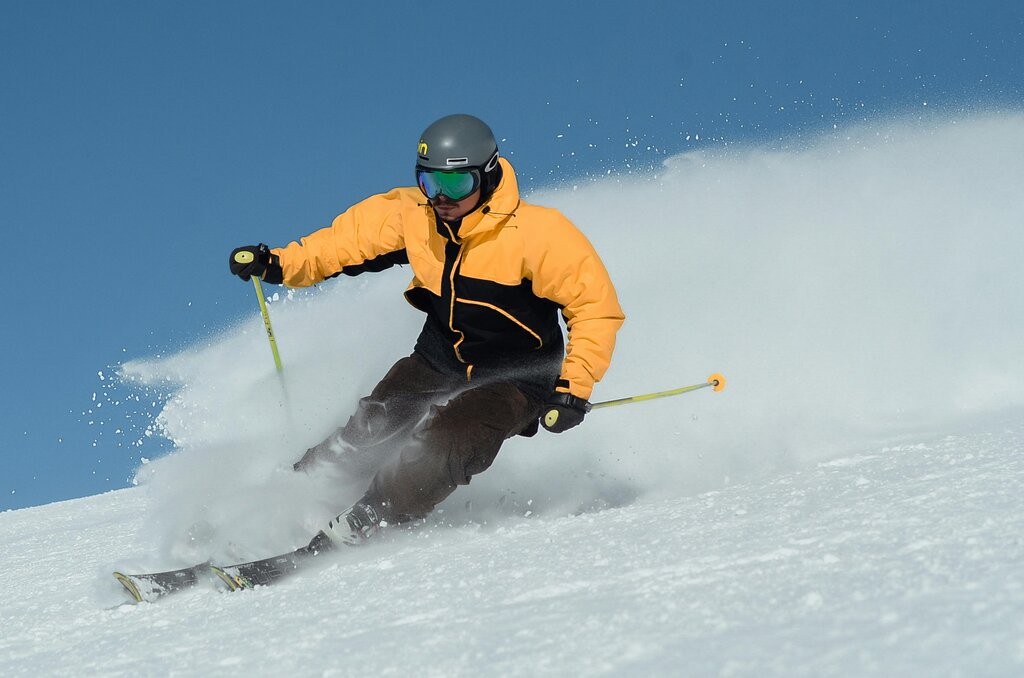
Think of your skis as tracing a clean line in the snow, like a pen on paper. The goal is to leave two thin railroad tracks behind you. To achieve this, you need to apply pressure progressively throughout the turn. Start gently, then increase pressure on your downhill ski as you move through the apex of the turn. This is where you’ll feel the most G-force and acceleration. As you exit the turn, gradually release that pressure to smoothly transition to your next one.
Conquering Steeps
Staring down a steep, black-diamond run can be intimidating. The key to skiing steeps with confidence is managing your speed with quick, controlled turns. On steep terrain, gravity is working overtime, so long, arcing carves will build up too much speed. Instead, you need to master the short-radius turn.
A short turn involves a powerful pole plant to initiate the turn and a quick pivot of the skis underneath you. Plant your downhill pole decisively, and use it as an anchor to swing your legs and skis into the new turn. Keep your skis closer together than you would on a gentler slope. This provides a more stable platform and allows for quicker edge-to-edge transitions.
Your mental game is just as important as your physical technique. Look ahead, not down at your ski tips. Plan your line a few turns in advance. Trust your edges and commit to each turn. Hesitation is your enemy on steep pitches; it leads to leaning back, which causes you to lose control and pick up unwanted speed.
On steeps, your pole plant is your trigger. A strong, timely pole plant initiates the turn and provides rhythm for a smooth descent.
Navigating Moguls
Mogul fields look chaotic, but there's a rhythm to them. The goal is not to ski over every mogul, but to use the terrain to your advantage. A good mogul skier makes tight, controlled turns around the bumps, maintaining constant contact with the snow.
There are two main lines you can take through a mogul field:
- The Round Line: You turn on the tops and sides of the moguls. This is a good way to control your speed as you're constantly turning.
- The Direct Line (Zipper Line): You ski straight down the fall line in the troughs between the moguls, using the sides of the bumps to check your speed. This line is faster and requires very quick leg movements.
Regardless of the line you choose, absorption is everything. Your legs must act like shock absorbers. As you ski into a mogul, flex your ankles, knees, and hips to absorb the compression. As you ski off it, extend your legs to keep your skis on the snow. Your upper body should remain quiet and stable, floating over the bumps while your legs do all the work.
Pole planting is also critical in the bumps. A well-timed pole plant in the trough or on top of the next mogul provides stability and helps initiate your next turn quickly. Keep your hands in front of you and be active with your poles to maintain your rhythm.
Adapting to Conditions
The mountain is rarely a perfectly groomed carpet. An expert skier can handle anything the conditions throw at them, from deep powder to boilerplate ice.
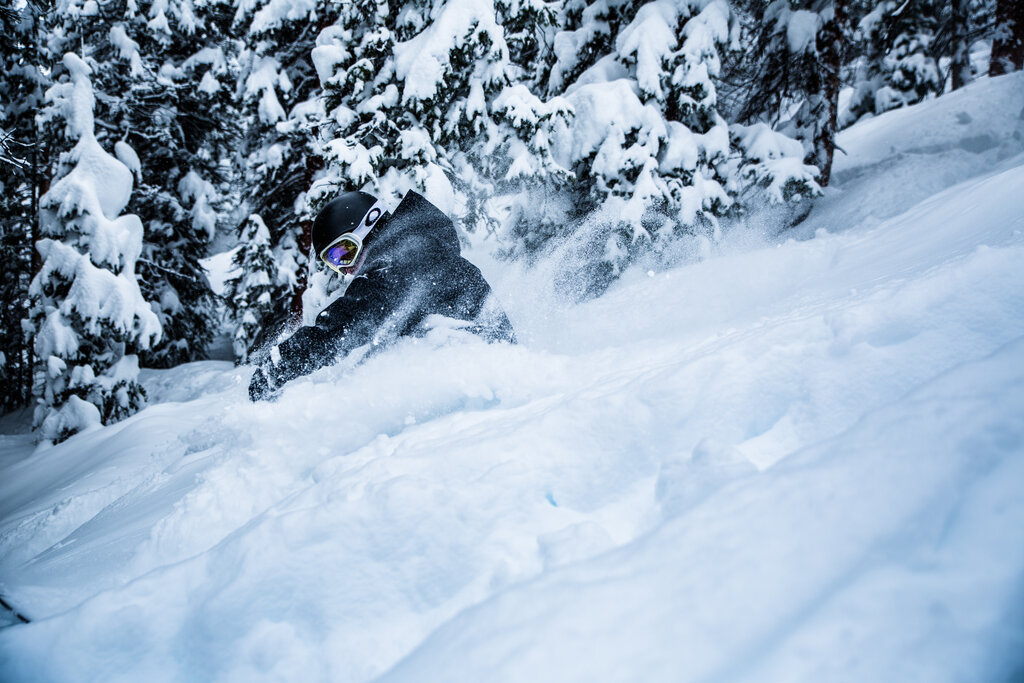
Powder: Skiing powder is about floating. You need a bit more speed than usual to stay on top of the snow. Keep your skis closer together to create a single, wide platform, like a surfboard. Bounce rhythmically from turn to turn, using a more up-and-down motion rather than a sharp edge-to-edge carve. Your weight should be centered, not leaned back.
Crud/Chopped Powder: This is heavy, unpredictable snow. It requires an aggressive, powerful stance. Keep your speed up and drive through the piles of snow. Widen your stance slightly for better balance and use strong, deliberate turns to cut through the variable surface.
Ice: On icy patches, control is paramount. You need to maximize your edge grip. Lower your center of gravity and increase the angle of your edges. Make calm, precise movements. Any sudden or jerky motions will cause your edges to slip. Trust the sidecut of your skis and apply steady pressure to maintain your grip.
Mastering these advanced techniques takes practice. Start on easier terrain to get the feel for a new movement before taking it to the steeps or moguls. Focus on one skill at a time. With patience and persistence, you'll be able to ski the entire mountain with confidence, control, and style.
Ready to test your knowledge?
What is the primary goal when carving a turn on skis?
On steep terrain, long, arcing carved turns are the most effective way to control speed.
Becoming an expert is a journey. By focusing on these techniques, you'll find new ways to challenge yourself and enjoy every part of the mountain.