Mastering Advanced Rhetorical Strategies
Classical Rhetorical Theories
The Titans of Rhetoric
In the bustling public squares of ancient Greece and Rome, the ability to speak persuasively was not just a skill—it was a necessity for anyone who wanted to participate in public life. Law courts, political assemblies, and public ceremonies were all arenas for powerful oratory. From this vibrant culture of public discourse emerged a formal art of persuasion known as rhetoric. Three figures stand out as the architects of this classical tradition: Aristotle, Cicero, and Quintilian. Their ideas laid the groundwork for how we understand effective communication even today.
Aristotle's Art of Persuasion
The first systematic study of rhetoric comes from the Greek philosopher Aristotle. Before him, teachers of rhetoric often provided students with speeches to memorize. Aristotle took a different approach. He wanted to understand why certain arguments were persuasive and others were not. His treatise, 'Rhetoric', is less of a how-to guide and more of a deep analysis of the psychology of a speaker and their audience.
One of the most significant contributions to rhetorical theory is Aristotle's Rhetoric, which outlined the three modes of persuasion: ethos, pathos, and logos.
Aristotle argued that every persuasive argument is built on three appeals. Understanding these is key to understanding his entire system.
- Ethos is an appeal to character. It's about establishing your credibility and authority. An audience is more likely to be persuaded by someone they trust and respect.
- Pathos is an appeal to emotion. It involves stirring feelings in the audience—joy, anger, fear, or pity—to make them more receptive to your message.
- Logos is an appeal to logic. This is the argument itself—the facts, figures, and reasoning you use to make your case.
Aristotle saw these three appeals as interconnected parts of a whole, often visualized as a triangle.
A successful speaker must balance all three elements. A logical argument (logos) is more powerful when delivered by a credible source (ethos) who can connect with the audience's emotions (pathos).
Cicero the Practitioner
Centuries after Aristotle, the Roman Republic became the new center of rhetorical practice. Here, Marcus Tullius Cicero rose to fame as Rome's greatest orator. While Aristotle was the theorist, Cicero was the master practitioner. He wasn't just a speaker; he was a lawyer and politician whose life often depended on his ability to persuade a jury or the Senate.
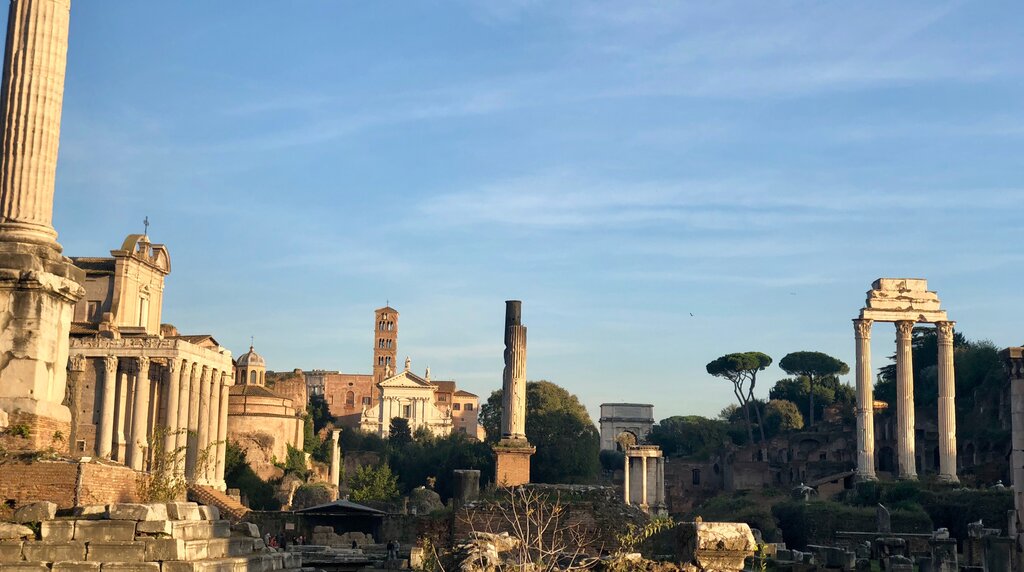
Cicero's writings, like 'De Oratore' (On the Orator), adapted Greek rhetorical theory for a Roman audience. He argued that the ideal orator couldn't just be a clever speaker; they had to be a person of broad learning and high moral character. For Cicero, great speaking required deep knowledge of history, law, and philosophy.
He also refined and popularized a framework for constructing a speech, now known as the Five Canons of Rhetoric.
| Canon | Description |
|---|---|
| Invention (Inventio) | Finding the best arguments for your case. This is the research and brainstorming phase. |
| Arrangement (Dispositio) | Structuring the arguments for maximum impact. A typical structure included an introduction, a statement of facts, the argument, and a conclusion. |
| Style (Elocutio) | Choosing the right words and phrasing to express your ideas clearly and eloquently. |
| Memory (Memoria) | Learning the speech. In an age before teleprompters, memorization was a crucial skill. |
| Delivery (Actio) | The physical performance of the speech, including gestures, posture, and voice modulation. |
These five steps provided a comprehensive roadmap that took a speaker from the initial idea all the way to the final performance.
Quintilian the Educator
After Cicero, the Roman Republic gave way to the Roman Empire. In this new political reality, rhetoric's role changed. While still important, it became more focused on education and law than on free-wheeling political debate. The most important figure of this era was Quintilian, a renowned teacher of rhetoric.
Quintilian's masterpiece, 'Institutio Oratoria' (Institutes of Oratory), is a massive, twelve-volume work covering the lifelong education of an orator, from cradle to grave. It is the most complete guide to rhetoric to survive from the ancient world.
More than anyone before him, Quintilian stressed the ethical dimension of public speaking. He believed that the goal of a rhetorical education was not just to produce a clever speaker, but a good person.
Quintilian's ideal orator was a vir bonus dicendi peritus—'a good man speaking well.'
For him, a truly great speech could not be delivered by a person of poor character. He argued that an orator's credibility (ethos) stemmed directly from their moral integrity. This ethical vision has had a lasting impact, shaping how we think about the responsibilities that come with public speech.
Let's check your understanding of these foundational thinkers.
A charity's advertisement shows images of suffering animals while sad music plays in the background, urging viewers to donate. Which of Aristotle's persuasive appeals is primarily being used?
Which classical rhetorician is most famous for emphasizing that a great orator must first and foremost be a 'good person' of high moral character?
The ideas of Aristotle, Cicero, and Quintilian form the bedrock of Western rhetorical tradition. Their work established a rich vocabulary for analyzing persuasion and provided a structured approach to communication that remains influential in fields from law and politics to marketing and writing.