Mastering Advanced Memorization Techniques
Advanced Memory Palace Optimization
Beyond the Blueprint
You've already mastered the basic architecture of the Method of Loci, turning familiar spaces into storage for information. Now, it's time to move beyond simple floor plans and build mental structures capable of holding vast, complex datasets. To do that, we need to understand why this technique works so well on a neurological level.
The power of the Memory Palace comes from hijacking your brain's powerful spatial navigation system. At the heart of this system is the hippocampus, a structure deep in your temporal lobe. The hippocampus is filled with specialized neurons called 'place cells.' Each place cell fires when you are in a specific location in an environment. Together, they create a cognitive map of your surroundings.
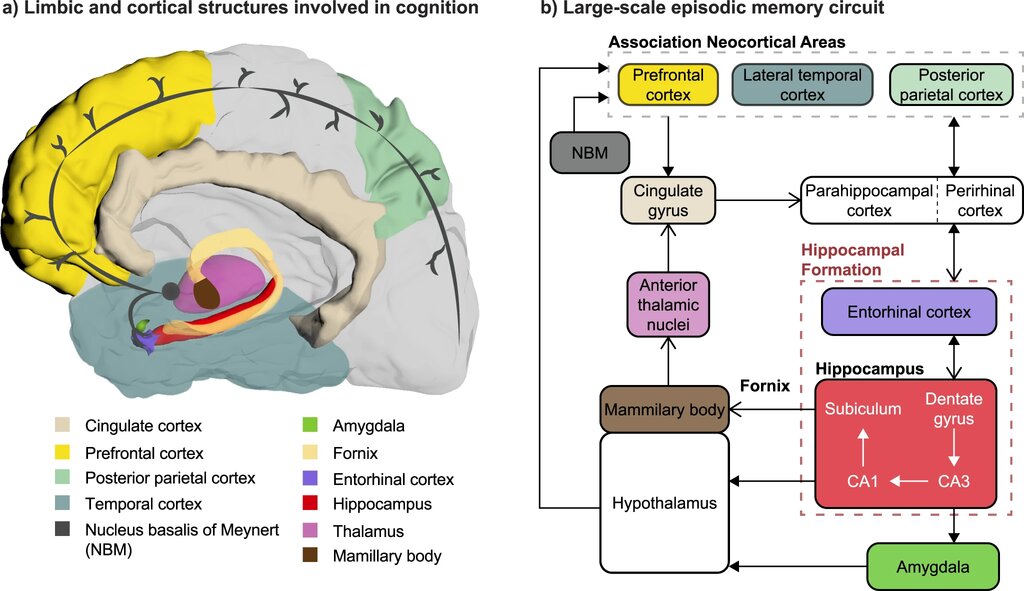
When you mentally walk through your Memory Palace, you are activating these place cells in a sequence, just as you would if you were physically there. By attaching abstract information—a number, a name, a concept—to a specific location, you're linking that data to the activation of a place cell. This gives a concrete, physical anchor to something that has no physical form, making it far easier to retrieve.
Virtual Architecture
Using your own home or a familiar route is a great starting point, but physical locations have limitations. They are finite and their layout isn't always ideal for the information you need to store. The solution is to design and build virtual Memory Palaces.
A virtual palace is a location that exists only in your mind. It can be a skyscraper where each floor represents a historical era, a library where each wing holds a different scientific discipline, or a spaceship where each deck stores data on a different programming language. The advantage is total control. You can design the layout specifically for the material, ensuring a logical flow and unlimited expansion.
Building a virtual palace takes more initial effort but pays dividends in scalability and organization. Start simple. Sketch it out. Walk through it mentally many times until it feels as real as your own home. The more sensory details you add—the texture of the walls, the quality of the light—the stronger the neural pathways will become.
High-Density Storage
To memorize massive amounts of information, you need to increase the storage density of your palace. A simple 'one item per room' approach won't work for complex subjects. This is where nesting and pegging come in.
Nesting involves creating sub-locations, or sub-loci, within a larger locus. Your living room is not one location. It contains a couch, a coffee table, a lamp, and a window. Each of these can be a sub-locus. The coffee table itself can have further sub-loci: on top of the table, under the table, a specific coaster. This creates a fractal-like system where you can zoom in to store granular details.
Pegging adds another layer of organization. A peg system is a pre-memorized list of items (pegs) that you can hang new information on. A common system uses number-rhymes: One is a bun, Two is a shoe, Three is a tree, etc. You can combine this with your nested loci.
For example, inside your 'living room' locus, you move to the 'coffee table' sub-locus. To store a three-part piece of information there, you would visually associate the first part with a bun on the coffee table, the second part with a shoe on the table, and the third with a tree growing out of the table. This creates a multi-layered retrieval structure: Palace -> Locus -> Sub-locus -> Peg. The combination is precise and incredibly high-capacity.
The key is to make your mental images vivid, interactive, and even absurd. The more unusual the image, the more it will stick.
Avoiding Interference
As you reuse your palaces for new information, you may encounter the 'ghosting' effect. This is a form of proactive interference, where old memories disrupt the recall of new ones. You might walk up to your front door and see the 'ghost' of the previous image you stored there, confusing it with the current one.
There are several ways to combat this. The simplest is to have multiple palaces for different subjects. But for palaces you must reuse, you need a clearing mechanism. When you're done with a set of information, walk through your palace and vividly imagine the images exploding, fading to dust, or being washed away by a flood. This act of intentional destruction helps 'reset' the locations.
Another advanced technique is to change the lighting or weather in the palace for each new set of data. Memorize your first list on a bright, sunny day. For the next list, imagine the palace during a thunderstorm. The next, at night. This adds a unique contextual cue to each layer of information, making it easier for your brain to distinguish between them.
Ready to test your knowledge of these advanced structures?
What specialized neurons in the hippocampus are crucial for creating the cognitive map used in a Memory Palace?
What is the primary advantage of using a virtual Memory Palace over one based on a real location?
Mastering these techniques transforms the Memory Palace from a simple mnemonic into a dynamic, high-performance cognitive tool. By understanding the neuroscience and applying principles of virtual design, nesting, and interference management, you can build mental structures capable of storing anything you want to learn.