Mastering Advanced Exercise Science
Biomechanics of Core Lifts
Beyond Form: Optimising the Big Three
You already know how to perform the squat, bench press, and deadlift. Now it's time to understand the 'why' behind the movements. Moving beyond basic cues into the realm of biomechanics is what separates a good lifter from a great one. It’s about transforming the lifts from simple up-and-down motions into a precise application of force.
This is where we talk about levers, balance, and making the barbell feel lighter without adding a single plate to the bar. We’re moving from 'how to move' to 'how to move efficiently'.
The biomechanical approach is anatomy and function driven focusing on range of movement (ROM), endurance and strength.
At the heart of efficient lifting is the concept of a moment arm. In simple terms, it's the perpendicular distance from a joint (the pivot point) to the line of force being applied. The longer the moment arm, the more torque a weight exerts on that joint, and the harder your muscles have to work to overcome it.
Think about carrying a heavy grocery bag. When you hold it close to your body, it feels manageable. The moment arm at your shoulder is short. If you extend your arm straight out, the bag feels much heavier. The weight hasn't changed, but the moment arm has increased, requiring more torque from your shoulder to hold it up.
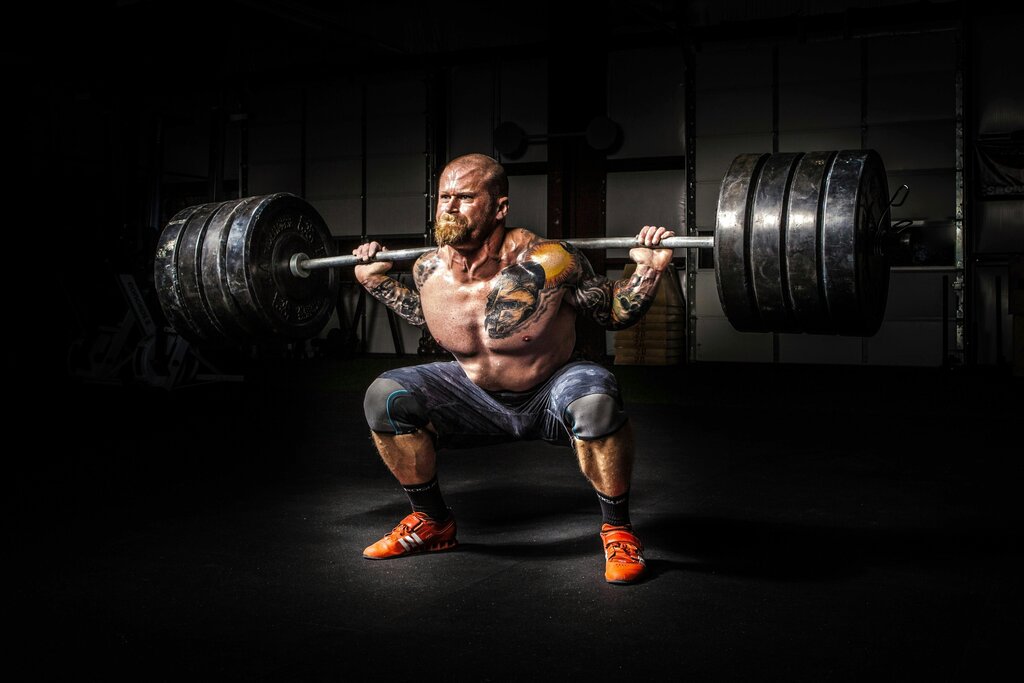
In the Big Three, the goal is often to minimise the moment arms at specific joints to make the lift more efficient. For a squat, this means keeping the barbell (the force) as close to being directly over the middle of your foot as possible. If the bar drifts forward, the moment arm at your hips and lower back increases, forcing them to work much harder.
Your Body, Your Lift
Why does a champion powerlifter's squat look so different from yours? The answer is anthropometry, the study of human body measurements. Your individual limb lengths dictate your optimal lifting form.
A lifter with long femurs (thigh bones) and a short torso will have to lean forward more in a squat to keep the bar over their mid-foot. This increases the moment arm at the hips, making the lift more hip-dominant. Someone with a long torso and short femurs can stay much more upright, making the squat more quad-dominant.
Similarly, long arms are a huge advantage in the deadlift, as they reduce the range of motion needed to get the bar off the floor. However, they can be a disadvantage in the bench press, where the bar has to travel a much greater distance.
| Anthropometry | Squat Advantage | Deadlift Advantage | Bench Press Advantage |
|---|---|---|---|
| Long Torso | Easier to stay upright, less lower back strain. | Neutral. | Shorter range of motion. |
| Short Torso | Requires more forward lean, more hip dominant. | Neutral. | Longer range of motion. |
| Long Arms | Can make racking the bar difficult. | Shorter range of motion, easier lockout. | Longer range of motion, harder lockout. |
| Short Arms | Can help maintain an upright posture. | Longer range of motion, harder off the floor. | Shorter range of motion, easier lockout. |
| Long Femurs | Requires more forward lean and wider stance. | Can be harder to get hips low at the start. | Neutral. |
| Short Femurs | Easier to stay upright, quad-dominant. | Easier to set up with an upright chest. | Neutral. |
Don't fight your build. Instead, adjust your technique. A long-femured lifter might benefit from a wider stance or low-bar squat position to shorten the effective moment arm at the hips. A long-armed bencher might use a slightly wider grip to reduce the travel distance of the bar. Optimisation is about finding the positions that give you the best leverage.
Greasing the Groove
When you first start lifting, you get stronger very quickly. This isn't just muscle growth; it's your Central Nervous System (CNS) learning the movement. This process is often called 'greasing the groove'.
Think of it like learning to type. At first, you hunt for each key. With practice, your fingers fly across the keyboard without conscious thought. Your brain has created an efficient neural pathway. Lifting is the same. Each rep strengthens the connection between your brain and the muscles involved. Your CNS learns to recruit muscle fibres more efficiently, synchronise their firing, and relax opposing muscles.
This neurological efficiency is why practicing the lifts frequently, even with lighter weights, leads to significant strength gains. You are teaching your body the skill of strength. A perfect, fast rep with a moderate weight is a better teacher for your CNS than a slow, grinding rep at your maximum.
Sticking Points and Solutions
The sticking point is that part of a lift where the bar slows down or stops. It’s where you are at your biomechanical weakest. This usually happens when a moment arm is at its longest for the primary moving muscles.
In the squat, it's often a few inches above parallel, where the torso is most inclined and the moment arm on the hips is greatest. In the bench press, it's typically a few inches off the chest, where the pectorals are in a stretched position and the moment arm on the shoulders is significant. In the deadlift, it's often just below the knee, as the bar must be pulled back towards the body to allow the knees to extend.
How do you fix this? By strengthening the muscles in that specific range of motion. This is where variations come in.
-
Paused Reps: Pausing at your sticking point (e.g., paused squats, paused bench) eliminates momentum and forces your muscles to produce maximum force from a dead stop in their weakest position. This builds specific strength exactly where you need it.
-
Tempo Work: Using a slow eccentric (lowering) phase, like a 3-second descent in a squat, builds control and muscle tension. A slow concentric (lifting) phase through the sticking point forces you to maintain tension and drive through the difficult portion of the lift.
-
Partial Reps: Exercises like board presses or rack pulls allow you to overload the top portion of a lift, strengthening the muscles responsible for lockout and building confidence with heavier weights.
By analysing your lifts through a biomechanical lens, you can target your weaknesses with precision. You move from just working hard to working smart.
Ready to test your understanding of these principles?
In the context of lifting biomechanics, what is a 'moment arm'?
A powerlifter with very long femurs (thigh bones) and a shorter torso will likely need to do what to maintain balance in a squat?
Understanding these principles transforms your training. Every rep becomes an opportunity to refine a skill, not just move a weight. By optimising your unique biomechanics, you're paving the way for safer, more efficient, and ultimately stronger lifts.