Mastering Advanced English Communication
Advanced Syntax Mastery
Beyond the Basics
You already know how to build simple sentences (one independent clause) and compound sentences (two independent clauses joined by a coordinating conjunction). To express more complex ideas, we need to connect clauses of unequal rank. This is where complex sentences come in.
A complex sentence has one independent clause and at least one dependent clause. These dependent clauses can't stand on their own; they rely on the main clause for their full meaning. The link between them is a or a relative pronoun, which shows the relationship—like cause, condition, or time.
Although the report was due, she took a break because she had been working for hours.
This sentence has one independent clause (she took a break) and two dependent adverbial clauses. "Although the report was due" shows concession, and "because she had been working for hours" shows cause. This structure is far more informative than three simple sentences.
A compound-complex sentence simply combines the two forms: it contains at least two independent clauses and at least one dependent clause. It's the ultimate tool for showing intricate relationships between multiple ideas in a single, flowing thought.
Adding Precision with Clauses
Dependent clauses come in several flavors, each with a specific job. Mastering them is key to elevating your professional communication.
Relative Clauses add extra information about a noun. They begin with relative pronouns like who, which, that, or whose.
A crucial distinction is between restrictive and non-restrictive clauses. A restrictive clause is essential to the sentence's meaning; it identifies which noun we're talking about. You don't use commas around it.
- The employee who finished the project received a bonus. (Specifies which employee)
A provides extra, non-essential information. It's set off by commas, signaling that the sentence would still make sense without it.
- The project manager, who is an expert in agile development, approved the timeline. (Adds bonus information about the manager)
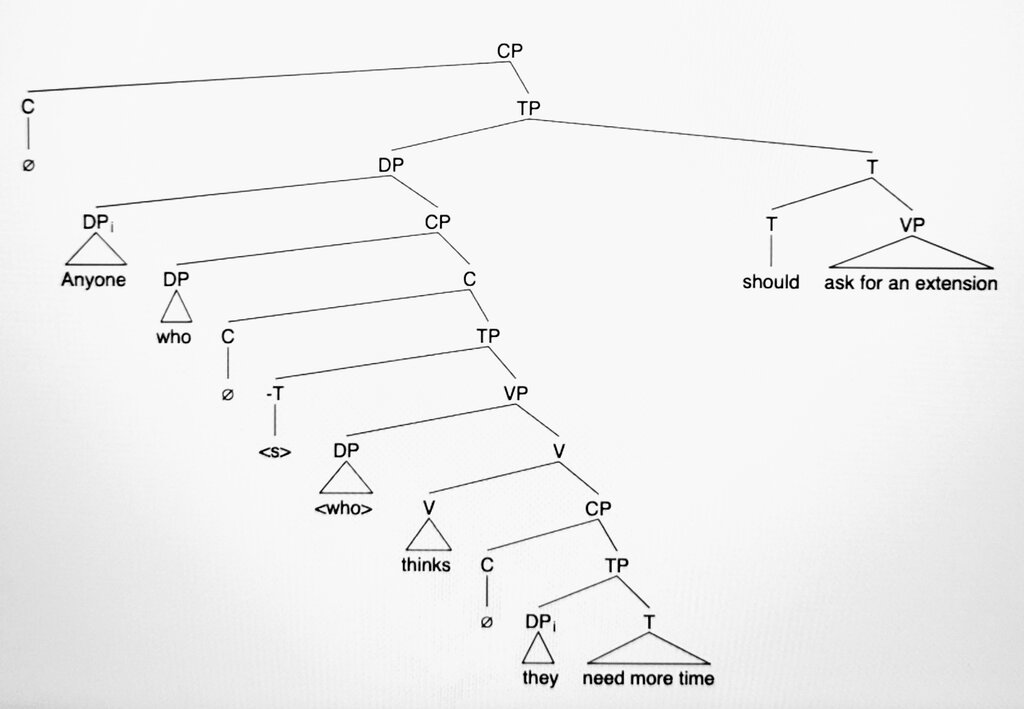
Noun Clauses function as a noun in a sentence. They can be the subject, the object of a verb, or the object of a preposition. They often start with words like that, what, who, why, or how.
- As a subject: What the committee decided remains confidential.
- As an object: The team knows that the deadline is firm.
Adverbial Clauses act like adverbs, modifying a verb, adjective, or another adverb. They answer questions like why?, when?, where?, or under what conditions? We've already seen examples showing cause and concession.
- Concession: Although the data was incomplete, we identified a clear trend.
- Condition: We will launch the product next month if the final tests are successful.
Varying Your Rhythm
Relying solely on conjunctions can make writing feel repetitive. Advanced punctuation provides alternative ways to connect ideas and create a more sophisticated rhythm.
The [{
}] connects two closely related independent clauses. It suggests a tighter link than a period would, but the two clauses could still stand on their own as complete sentences.
- The first quarter results were strong; the second quarter looks even more promising.
Using a semicolon here implies that the second clause follows directly from the first, creating a sense of cause-and-effect or continuation. A period would create a more definitive stop.
The em dash—like this one—is a versatile tool used for emphasis or to set off an abrupt interruption or explanation. It creates a more dramatic pause than a comma and can often replace parentheses for a less formal feel.
- The final feature—the one everyone was waiting for—will be released tomorrow.
Both the semicolon and the em dash break up the traditional sentence flow, adding variety and drawing attention to specific relationships between your ideas.
What is the defining characteristic of a complex sentence?
Identify the type of sentence: "Although the team faced several setbacks, they launched the product on schedule, and it received excellent reviews."
By moving beyond simple structures, you can express your thoughts with greater precision and control.