Mastering ADONIS for Business Process Management
Introduction to Business Process Management
What Is Business Process Management?
At its heart, every organization is a collection of processes. A process is simply a series of steps taken to achieve a specific goal. Think about how a coffee shop makes a latte, how a warehouse fulfills an online order, or how a company hires a new employee. Each of these is a business process.
Without a clear plan, these processes can become messy, inefficient, and expensive. People might perform the same task in different ways, steps might be missed, or delays can frustrate customers. This is where Business Process Management (BPM) comes in.
Business Process Management
noun
A discipline that uses various methods to discover, model, analyze, measure, improve, and automate business processes.
BPM isn’t a one-time project; it's an ongoing practice of looking at your organization’s processes and consistently asking, “How can we do this better?” It's about transforming an organization from a jumble of disconnected activities into a well-oiled machine where every part works together to achieve business goals.
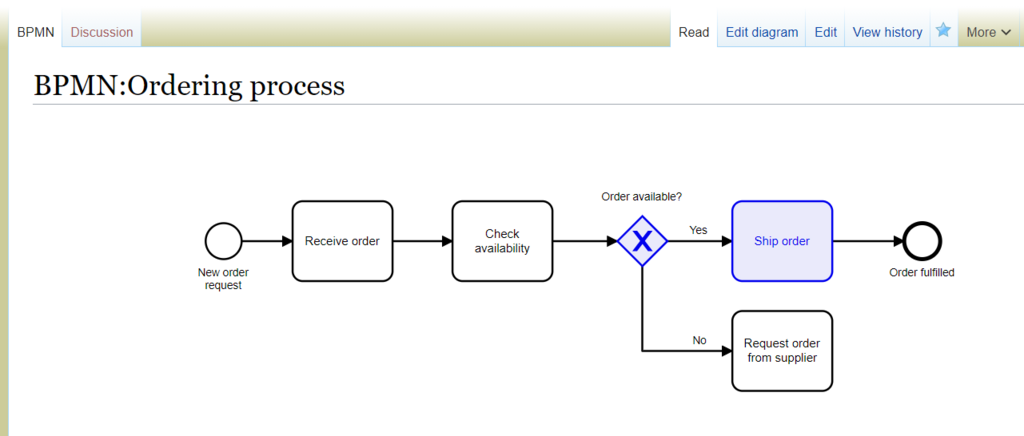
The Benefits of a Process-First Mindset
When organizations adopt BPM, the benefits ripple out across the entire business. By mapping out and refining workflows, companies can eliminate waste and cut down on unnecessary steps. This directly leads to lower operational costs and frees up resources for more important work.
Efficiency gets a major boost. Tasks are completed faster and with fewer errors, which means products and services get to customers more quickly. This speed and reliability naturally lead to higher customer satisfaction. When a customer's order is processed smoothly and arrives on time, they're more likely to return.
Ultimately, BPM makes a business more agile. With well-documented and understood processes, it's easier to adapt to market changes, new technologies, or shifts in customer demand.
The BPM Lifecycle
BPM is a continuous cycle of improvement, not a task you finish and forget. This loop ensures that processes stay relevant and efficient as the business evolves. The cycle generally consists of a few key phases.
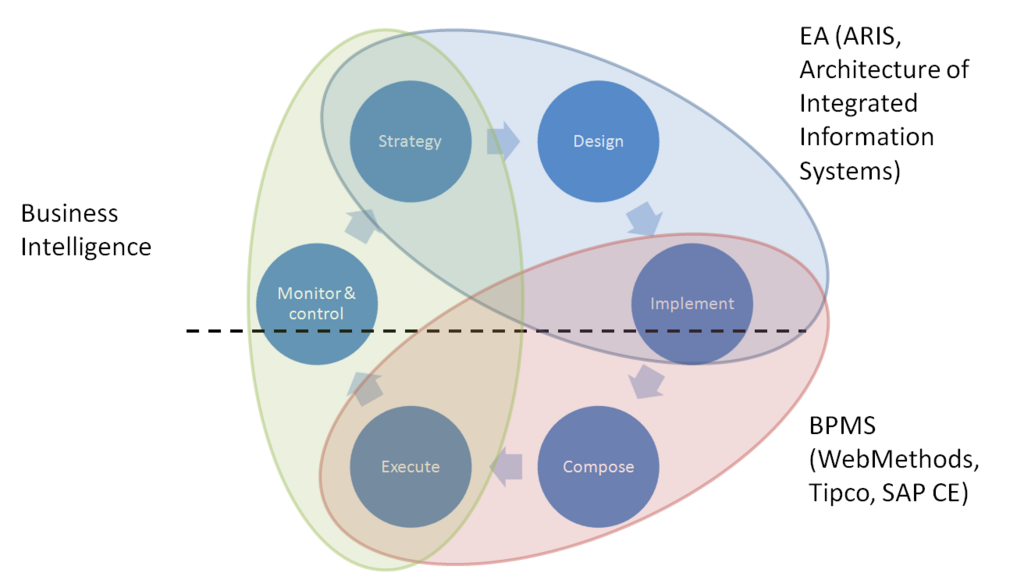
1. Design & Modeling: The first step is to understand and map the current process. What are the steps? Who is responsible for each one? This creates a visual model, or a flowchart, of how work gets done.
2. Implementation & Execution: The improved process is put into action. This might involve training employees, rolling out new software to automate steps, or simply communicating the new workflow to the team.
3. Monitoring & Control: Once the new process is running, you need to track its performance. Are things moving faster? Are there fewer errors? This involves collecting data and measuring key metrics, like the time it takes to complete a task.
4. Optimization: Based on the data collected during monitoring, you identify bottlenecks or areas for further improvement. This analysis feeds directly back into the design phase, starting the cycle all over again. This commitment to ongoing refinement is what makes BPM so powerful.
What is the primary goal of Business Process Management (BPM)?
In which phase of the BPM cycle would a team create a flowchart of an existing workflow to understand how it currently operates?
Understanding these core ideas is the first step toward using BPM to create a more efficient and effective organization.