Mastering Administrative Document Requests
Administrative Landscape and Documentation
Navigating the Paper Trail
Getting your original academic documents back from a university or college isn't like picking up a package. It's a formal process designed to close the loop on your time as a student. Every institution has a checklist to ensure you've settled all your accounts, returned all property, and officially concluded your academic journey with them. Think of it as a final handshake, but with a lot more paperwork.
This bureaucracy exists for a reason: to protect both you and the institution. It prevents fraud, confirms you've met all your obligations, and creates a clear, official record of your departure. Approaching this with the right documents in hand is the difference between a smooth process and a series of frustrating delays.
The Clearance Gauntlet
Before an institution will release your final documents, you must prove that you owe them nothing. This is handled through a series of clearances, often bundled into a single, crucial document: the No Dues certificate
This isn't just about tuition fees. The 'No Dues' process is a comprehensive audit of your student life. The library needs to confirm you've returned all your books and paid any late fees. The laboratory or department head must sign off that you haven't damaged or lost any equipment. If you lived in a hostel, that department needs to clear you of any outstanding charges for room and board. Each of these sign-offs is a necessary step in the workflow. Without them, your request for documents will be stopped in its tracks.
Certificates of Departure
Once you're cleared, you'll need a specific certificate to move on. The two most common are the Transfer Certificate (TC) and the Migration Certificate, and they are not interchangeable. Each serves a distinct legal and administrative purpose.
| Certificate | Purpose | When It's Used |
|---|---|---|
| Transfer Certificate (TC) | Certifies that a student has left one institution. It often includes notes on conduct and last courses attended. | Moving between schools or colleges under the same educational board or university. |
| Migration Certificate | Allows a student to enroll in an institution under a different board or university. | Switching from a state board to a central board, or moving from one university to another for a Master's degree. |
A Transfer Certificate is for internal moves within a single educational ecosystem. A Migration Certificate is your passport to a new one. Your new institution needs the correct document to legally enroll you and recognize your previous academic standing. Submitting a TC when a Migration Certificate is required is a common reason for application rejection.
Proving You Are You
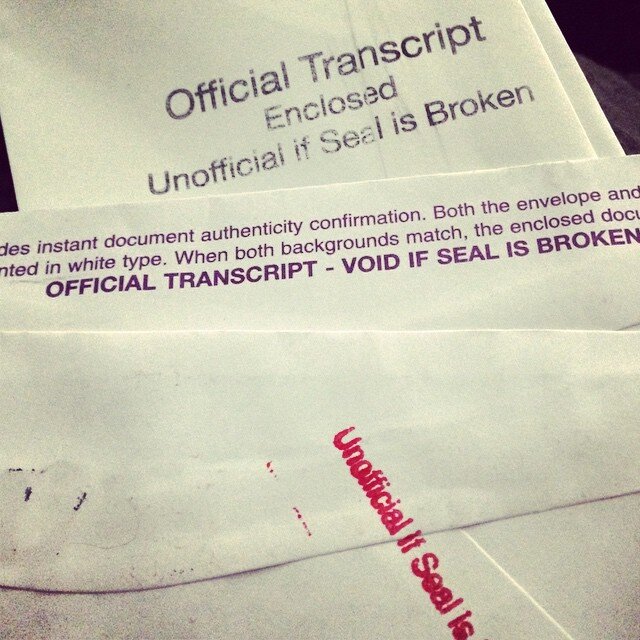
Finally, you need to prove your identity. Institutions are custodians of your personal and academic data, and they take that responsibility seriously. They won't hand over sensitive documents like mark sheets and diplomas without absolute certainty of who you are.
This is why they insist on specific forms of identification, often requiring the original document, not a copy. A student ID card is common, as it directly links you to their records. Government-issued IDs like an in India or a passport are also standard. The name on your ID must be an exact match to the name in their student records. Any discrepancy, even a small spelling difference, can trigger a verification process that adds significant delays.
You must provide original documents.
Understanding these requirements beforehand allows you to assemble a complete package. By anticipating the need for clearances, the correct transfer or migration certificate, and exact ID proof, you can navigate the administrative landscape efficiently.