Mastering Adaptive Immunity
Adaptive Immunity Overview
The Targeted Defense
While the innate immune system provides a rapid, general defense, the adaptive immune system is your body's specialized, highly targeted task force. It learns to recognize specific invaders, called antigens, and mounts a custom attack against them. This system is what gives you long-term immunity to diseases you've already had.
The stars of this show are specialized white blood cells called lymphocytes, specifically T cells and B cells. Each T and B cell is unique, designed from birth to recognize one specific type of antigen and nothing else. They circulate through your body, waiting to encounter their one-and-only match.
Recognizing the Enemy
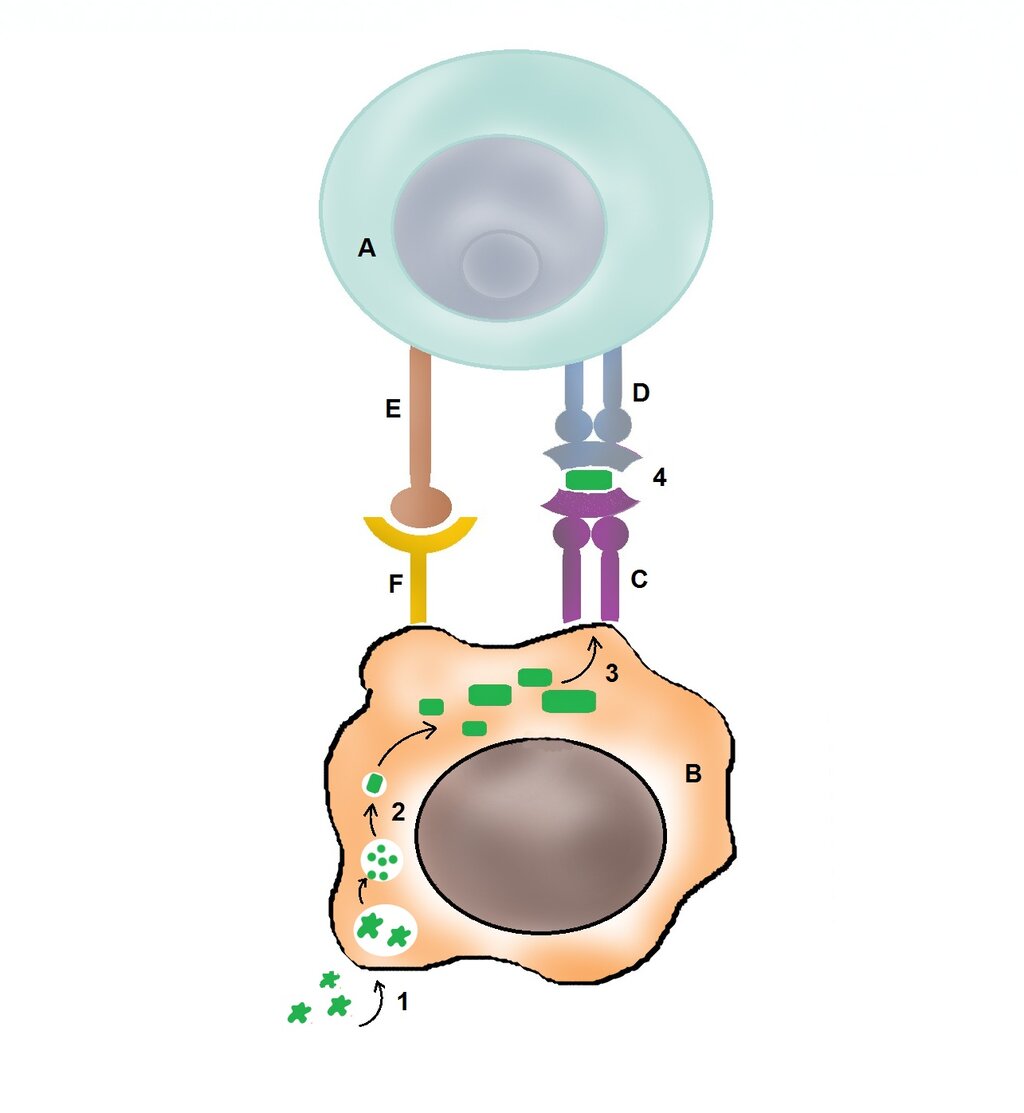
How do these cells know which invader to attack? It starts with recognition. B cells can directly identify antigens on the surface of pathogens. T cells, however, need a little help. They can't see the whole pathogen; they only recognize small fragments of it.
This is where antigen-presenting cells (APCs) come in. APCs, which are often part of the innate immune system, act as scouts. They engulf a pathogen, break it down, and then display the pieces on their surface. They travel to lymph nodes and present these antigen fragments to T cells, essentially saying, "Here's what the enemy looks like. Time to get to work."
Building an Army
Once a T or B cell recognizes its specific antigen, it becomes activated. This triggers a process called clonal selection. The immune system has "selected" the one specific lymphocyte that can fight the current infection.
That selected cell then begins to multiply rapidly in a process called clonal expansion. It makes thousands of identical copies, or clones, of itself. This creates a massive, specialized army perfectly designed to combat that specific pathogen.
This army of clones differentiates into two main types: effector cells that fight the immediate infection, and memory cells that provide long-term protection.
Effector B cells, also called plasma cells, become antibody factories. They pump out huge quantities of antibodies that circulate in the blood and neutralize the pathogen. Effector T cells have different jobs. Some, called helper T cells, coordinate the immune response, while others, called cytotoxic T cells, directly find and kill infected host cells.
Never Forget a Face
After the infection is cleared, most of the effector cells die off. But a small population of memory cells remains. These are long-lived clones of the original activated lymphocyte that patrol your body for years, sometimes even a lifetime.
If the same pathogen ever enters your body again, these memory cells are ready. They recognize it immediately and launch a much faster and stronger secondary immune response. You might not even feel any symptoms because the infection is wiped out before it can take hold. This powerful feature is known as immunological memory.
Immunological memory is a critical aspect of the adaptive immune system.
This ability to "remember" is the principle behind vaccination, which introduces a harmless form of an antigen to your body to create memory cells without causing disease.
Ready to check your understanding of this targeted defense system?
What is the primary characteristic that distinguishes the adaptive immune system from the innate immune system?
Which cell's main function is to engulf a pathogen and display fragments of it to T cells?
The adaptive immune system provides a sophisticated and lasting defense, ensuring that once an enemy is defeated, it won't be forgotten.