Mastering Accelerated Learning
Introduction to Accelerated Learning
What Is Accelerated Learning?
Accelerated learning isn't about cramming information into your brain at high speed. It's about making the learning process more natural, effective, and lasting. Think of it as upgrading your mental operating system to absorb, process, and use new knowledge more efficiently. Instead of forcing information in through rote memorization, this approach aims to work with your brain's natural tendencies.
The goal is to learn smarter, not just faster. It's a method designed to boost long-term retention and genuine understanding, reducing the time it takes to become proficient in a new skill or subject.
Traditional learning often pictures the student as an empty vessel waiting to be filled with facts. Accelerated learning sees the student as an active participant, a creator of their own understanding. It leverages a combination of techniques to engage the whole mind and body.
A Quick Look Back
The roots of accelerated learning stretch back to the 1970s with the work of Bulgarian psychotherapist Georgi Lozanov. He developed a method called "Suggestopedia," which was based on the idea that our capacity to learn is far greater than we typically believe. Lozanov's experiments suggested that we are often held back by our own negative suggestions about learning, like "this is too difficult" or "I'm bad at math."
He proposed that by creating a relaxed, positive, and stimulating environment, we could bypass these mental blocks. His original method involved specific elements like comfortable seating, classical music, and dramatic readings of material. The idea was to engage both the conscious and subconscious mind, making learning feel effortless and natural.
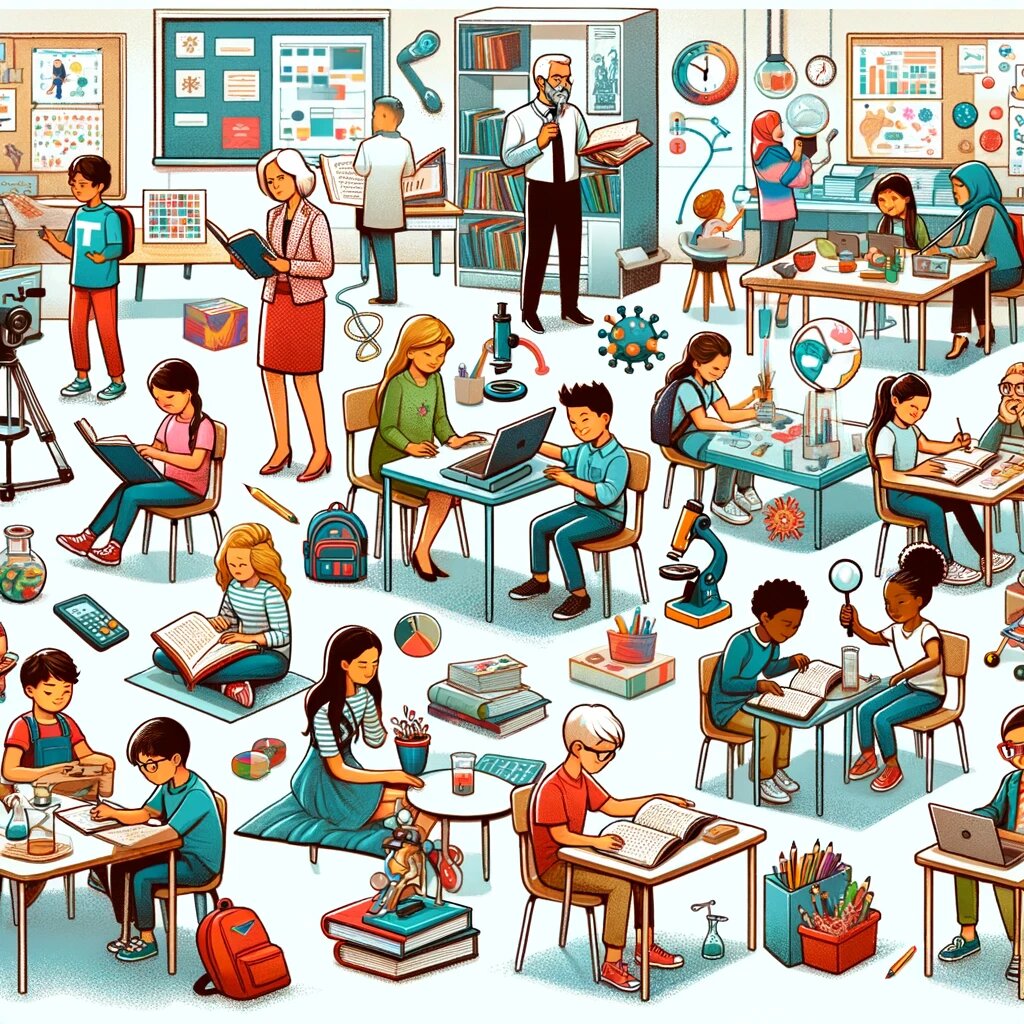
While some of Lozanov's specific techniques might seem unconventional today, his core insight was revolutionary: the learner's state of mind is critical. Over the decades, his ideas have been refined and integrated with findings from neuroscience and cognitive psychology, evolving into the broader field of accelerated learning we know now.
Core Ideas and Contrasts
Accelerated learning is built on several key principles that set it apart from traditional methods. A central tenet is that learning is most effective when it's active, not passive. You engage with the material through doing, creating, and teaching, rather than just listening or reading.
Another principle is the importance of a multi-sensory experience. Instead of relying only on text, this approach uses visuals, sounds, movement, and discussion to create richer, stronger neural connections. The learning environment itself is also considered crucial. It should be a place that fosters comfort, reduces stress, and encourages curiosity and play.
Let's compare this with a more traditional classroom setting:
| Feature | Traditional Learning | Accelerated Learning |
|---|---|---|
| Learner's Role | Passive recipient | Active participant |
| Focus | Memorization of facts | Understanding and application |
| Environment | Often formal and structured | Relaxed and multi-sensory |
| Pace | Standardized for the group | Often self-paced or flexible |
| Materials | Primarily text-based | Uses music, visuals, and collaboration |
| Mindset | Learning can be a chore | Learning is a natural, enjoyable process |
Benefits and Applications
The most obvious benefit of this approach is efficiency. By making learning more effective, you can acquire skills and knowledge in less time. This is invaluable in today's fast-paced world, whether you're a student facing exams or a professional needing to quickly master new technologies.
In professional development, companies use accelerated learning to train employees faster and more effectively, improving skills and boosting productivity. For example, instead of a week-long lecture-based training, a company might use a two-day immersive workshop filled with simulations, group projects, and problem-solving activities.
In education, teachers apply these principles to create more engaging classrooms where students are not just memorizing for a test but are developing a deep, lasting understanding of the subject matter. This leads to better retention and a greater ability to apply knowledge to new situations.
Ultimately, accelerated learning is about unlocking your potential. It reminds us that learning is a holistic human activity, involving our emotions, our senses, and our creativity, not just our intellect.