Mastering Academic Poster Presentations
Understanding Academic Posters
More Than Just a Big Piece of Paper
An academic poster isn't just a research paper printed in a large format. It's a visual medium designed to spark conversation. Think of it as a snapshot of your work, distilled into a clear, engaging summary. At conferences and symposiums, posters serve as focal points where you can share your findings, get valuable feedback, and connect with other researchers in your field.
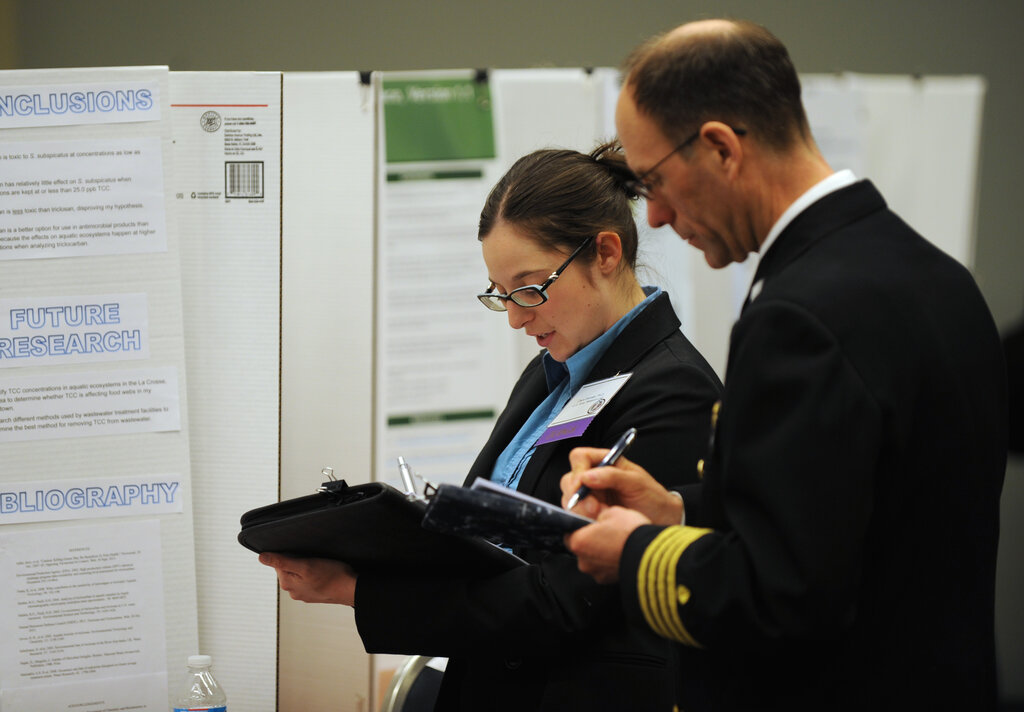
Your poster is an advertisement for your research. It should grab attention and make people want to stop and learn more.
The Anatomy of a Poster
While layouts can vary, most academic posters follow a standard structure that guides the viewer through your research story. The flow is similar to a formal paper, but the content is much more condensed.
Each section serves a specific purpose:
- Title, Authors, and Affiliations: This is your headline. It should be large, catchy, and clearly state who did the work and where.
- Introduction: Briefly set the stage. What problem did you investigate, and why is it important?
- Methods: Explain how you conducted your research. Keep it concise; focus on the approach, not every minor detail.
- Results: This is the heart of your poster. Use graphs, charts, and images to show what you discovered. The visuals should do most of the talking.
- Conclusion: Summarize your key findings and their implications. What’s the main takeaway message?
- References & Acknowledgements: Give credit where it's due, and provide contact information for follow-up questions.
Clarity is King
A conference hall is a busy place. People often scan dozens of posters in a short amount of time. If your poster is a wall of dense text, they will likely walk right by. The goal is to make your main points digestible in just a minute or two.
Use short sentences, bullet points, and plenty of white space. Every element, from text to charts, should be clear and serve a purpose. Avoid clutter. Your poster should be a guide, not a transcript. It provides the key points, and you provide the details in your verbal explanation.
Know Your Audience
Who are you trying to reach? A poster for a highly specialized conference will be different from one presented to a general audience. Before you start designing, think about your viewers' background knowledge.
If you're presenting to experts in your specific field, you can use more technical jargon and assume a certain level of understanding. For a broader audience, you'll need to define key terms, simplify complex ideas, and focus on the bigger picture and its wider implications. Tailoring your language and the depth of your content is critical for making a real impact.
Ready to check your understanding? Let's review the key ideas.
What is the primary purpose of an academic poster at a conference?
Which section of an academic poster should most heavily feature visuals like charts and graphs to display findings?
By focusing on a clear structure, concise language, and your specific audience, you can create a poster that effectively communicates your research and starts meaningful conversations.