Mastering Academic Poster Presentations
Understanding Academic Posters
The Research Trailer
Imagine trying to explain a year's worth of research in just a few minutes. That's the challenge for academics, and one of their best tools is the academic poster. Think of it as a movie trailer for a research project. It's a visual summary that presents the most important findings on a single, large sheet of paper or fabric.
The goal isn't to cram every detail of a research paper onto the poster. Instead, it's designed to give a clear, high-level overview. It should grab people's attention, communicate the core ideas of the study, and make them want to learn more by talking to the researcher standing nearby.
An academic poster boils down a complex project into its essential parts: the question, the method, the key results, and the main conclusion.
Why Not Just Give a Talk?
Oral presentations have their place, but posters offer unique advantages. The biggest one is interaction. During a poster session at a conference, researchers stand by their work. This allows for genuine, one-on-one conversations with anyone who stops by. People can ask detailed questions about the parts that interest them most, and researchers get immediate, valuable feedback.
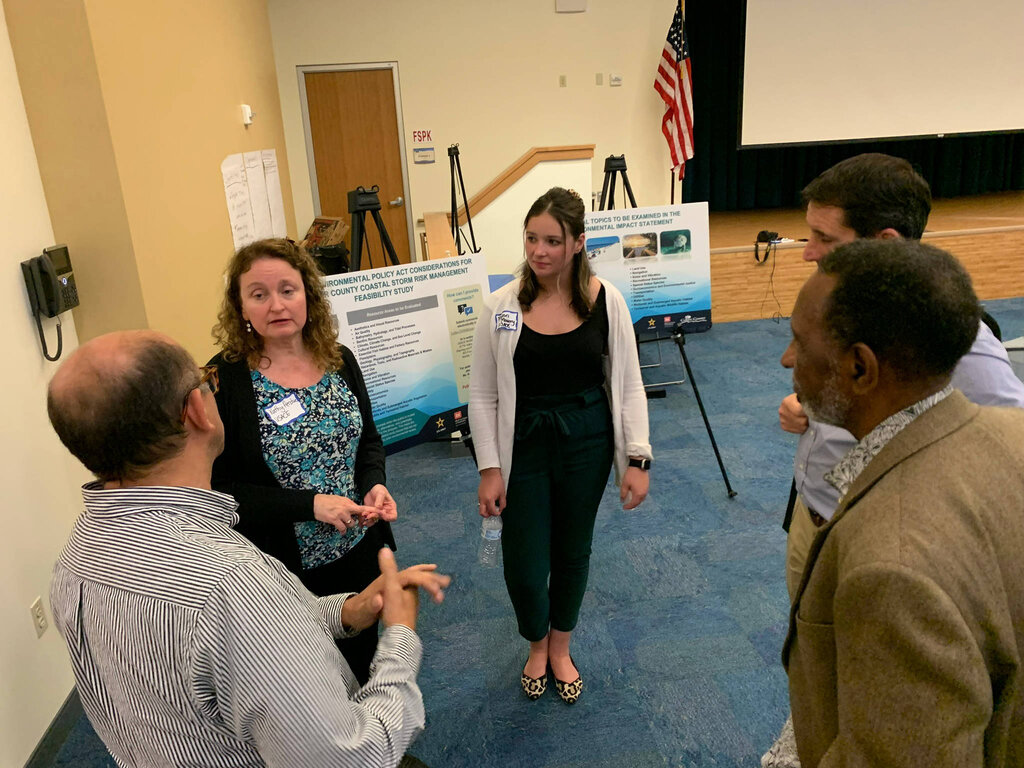
Unlike a 15-minute talk that happens once, a poster is often on display for hours. This gives more people a chance to see the research at their own pace, without being rushed. A well-designed poster can also make complex information easier to digest. Through graphics, charts, and a clear layout, it presents data in a format that's often quicker to understand than a dense block of text or a series of fast-moving slides.
Where You'll Find Posters
The most common home for academic posters is the conference. Major academic gatherings often dedicate large halls and specific time slots to poster sessions, where hundreds of researchers can share their work simultaneously. They are a staple across nearly every field, from astronomy and medicine to history and sociology.
You'll also find them in university settings. Departments often host poster sessions for students to present their thesis work, and campus-wide research fairs give undergraduates a chance to showcase their projects. They are a fundamental part of how new knowledge is shared and discussed within the academic world.
Scientific posters play a vital role in academic communication by presenting ideas through visual summaries.
What Makes a Poster Effective?
A great poster strikes a balance between information and design. While we won't dive into specific design rules here, the core principles are clarity, conciseness, and visual appeal.
First, the main message should be obvious at a glance. A person walking by should be able to understand the research topic and key takeaway in under a minute. This is achieved through a clear title, logical flow, and limited text. Using bullet points instead of long paragraphs is key.
Second, visual elements are crucial. Charts, graphs, and high-quality images can convey information much more efficiently than words alone. They break up the text and draw the reader's eye to the most important findings. The overall look should be clean and professional, not cluttered or chaotic.
A well-designed poster should be able to stand alone, conveying the key points of your research even when you're not present to explain it.
Essentially, an effective poster tells a compelling story about the research, making it accessible and engaging for a broad audience.
What is the primary goal of an academic poster?
According to the principles of effective poster design, a person walking by should be able to understand the research topic and its key takeaway in about ______.
You've now learned the basics of academic posters and their role in sharing knowledge.