Mastering Academic Excellence
Cognitive Encoding Mastery
From Reading to Knowing
Top academic performance isn't about how many hours you read; it's about how deeply you encode information. Passive reading, where you simply let your eyes scan the page, creates a fragile, short-term understanding. To achieve mastery, you need to actively engage with the material, transforming it from something you've seen into something you truly know. This process is called cognitive encoding.
The first tool in our arsenal is the , a powerful mental model for deconstructing complex topics. It’s a four-step process that forces you to move beyond jargon and confront the core of an idea.
Let's apply this. Imagine you're trying to learn a mathematical concept like Euler's Identity, often written as . Instead of just memorising it, you would explain it as if to a high school student. You'd start by defining each component: (the base of natural logarithms), (the imaginary unit ), and (the ratio of a circle's circumference to its diameter). You would then try to explain how these seemingly unrelated constants connect. You'd likely get stuck explaining how exponentiating with an imaginary number works. That's your knowledge gap. You would then go back to your textbook, figure out the connection via Euler's formula (), and refine your explanation until it's simple and clear.
Strengthen Your Neural Pathways
The Feynman Technique helps you identify weak spots in your understanding. To solidify that understanding, you need —the process of deliberately retrieving information from your brain. Every time you pull a memory out, you strengthen the neural connections associated with it, making it easier to recall next time. This is the opposite of passively reviewing your notes.
High-leverage Active Recall methods go beyond simple question-and-answer flashcards. Instead of a card that asks, "What is photosynthesis?", create one that demands synthesis:
Front: "Explain the entire process of photosynthesis, from inputs to outputs, as a story of energy conversion."
This forces you to construct a narrative, connecting concepts like chloroplasts, light-dependent reactions, and the Calvin cycle into a coherent whole. Another powerful technique is pre-testing. Before you even start reading a chapter, try to answer the questions at the end. You will likely fail, but this failure primes your brain. It creates a mental framework and highlights what you need to look for, turning your reading session into an active search for answers.
The goal isn't just to remember facts, but to build a mental web where every concept is linked to another.
Explain to Understand
The final piece of the puzzle is self-explanation. This is the core engine of the Feynman Technique and a powerful form of active recall. As you explain a concept out loud, you are forced to confront your own understanding. You'll notice where you hesitate, use vague language, or skip over a logical step. These are your —the murky areas where true comprehension has failed.
For example, try explaining a complex biological process like cellular respiration. You might say, "First there's glycolysis, then the Krebs cycle, and finally the electron transport chain, and that makes ATP." A simple self-explanation probe would be to ask yourself "Why?" Why does glycolysis come first? Why is it anaerobic? How does the output of the Krebs cycle feed into the next stage? Each question forces you to retrieve deeper, more connected information, moving you from a shallow list of steps to a deep, causal understanding. This is how you achieve 100% retention.
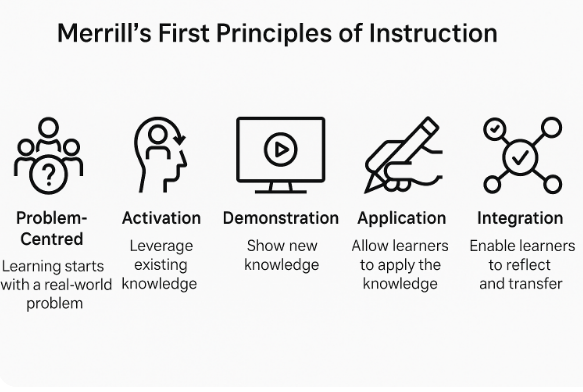
Integrating these techniques creates a cycle of deep learning. You use the Feynman Technique to simplify and find gaps, and then use active recall methods like flashcard synthesis and self-explanation to fill those gaps and strengthen your memory. This transforms studying from a passive chore into an active, engaging process of knowledge construction.
Now, let's test your understanding of these encoding strategies.
What is the primary difference between passive reading and active engagement with study material, according to the text?
When using the Feynman Technique to learn a complex topic like India's GST structure, what is the main purpose of trying to explain it to a beginner?
By consistently applying these methods, you shift your focus from simply covering the syllabus to truly mastering it.