Mastering 5th Grade Fractions
Understanding Fractions
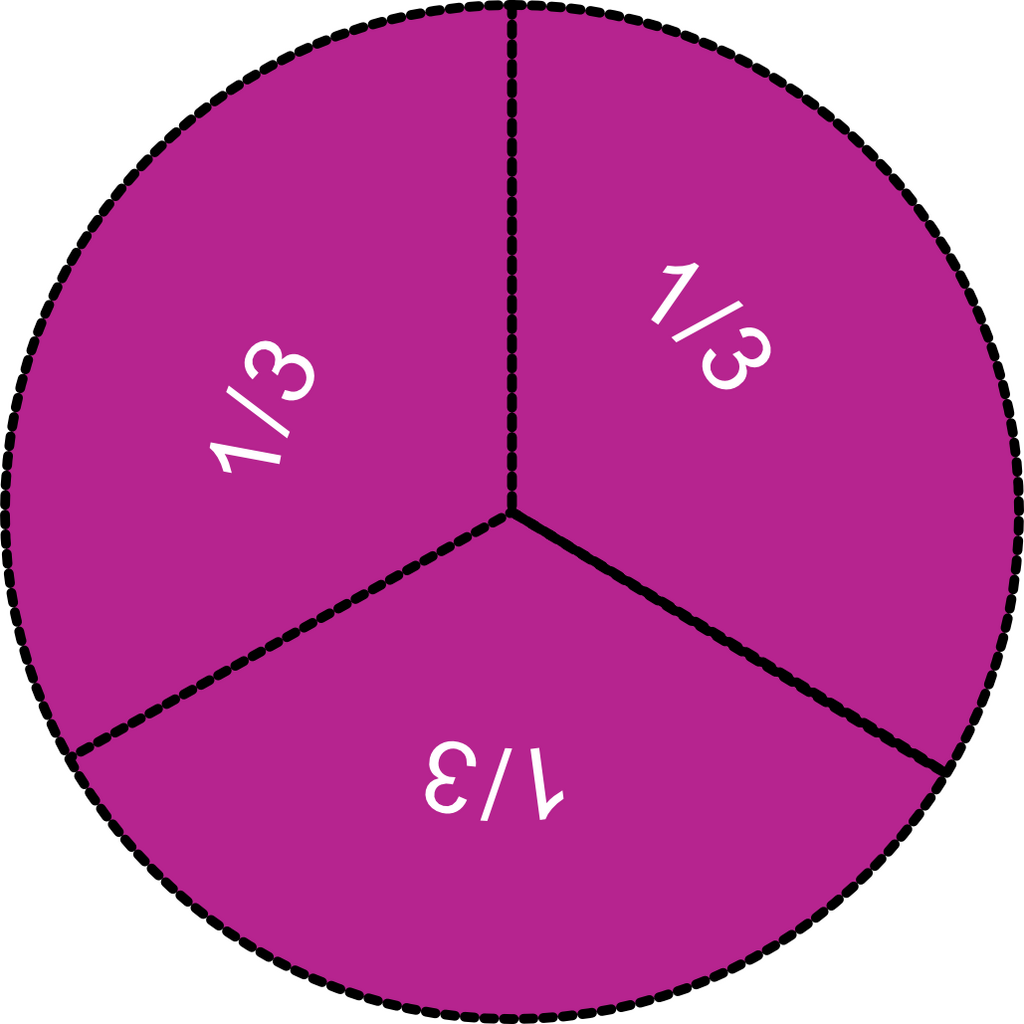
Parts of a Whole
At its core, a fraction is just a way to talk about parts of something. If you have a whole pizza and you cut it into equal slices, each slice is a fraction of the whole pizza. This concept is fundamental, but students often get stuck thinking that fractions aren't “real” numbers like 1, 2, or 3. It's crucial to establish that fractions are numbers, too. They simply represent quantities that are less than one whole, or that fall in between whole numbers.
Fractions are a way to represent parts of a whole.
Every fraction has two key parts: a top number and a bottom number, separated by a line.
The bottom number is the denominator. It tells you how many equal pieces the whole has been divided into. Think of it as the name of the fraction. If the denominator is 4, we're talking about “fourths.” If it's 8, we're talking about “eighths.”
The top number is the numerator. It tells you how many of those equal pieces you actually have. So, in the fraction , we have 3 pieces, and each piece is a fourth of the whole.
Unit Fractions
A unit fraction is the simplest type of fraction. It's a fraction where the numerator is always 1. Examples include , , and . Each one represents exactly one piece of the whole.
Unit fractions are the basic building blocks of all other fractions. For instance, is just three s put together.
Understanding unit fractions helps students see the relationship between different fractions. A student who gets that is larger than has a much stronger grasp of the concept than one who just memorizes rules. They can visualize that cutting a whole into 4 pieces results in bigger slices than cutting it into 8 pieces.
Fractions on a Number Line
While shapes and objects are great for introducing fractions, number lines are essential for showing that fractions are, in fact, numbers. They have a specific value and a specific place between whole numbers.
To place a fraction on a number line, you first look at the denominator. This tells you how many equal parts to divide each whole number segment into. For , you divide the segment between 0 and 1 into four equal parts. Then, you use the numerator to count your way from zero. You would count three of those parts to find the location of .
Model how to count the intervals between 0 and 1, and teach students to associate that number with the denominator.
Using number lines reinforces that is the same as 1, and it lays the groundwork for more complex ideas, like comparing fractions and understanding improper fractions later on.
What does the fraction represent?
In the fraction , the number 10 is the ______.
A solid grasp of these basics—what a fraction is, its parts, and how it fits on a number line—is the most important foundation you can build for students.