Mastering 5s in Six Sigma
Introduction to 5S Methodology
Organizing for Efficiency
Imagine a kitchen where every tool has its place, ingredients are easy to find, and the counters are always clean. Cooking becomes faster, easier, and more enjoyable. The 5S methodology applies this same logic to the workplace. It's a systematic way to organize a space for maximum efficiency and safety.
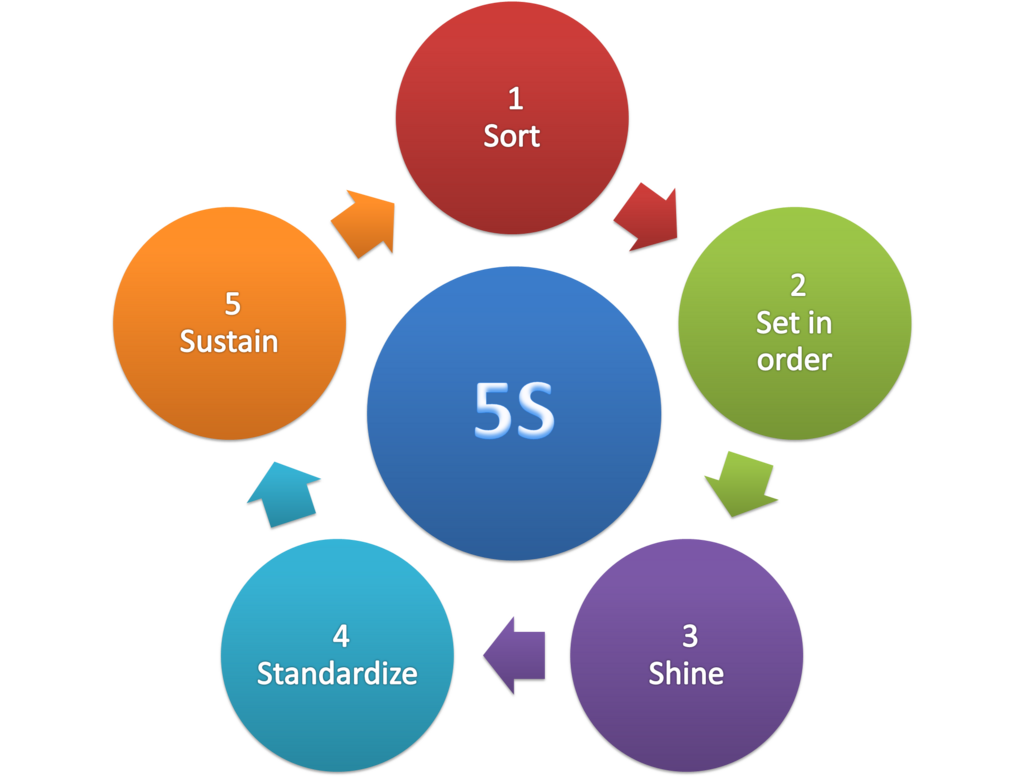
5S is a five-step methodology that creates a more organized and productive workspace.
While it might seem like simple housekeeping, 5S is a foundational principle of Lean manufacturing and a key component of broader process improvement strategies like Six Sigma. Its goal is to eliminate waste, improve workflow, and create a culture of continuous improvement by establishing a clear, standardized, and self-sustaining system for workplace organization.
The Five Pillars
The name "5S" comes from five Japanese words that describe the steps in the process. Each step builds on the last, creating a solid framework for a well-run environment.
The term ‘5S’ originates from five Japanese words, each beginning with the letter ‘S’: Seiri, Seiton, Seiso, Seiketsu, and Shitsuke.
Developed in post-war Japan, these principles were instrumental in the success of manufacturers like Toyota. They form the basis of the Toyota Production System, a model for efficiency that has been adopted worldwide. In English, the five pillars are commonly translated as:
| Japanese Term | English Translation | Core Idea |
|---|---|---|
| Seiri (整理) | Sort | Remove what is not needed. |
| Seiton (整頓) | Set in Order | Organize what remains. |
| Seiso (清掃) | Shine | Clean the workspace. |
| Seiketsu (清潔) | Standardize | Create rules for the first three S's. |
| Shitsuke (躾) | Sustain | Make 5S a long-term habit. |
Together, these five steps create a continuous cycle of improvement, not just a one-time cleanup.
5S and Six Sigma
While 5S can be a standalone program, it's often used as part of a larger Six Sigma initiative. Six Sigma is a data-driven methodology focused on eliminating defects and reducing process variation. For Six Sigma to be effective, the work environment must be stable and predictable. That's where 5S comes in.
By creating an organized and standardized workspace, 5S reduces inconsistencies and distractions. This allows teams to more easily spot problems and measure the impact of improvements made through Six Sigma projects.
Think of 5S as preparing the ground before planting a garden. A well-prepared, organized plot makes it much easier to cultivate healthy plants and spot weeds. Similarly, an organized workplace makes it easier to implement and sustain the complex process improvements of Six Sigma.
Six Sigma is a systematic approach to eliminating errors that harmonizes with 5S and 5S principles.
Why Bother with 5S?
Implementing 5S brings a host of benefits beyond just a tidy workspace. When everything has a designated place, employees spend less time searching for tools or information, which directly boosts productivity. An organized environment is also a safer one, as it reduces the risk of trips, falls, and other accidents caused by clutter.
Furthermore, the visual nature of 5S makes it easier to spot abnormalities, such as missing equipment or potential maintenance issues, before they become major problems. This discipline builds a strong foundation for a company culture that values efficiency, quality, and continuous improvement.
What is the primary goal of the 5S methodology?
The 5S methodology originated as a key part of which company's production system?