Mastering 2-Stage Ultra Low Temp Screw Compressors
Refrigeration Cycle Basics
Moving Heat Uphill
Heat naturally flows from hot places to cold places. A hot cup of coffee cools down because its heat moves into the cooler air around it. Refrigeration does the opposite. It takes heat from a cold space, like the inside of your fridge, and moves it to a warmer space, like your kitchen.
This process isn't natural, so it requires energy. Think of it like carrying water up a hill. Water flows downhill on its own, but to get it to the top, you have to put in work. Similarly, a refrigeration system does work to move heat against its natural direction of flow.
Refrigeration is a process in which work is done to move heat from one location to another.
The Four Key Players
The magic of refrigeration happens in a closed loop, where a special fluid called a refrigerant continuously circulates. This journey has four main stops, each managed by a key component:
- Evaporator: Absorbs heat.
- Compressor: Adds energy.
- Condenser: Releases heat.
- Expansion Valve: Reduces pressure.
Let's walk through the cycle, step by step.
The Cycle in Action
Refrigerant
noun
A substance used in a heat cycle that undergoes a phase transition from a fluid to a gas and back again.
Step 1: Evaporation
The cycle begins inside the space you want to cool. A low-pressure, cold liquid refrigerant flows into the evaporator coils. The air inside the refrigerator is warmer than this refrigerant. This heat flows from the air into the refrigerant, causing the refrigerant to boil and turn into a gas, just like water turning to steam. In the process, it absorbs a lot of heat from its surroundings, making the inside of the refrigerator cold.
Step 2: Compression
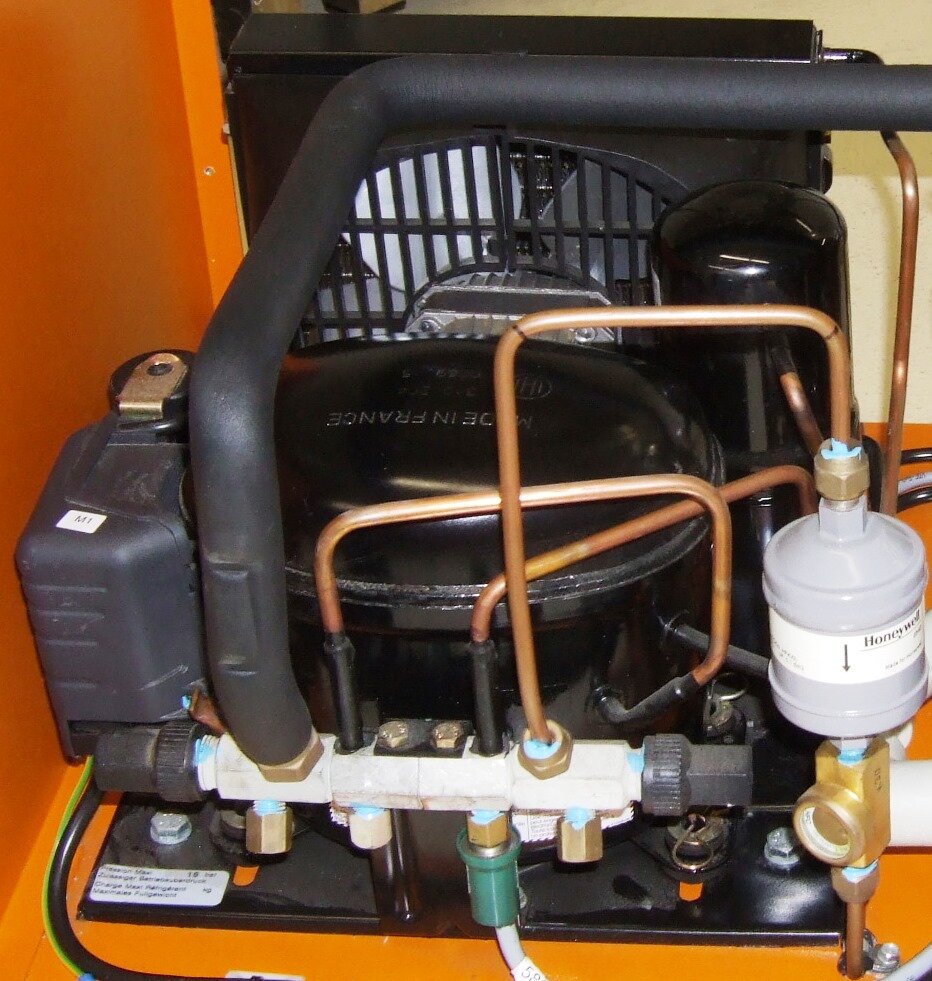
The refrigerant, now a low-pressure gas, travels to the compressor. This is the heart of the system and where the work is done. The compressor squeezes this gas, increasing its pressure and temperature significantly. It leaves the compressor as a hot, high-pressure gas.
Step 3: Condensation
The hot, high-pressure gas then moves to the condenser, which is usually located on the back or bottom of a refrigerator. Here, the gas is much hotter than the surrounding air in your kitchen. Heat flows from the hot refrigerant gas into the cooler room air. As the refrigerant loses heat, it condenses back into a high-pressure liquid.
Step 4: Expansion
This high-pressure liquid then flows through the expansion valve. This valve has a very narrow opening, which causes a sudden drop in the refrigerant's pressure. This pressure drop makes the liquid expand and cool down rapidly, turning it into the cold, low-pressure liquid that flows back to the evaporator to start the cycle all over again.
This cycle of evaporation, compression, condensation, and expansion repeats continuously to keep the refrigerated space cool.
What is the primary function of the compressor in a refrigeration cycle?
In which component does the refrigerant change from a gas back into a liquid?
That's the basic principle behind how your air conditioner, refrigerator, and freezer all work to move heat from where it's not wanted to where it can be released.