Master Your Schedule With Time Blocking
Understanding Time Blocking
What Is Time Blocking?
Most of us use to-do lists to keep track of our tasks. They're great for seeing what needs to get done, but they have a major flaw: they don't tell you when you'll do anything. That's where time blocking comes in.
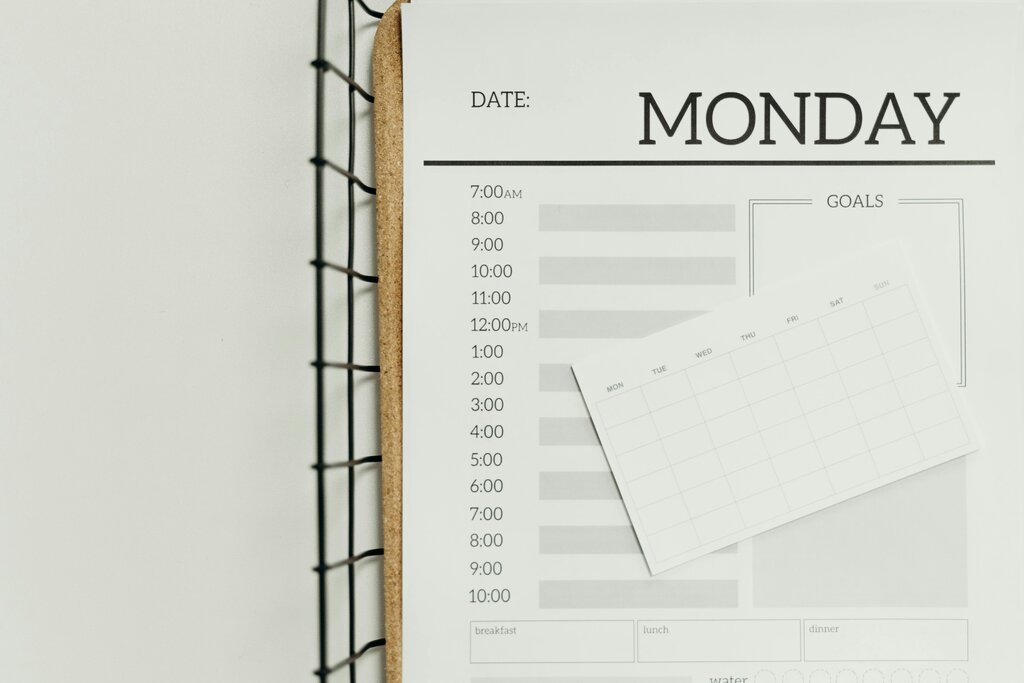
Time blocking is a time management method where you treat your calendar like a blueprint for your day. Instead of just listing your tasks, you schedule them directly into specific time slots, or "blocks." A block might be for a big project, a batch of small errands, or even a much-needed break.
A standard to-do list tells you what you need to do. Time blocking tells you when you're going to do it.
This simple shift from a list of tasks to a schedule of intentions gives you a realistic plan. You're not just hoping to get things done; you're making a concrete appointment with yourself to do them. It transforms your day from a series of reactions to a sequence of planned actions.
The Payoff
The main benefit of time blocking is enhanced focus. When you know you have a dedicated block of time for a single task or a group of related tasks, it's easier to resist the urge to multitask. Constantly switching between tasks—answering an email, then working on a report, then checking a message—is mentally draining. It creates what's called "attention residue," where thoughts about the last task linger and interfere with the new one. By dedicating a block to one thing, you give your brain the space to fully engage.
This leads to greater productivity. With a clear plan, you spend less time deciding what to do next and more time actually doing it. Time blocking also forces you to be realistic about how long tasks take. When you have to fit everything into the hours you have, you get better at estimating and prioritizing what truly matters.
Time blocking helps you take control.
Finally, it helps create a healthier work-life balance. You can block time not just for work, but for exercise, hobbies, family time, and rest. These activities become protected appointments in your schedule, ensuring they don't get pushed aside by an ever-expanding to-do list.
Time Blocking and Its Cousins
Time blocking is often mentioned alongside other productivity techniques like timeboxing and the Pomodoro Technique. They're related, but not the same. Understanding the differences can help you figure out what works best for you.
Timeboxing
noun
The practice of setting a fixed maximum amount of time for an activity in advance, and then completing the activity within that time frame.
Timeboxing is about setting a limit. You might say, "I'm going to spend no more than 60 minutes on my email inbox." It's a great way to prevent tasks from expanding to fill all available time and to combat perfectionism.
Pomodoro Technique
noun
A time management method that uses a timer to break work into intervals, traditionally 25 minutes in length, separated by short breaks.
This technique is all about managing your energy and focus. It's a cycle of intense work followed by a short rest, which helps maintain high concentration over longer periods.
| Technique | Main Goal | How It Works |
|---|---|---|
| Time Blocking | Schedule your tasks | Assign specific tasks to specific time slots in your calendar. |
| Timeboxing | Limit your time | Set a fixed, maximum duration for a task. |
| Pomodoro Technique | Manage your focus | Work in short, focused intervals (e.g., 25 mins) with breaks. |
You can even combine these methods. For example, you could time block a two-hour period for "Report Writing." Within that block, you could use timeboxing by setting a 30-minute limit for the research phase. And for the writing itself, you could use the Pomodoro Technique, working in 25-minute sprints.
What is the primary flaw of a traditional to-do list that time blocking aims to solve?
The mental drain caused by switching between different tasks, where thoughts of the previous task linger and interfere with the new one, is called:
By understanding the core idea of giving every minute a job, you've taken the first step toward a more intentional and productive day.