Master Your Schedule with Time Blocking
Understanding Time Blocking
Giving Every Minute a Job
A to-do list can feel like a promise you can't keep. You write down everything you need to accomplish, but the day pulls you in a dozen different directions. Emails pop up, notifications buzz, and small interruptions steal your focus. By the end of the day, you've been busy, but the most important tasks on your list are still unchecked.
The problem isn't the list itself; it's the lack of a plan for when to do the things on it. This is where time blocking comes in. Instead of a simple list of what you need to do, you create a schedule for when you'll do it.
Time blocking is the practice of assigning a specific task or activity to a dedicated block of time in your calendar. It turns your to-do list into a concrete schedule.
Think of it as creating a budget for your time. You have 24 hours in a day, and you decide in advance how you'll spend them. A 90-minute block is for writing that report. The 30 minutes before lunch are for answering emails. An hour in the evening is for exercise. Every minute has a purpose, which prevents your time from being claimed by distractions.
The Power of Single-Tasking
Our brains aren't built for multitasking. When we try to write an email while listening to a meeting and keeping an eye on messages, we aren't actually doing three things at once. We're rapidly switching our attention between them. Each switch has a mental cost, draining our energy and making it harder to do deep, focused work.
Time blocking is the antidote to this constant context switching. By dedicating a specific block of time to a single task, you give yourself permission to ignore everything else. For that one hour, your only job is to work on the project in front of you. This focus leads to higher quality work, completed in less time.
By encouraging your team to assign clear windows for each task, you help them reclaim control of their day, reduce the mental fatigue of constant context-switching, and make room for deep, focused work.
This approach also reduces decision fatigue. You don't waste mental energy throughout the day wondering what to work on next. The plan is already set. You just have to follow it. This frees up your brainpower for the actual task at hand.
Time Blocking in Action
The principles of time blocking can be applied to any part of your life. It's a flexible framework, not a rigid set of rules.
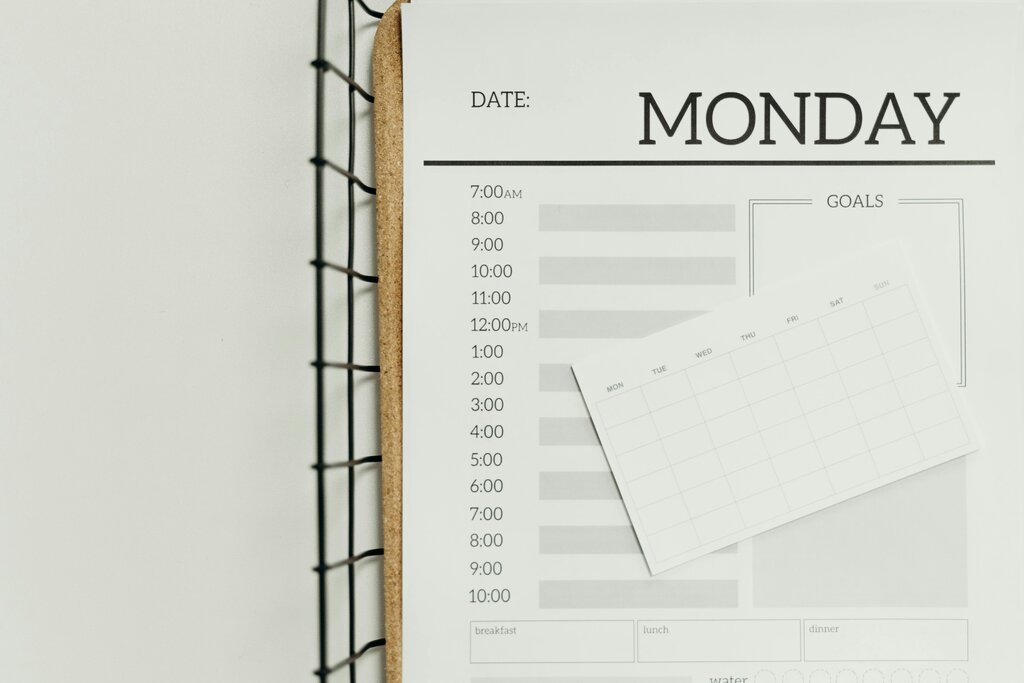
For a student, a time-blocked schedule might look like this:
- 9:00 AM - 10:30 AM: Chemistry problem set (deep work)
- 10:30 AM - 11:00 AM: Review lecture notes
- 11:00 AM - 12:00 PM: History class
- 12:00 PM - 1:00 PM: Lunch and break
Notice that breaks are scheduled, too. Time blocking isn't just about work; it's about intentionally planning for rest, meals, and social time to ensure a healthy balance.
In a professional setting, an office worker might block their time to manage different types of responsibilities:
- 9:00 AM - 9:30 AM: Plan day & check urgent emails
- 9:30 AM - 11:00 AM: Work on Project Alpha (focused work)
- 11:00 AM - 12:00 PM: Team meeting
- 1:00 PM - 2:30 PM: Write monthly report (focused work)
This protects their most productive hours for important projects, preventing the day from being consumed by meetings and emails.
Even personal time benefits from this structure. You could block out an hour on Saturday morning for grocery shopping, 30 minutes in the evening for reading, or two hours on Sunday for a hobby. This ensures you make time for the things that matter to you outside of your academic or professional obligations.
Ready to see how well you've grasped these concepts? Take a short quiz to test your knowledge.
What is the primary problem with a traditional to-do list that time blocking aims to solve?
The main benefit of dedicating a specific block of time to a single task is that it reduces __________.
By planning your day in advance, you take control of your time instead of letting your time control you. It's a simple shift from being reactive to being proactive, and it can make all the difference in reaching your goals.