Master Your Schedule with Time Blocking
Understanding Time Blocking
Giving Every Hour a Job
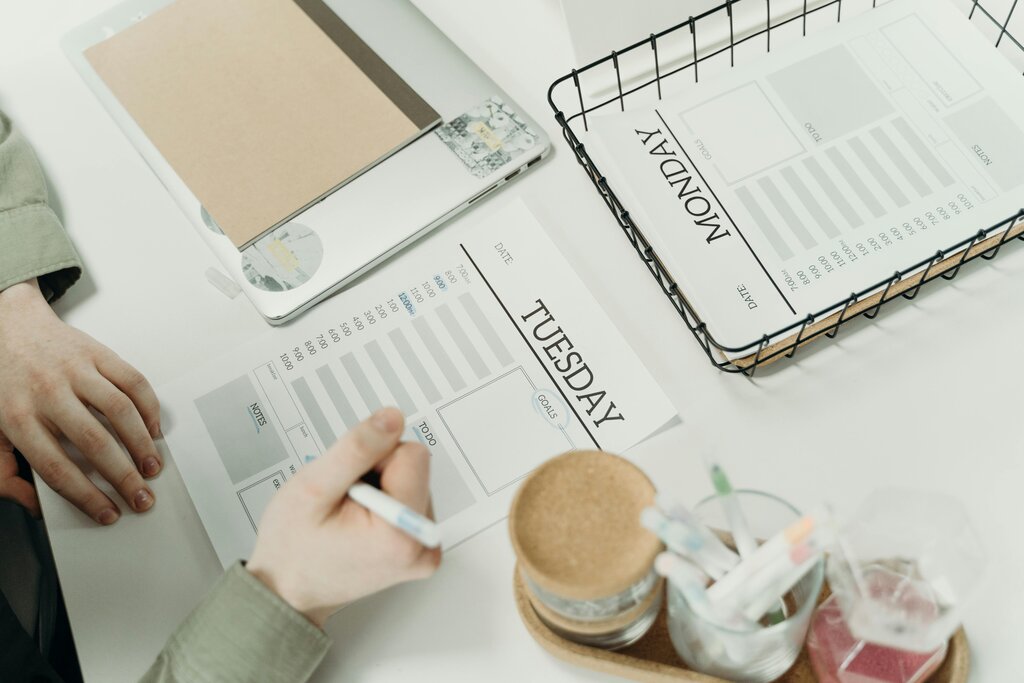
A to-do list tells you what you need to accomplish, but it doesn't tell you when. That's where time blocking comes in. Instead of a simple list of tasks you hope to get to, you divide your day into specific chunks of time and assign a single task or activity to each block.
Time blocking is a time management method where you divide your day into blocks of time, each dedicated to a specific task or group of tasks.
This simple shift forces you to be realistic about how much you can actually achieve in a day. It turns vague intentions into a concrete plan. You're not just planning your work; you're planning your life, including study sessions, meals, exercise, and social time.
Focus and Balance
One of the biggest benefits of time blocking is improved focus. When you know that 9 AM to 11 AM is dedicated solely to studying for your history exam, you're less likely to get distracted by emails or social media. You’ve given that block of time a single purpose. This practice of "single-tasking" is far more effective than trying to multitask, which often just means switching between several tasks poorly.
Time blocking also helps create a more balanced life. It’s easy for school or work to bleed into every waking hour. By intentionally scheduling blocks for personal activities—like a workout, a coffee with a friend, or just an hour to read for fun—you protect that time. It ensures that the important, non-urgent parts of your life don't get pushed aside by whatever feels most pressing.
A Simple Example
So, what does this look like in practice? It doesn't need to be complicated. You can use a simple planner or a digital calendar. The key is to account for your entire day, not just your work. Here’s a snapshot of what a student's afternoon might look like:
| Time | Task |
|---|---|
| 1:00–2:30 PM | Biology Lecture & Review Notes |
| 2:30–3:00 PM | Break: Walk, Snack, Check Phone |
| 3:00–4:30 PM | Work on English Paper (Research) |
| 4:30–5:30 PM | Go to the Gym |
| 5:30–6:30 PM | Dinner with Friends |
Notice how breaks and social time are scheduled just like academic tasks. This schedule is a plan, not a prison. If something unexpected comes up, you can adjust your blocks. The goal is to be intentional with your time, not rigid.
What is the primary difference between a to-do list and a time-blocked schedule?
Time blocking helps improve focus by encouraging ________, the practice of concentrating on one task at a time.