Master Your Schedule with Time Blocking
Understanding Time Blocking
What Is Time Blocking?
If you've ever felt overwhelmed by a long to-do list, you're not alone. It's easy to know what you need to do, but deciding when to do it can be paralyzing. Time blocking offers a simple solution: instead of just listing your tasks, you schedule them directly into your calendar.
Time blocking is a time management method where you divide your day into blocks of time, each dedicated to a specific task or group of tasks.
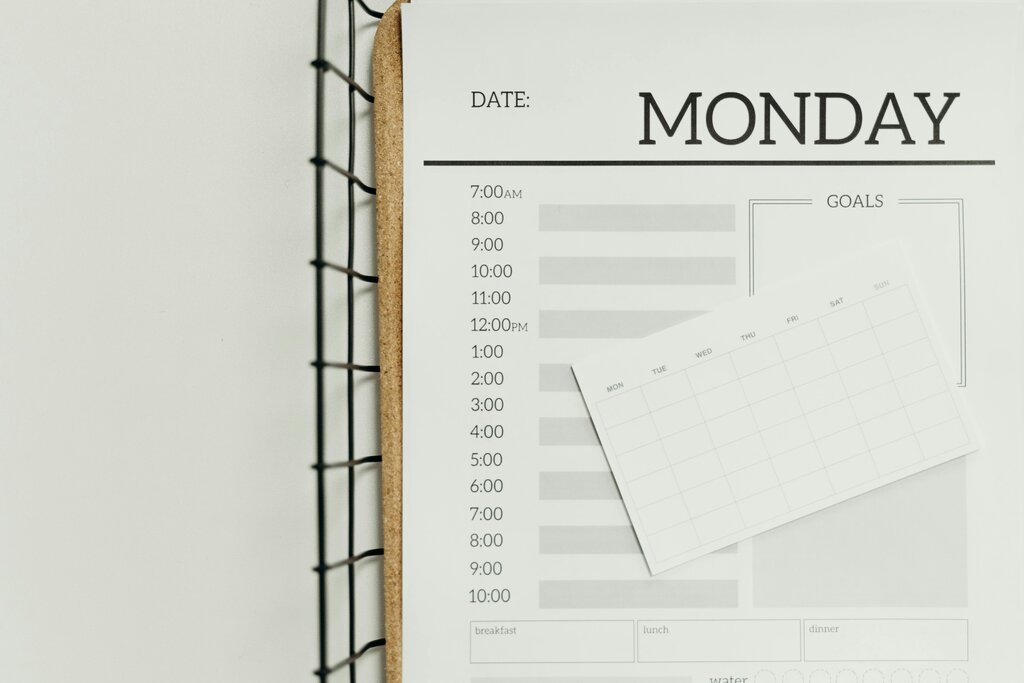
Think of your day as a series of appointments. You have an appointment to answer emails, an appointment to work on a project, and even an appointment for lunch or a break. By giving every task a specific home on your schedule, you create a clear plan for your day.
A standard to-do list tells you what you need to do. Time blocking tells you when you're going to do it.
Why It Works
Adopting this method has several key benefits. First, it promotes deep work. When you set aside a specific block for a single task, you're giving yourself permission to focus completely without multitasking. This dedicated attention leads to higher quality work in less time.
Time blocking also helps fight procrastination. When you have a vague goal like "work on report," it's easy to put it off. But when your calendar says "Draft report introduction from 10:00 AM to 11:30 AM," the task becomes concrete and much easier to start.
Finally, it helps you reclaim your time. It’s easy for a day to get filled with other people's priorities. By proactively blocking time for your own goals, including rest and personal activities, you ensure that your priorities get the attention they deserve.
By consciously choosing and combining these time management strategies, students move from a reactive state of fighting fires to a proactive position of control.
Common Time Blocking Methods
Time blocking isn't a one-size-fits-all system. You can adapt it to your needs using several popular techniques. Here are three common approaches:
Task Batching
noun
Grouping similar small tasks together and completing them in a single time block.
This method reduces "context switching," the mental effort it takes to jump between different types of work. Instead of constantly changing gears, you stay in one mode, like "communication" or "errands," which makes you more efficient.
To avoid this, group similar tasks, such as replying to emails or making telephone calls, into one block of time.
Day Theming
This is where you dedicate an entire day to a specific area of focus. For example, Monday could be for meetings and planning, Tuesday for focused project work, Wednesday for marketing and outreach, and so on. This approach is great for people whose jobs involve several distinct roles or major projects.

Time Boxing
With time boxing, you set a fixed time limit for a task and stick to it. Instead of working on something until it's "done," you give it a specific container of time, say, 90 minutes. When the time is up, you stop and move on.
This technique is useful for perfectionists or for large, intimidating projects. It forces you to focus on making progress within the allotted time, rather than getting stuck on minor details.
Now let's check your understanding of these core concepts.
What is the core principle of time blocking?
A freelancer dedicates Mondays to client meetings and proposals, Tuesdays and Wednesdays to deep project work, and Thursdays to marketing. Which time blocking technique are they using?