Master Your Report Comprehension
Understanding Self-Assessment
What is Self-Assessment?
Self-assessment is the process of looking inward to evaluate your own understanding, skills, and performance. It's like holding up a mirror to your own learning. Instead of waiting for a teacher or a manager to tell you how you're doing, you take the lead in figuring it out for yourself.
The goal isn't to be critical, but to be honest. It's about gaining a clear, accurate picture of where you are right now.
This practice helps you take ownership of your growth. It shifts the focus from external judgment to internal awareness, which is a crucial skill in any field.
Self-assessment is the process of learning about yourself through defining your interests, values, skills and abilities.
Why Does It Matter?
Honest self-assessment is a catalyst for growth. The most immediate benefit is identifying your strengths and weaknesses. Think about learning to play the guitar. You might realize you're great at memorizing chords (a strength) but your timing is consistently off (a weakness). Without that self-awareness, you'd keep practicing chords and never fix the rhythm problem. Self-assessment gives you a roadmap, showing you exactly what to work on next.
This process naturally fosters self-directed learning. When you know your gaps, you can seek out the resources you need to fill them. You become an active participant in your education or career development, rather than a passive passenger. This is essential for professional growth, where you're often expected to manage your own improvement.
Tools of the Trade
Self-assessment isn't just guesswork. It relies on structured tools to guide your reflection. There are several common types, each suited for different purposes.
| Tool Type | Description | Best For... |
|---|---|---|
| Questionnaires & Surveys | A series of questions to gauge your skills, knowledge, or preferences. | Quickly identifying specific strengths and weaknesses. |
| Reflective Journals | A space to write freely about your learning experiences, challenges, and successes. | Exploring thoughts and feelings to understand your learning process on a deeper level. |
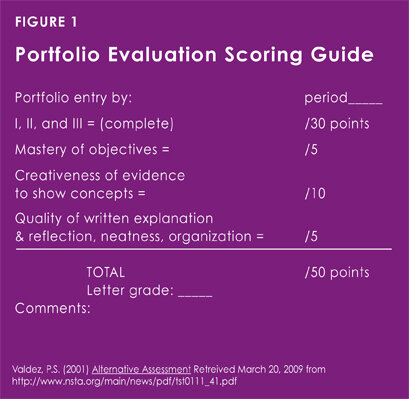
| Rubrics & Checklists | A set of criteria that defines what quality performance looks like. | Evaluating your work against a clear, established standard. |
These tools provide a framework for your thoughts. Using a rubric, for instance, can help you see exactly which parts of a project met expectations and which fell short. A journal might help you uncover a recurring mindset that's holding you back.
Putting It to Use
Self-assessment is versatile. In academics, students use it to check their understanding before an exam, helping them focus their studying. By reviewing a chapter and asking, "Can I explain this concept in my own words?" they are performing an informal self-assessment.
In professional development, it's the foundation of a career plan. An employee might use a skills checklist to see where they stand in their current role and what skills they need to develop for a promotion. This clarity allows them to seek out relevant training or projects.
Even in personal growth, self-assessment is key. Someone wanting to improve their public speaking skills might record themselves and use a rubric to evaluate their performance on things like pacing, clarity, and body language.
What is the primary focus of self-assessment?
By identifying your knowledge gaps, self-assessment naturally fosters what kind of learning?
Ultimately, self-assessment is about building self-awareness. It’s a skill that, once developed, serves you in every area of life by turning reflection into actionable steps forward.