Master Your Personal Brand
Introduction to Personal Branding
What Is a Personal Brand?
Think of a brand like Nike or Apple. You immediately have an idea of what they're about, what they value, and what you can expect from them. A personal brand applies that same concept to an individual: you.
It’s the story people tell about you when you're not in the room. It’s a mix of your skills, your experiences, and your personality. Personal branding is the active process of shaping that story.
Your personal brand is the unique set of skills, education, experience, values, and strengths that differentiates you in the minds of your target audience.
This isn't about creating a fake persona. It’s about being intentional. You decide what you want to be known for—your expertise, your passion for a certain cause, your unique way of solving problems—and then you deliberately showcase that. In a crowded job market and a connected digital world, a strong personal brand helps you stand out from the noise.
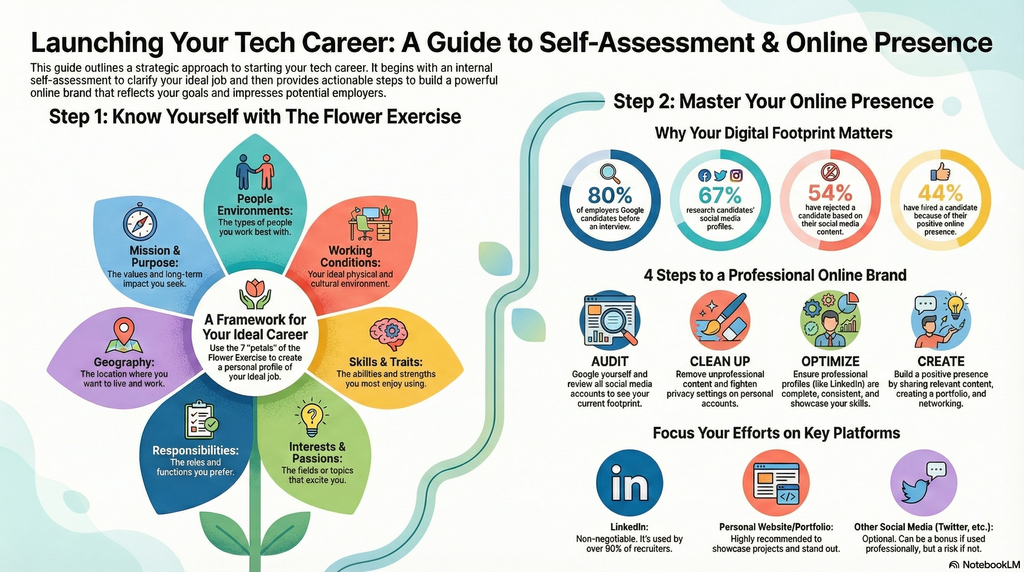
From Handshake to Hashtag
The idea of a personal brand isn't new. For generations, your reputation was built on word-of-mouth, community involvement, and a firm handshake. It was local and largely confined to people you met in person.
The internet changed everything. Suddenly, your reach became global. Your online presence—from a LinkedIn profile to a comment on a blog—became part of your professional identity. Your reputation is no longer just local; it's digital and permanent. This shift makes actively managing your personal brand more important than ever before.
The Core Components
A strong personal brand isn't built overnight. It rests on three fundamental pillars: authenticity, consistency, and visibility.
Authenticity is the foundation. Your brand must be a true reflection of who you are. Trying to be someone you're not is exhausting and unsustainable. People connect with realness. Your brand should highlight your genuine passions, values, and personality. It’s what makes you unique.
Personal branding isn't about creating a manufactured image but revealing your authentic professional self.
Consistency builds trust. The message you send should be the same everywhere. Your LinkedIn profile, your resume, your professional bio, and the way you communicate in person should all tell the same story. Inconsistency creates confusion and undermines your credibility.
Visibility ensures you get noticed. A powerful brand is useless if no one sees it. You need to put yourself out there. This means sharing your knowledge, participating in industry conversations, and building a network. Being visible allows others to find you and recognize the value you offer.
Your Brand and Your Career
So, how does this all help your career? A well-defined personal brand acts like a career compass. It clarifies your goals and helps you make decisions that align with them. It attracts opportunities that are the right fit for you, rather than you having to chase every opening.
When recruiters or potential clients look you up online, they should find a clear, compelling narrative that shows what you can do. It’s the difference between being just another applicant and being the candidate they have to talk to.
A compelling personal brand can attract recruiters and open doors to unexpected opportunities.
Ultimately, personal branding gives you more control over your professional journey. It’s your opportunity to tell your own story, on your own terms.