Master Your Brain Power
Brain Anatomy
The Brain’s Three Main Players
Your brain is the command center for your entire body. It’s a complex organ, but we can start by breaking it down into three main parts: the cerebrum, the cerebellum, and the brainstem. Each has a distinct job, but they all work together seamlessly.
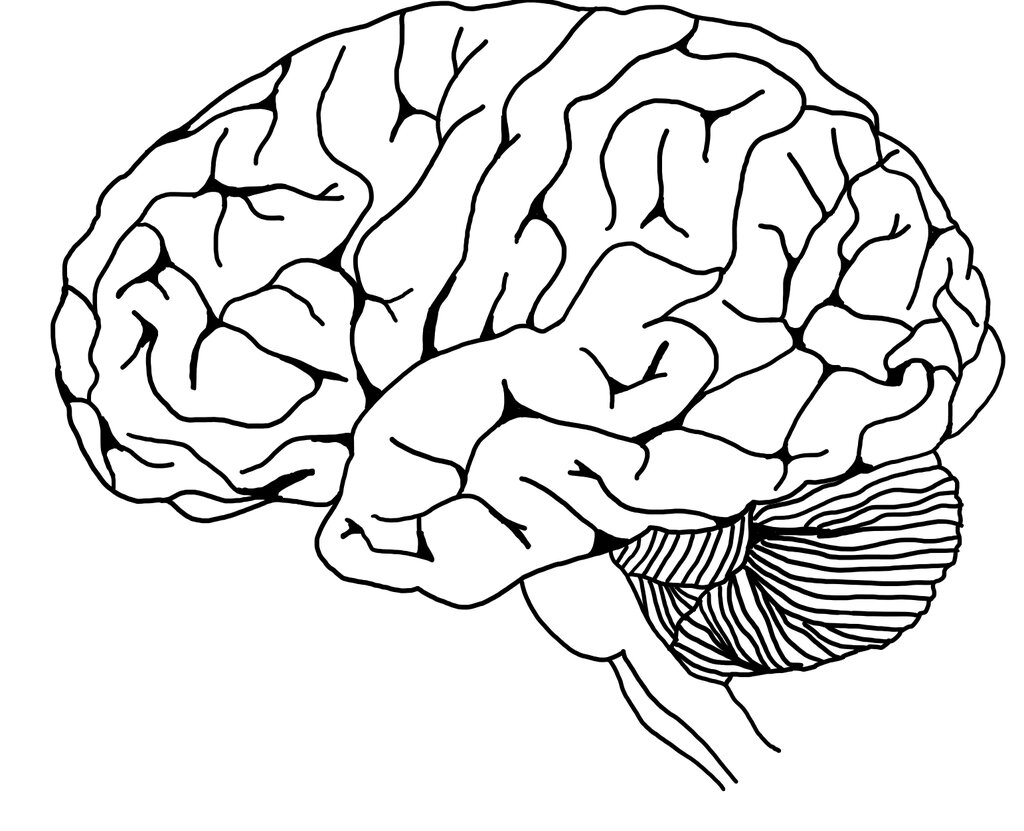
The cerebrum is the largest part, responsible for your thoughts and actions. The cerebellum, tucked underneath, fine-tunes your movements. The brainstem connects it all to the spinal cord, managing the automatic functions that keep you alive.
The Thinking Cap
The cerebrum is what you probably picture when you think of a brain. It's the wrinkly, outermost layer, divided into two halves, or hemispheres. The left hemisphere generally controls the right side of the body, and the right hemisphere controls the left. A thick band of nerve fibers called the corpus callosum connects them, allowing them to communicate.
The cerebrum's wrinkled surface is made of folds called gyri and grooves called sulci. This folding dramatically increases the surface area, packing more processing power into a compact space. This is where higher-level functions happen, like thinking, learning, remembering, and feeling emotions.
The cerebrum is also where you process information from your senses: what you see, hear, taste, smell, and touch.
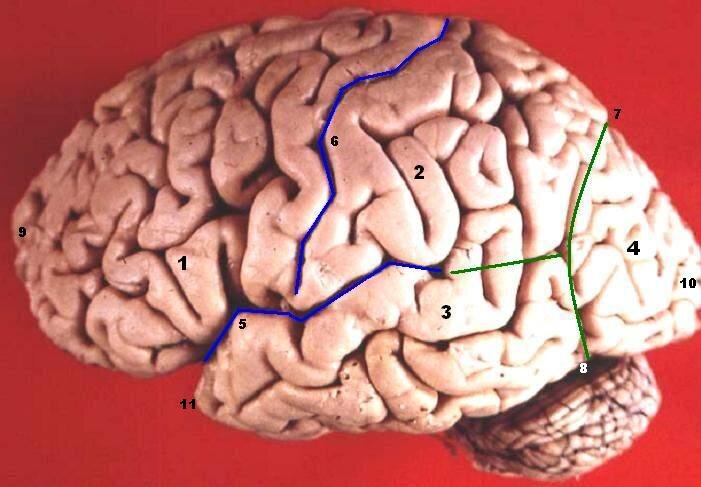
To organize these many jobs, the cerebrum is divided into four distinct sections, or lobes. Each lobe specializes in different tasks.
A Tour of the Lobes
Let's take a closer look at what each of the four lobes does. While each has a primary role, they constantly interact and cooperate to produce your thoughts and behaviors.
| Lobe | Primary Functions |
|---|---|
| Frontal | Planning, problem-solving, personality, voluntary movement |
| Parietal | Processing touch, temperature, pain; spatial awareness |
| Temporal | Hearing, memory, understanding language |
| Occipital | Processing visual information |
The frontal lobe, located at the front of your head, is like your brain's CEO. It’s in charge of executive functions such as planning, making decisions, and moderating social behavior. It also houses the motor cortex, which controls your voluntary movements, from waving hello to kicking a ball.
Behind it is the parietal lobe. This area integrates sensory information. When you pat a dog, the parietal lobe processes the feeling of its soft fur, the warmth from its body, and its position in space relative to you.
The temporal lobes, found on the sides of your head near your ears, are the main centers for hearing and are also heavily involved in forming memories. This is why a certain song can instantly transport you back to a specific moment in your past.
Finally, the occipital lobe is at the very back of the brain. Its job is singular but crucial: vision. It takes the raw data coming from your eyes and interprets it into the meaningful images that make up your world.
The Support System
While the cerebrum handles conscious thought, the cerebellum and brainstem manage other critical tasks.
The cerebellum, which means "little brain" in Latin, sits at the back, beneath the cerebrum. If you've ever learned to ride a bike or play a musical instrument, you have your cerebellum to thank. It coordinates voluntary movements to make them smooth and balanced. It doesn't initiate movement, but it fine-tunes it, controlling posture, balance, and coordination.
Think of the cerebrum as the part of you that decides to walk across the room, and the cerebellum as what ensures you don't trip over your own feet.
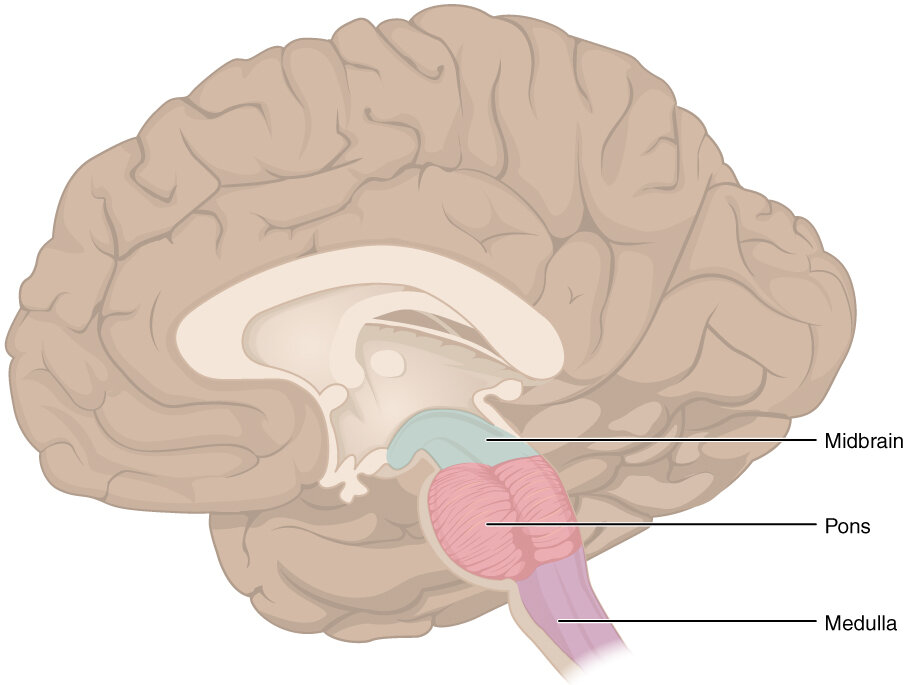
The brainstem is the final piece of the puzzle, connecting the cerebrum and cerebellum to the spinal cord. It’s the brain’s most ancient and basic region, and it controls the functions essential for survival. This includes breathing, heart rate, body temperature, and sleep cycles. You don't have to consciously think about these things because the brainstem handles them automatically.
Now that you've learned about the brain's main structures, let's test your knowledge.
What are the three main parts of the brain?
A person has difficulty maintaining balance and coordinating smooth, fluid movements, like walking in a straight line. Damage to which part of the brain is the most likely cause?
Together, these parts form an incredibly efficient organ that governs everything you do, think, and feel.