Master Weekly Meal Prep
Meal Planning Basics
Why Plan Your Meals?
Deciding what to eat every day can feel like a chore. You get home from a long day, you're hungry, and the last thing you want to do is figure out dinner. This often leads to last-minute takeout or uninspired microwave meals. Meal planning is the simple fix for this daily dilemma.
A well-thought-out meal plan can help you improve the quality of your diet or reach a specific health goal while saving you time and money.
By thinking ahead, you can cut down on frantic grocery store runs, reduce food waste, and reclaim your evenings. It's not about creating complex, gourmet meals every night. It's about bringing a little order to your kitchen and your life, making it easier to eat well without the stress.
Start by Looking Inward
Before you can plan for the future, you need to understand the present. Take a few days to honestly assess your current eating habits. You don't need a fancy app or a detailed journal. Just pay attention.
What do you typically eat for breakfast? Do you grab something on the go? For lunch, do you buy it, or pack it? What about dinner? Note when you tend to rely on takeout or snacks. The goal isn't to judge yourself, but to gather data. This will show you where a little planning can make the biggest impact.
A simple tracking method is to jot down your meals for three days. It gives you a clear snapshot of your routine, your go-to foods, and your 'I have nothing to eat' moments.
Here’s a basic way to track your meals for a day:
| Meal | What I Ate | How I Got It |
|---|---|---|
| Breakfast | Coffee and a banana | Made at home |
| Lunch | Sandwich and chips | Bought from deli |
| Dinner | Frozen pizza | From the freezer |
| Snacks | Handful of almonds | From the pantry |
Set Realistic Goals
Jumping from no plan to a full seven-day, three-meal-a-day plan is a recipe for burnout. It's better to start small and build momentum. Your initial goal should be simple and achievable.
Maybe your goal is to pack lunch three times this week instead of buying it. Or perhaps you want to cook dinner at home four nights instead of your usual two. Success is about making small, sustainable changes. Once you've mastered one goal, you can add another.
Begin by planning out just a few meals or snacks for the week ahead.
Think about your biggest pain point. Is it the morning rush? The afternoon slump? The dinner scramble? Target that first. If mornings are chaotic, focus on planning simple, grab-and-go breakfasts. If dinner is the problem, start by planning just two or three dinners for the week.
Create Your First Plan
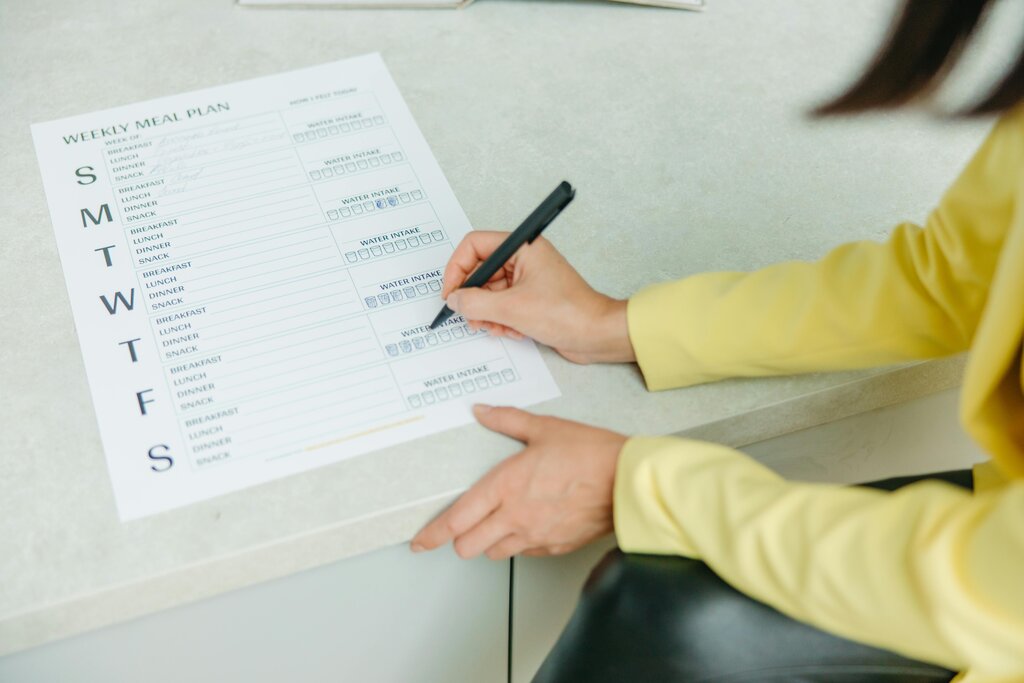
Now it’s time to put it all together. Grab a piece of paper or open a notes app. Your first meal plan doesn't need to be perfect, it just needs to exist.
- Pick Your Meals: Based on your goal, decide which meals you'll plan. Let's say you're starting with three dinners.
- Choose Simple Recipes: Stick with what you know. This isn't the time to try a complicated new dish. Think about your favorite easy meals: spaghetti, tacos, or a simple stir-fry.
- Check Your Pantry: Before you write a shopping list, look at what you already have. You might have pasta, rice, or canned beans ready to go.
- Make a Shopping List: List only the ingredients you need to complete your planned meals. This focused approach prevents impulse buys and saves money.
That's it. You've created a meal plan. It might seem basic, but this simple act of planning ahead is the foundation for saving time, reducing stress, and eating better.
Now, let's test your understanding of these core concepts.
What is the primary benefit of meal planning, according to the provided text?
What is the recommended first step before creating your first meal plan?
Meal planning is a skill that gets easier with practice. By starting small and focusing on your own habits and goals, you can build a routine that works for you.