Master the Hero's Journey for Storytelling
Introduction to the Hero's Journey
The Story We All Know
From ancient myths to modern blockbusters, many of the most compelling stories follow a familiar pattern. A hero leaves home, faces incredible challenges, and returns forever changed. This timeless narrative structure is known as the Hero's Journey.
The concept was popularized by scholar Joseph Campbell in his 1949 book, The Hero with a Thousand Faces. Campbell studied myths from all over the world and discovered that they often shared a fundamental structure. He called this universal pattern the "monomyth."
The Hero’s Journey is a pattern of narrative identified by the American scholar Joseph Campbell that appears in drama, storytelling, myth, religious ritual, and psychological development.
Think of King Arthur pulling the sword from the stone, Odysseus journeying home after the Trojan War, or Luke Skywalker leaving his desert planet. These stories, though from different cultures and eras, all tap into the same core journey. This structure provides a roadmap for a character's transformation that feels both epic and deeply personal.
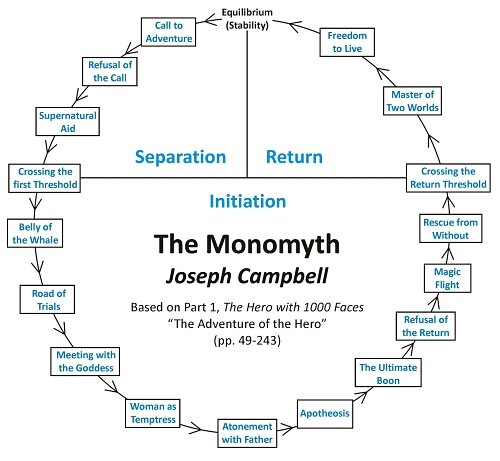
While Campbell's full model has 17 stages, they can be grouped into three main acts: Separation, Initiation, and Return.
- Separation: The hero is called away from their ordinary, familiar world.
- Initiation: The hero ventures into an unknown world, facing trials and tribulations.
- Return: The hero comes back to their original world, but with new wisdom or a gift to share.
This structure isn't just a formula for writers. It resonates because it reflects the challenges we all face in our own lives. We leave comfort zones, overcome obstacles, and hopefully, grow from the experience. The Hero's Journey gives us a framework for understanding transformation.
Why It Works
The enduring power of the monomyth lies in its universality. It taps into fundamental human experiences of growth, struggle, and discovery. By following a character through their trials, we see a reflection of our own potential for courage and change. It's a story that feels true, no matter when or where it's told.
The hero's journey framework makes things personal, relatable, and interesting.
Ready to test what you've learned about this foundational storytelling concept?
Who popularized the concept of the 'monomyth,' also known as the Hero's Journey?
A hero ventures into a dark forest to face a series of challenges and battles. This part of the story belongs to which of the three main acts?
Understanding this structure is the first step toward crafting narratives that captivate and inspire.