Master the 30-Second Elevator Pitch
Understanding Elevator Pitches
What's an Elevator Pitch?
An elevator pitch is a short, persuasive speech you can use to spark interest in what you do. The name comes from the idea that you should be able to deliver it in the time it takes to ride an elevator—roughly 30 to 60 seconds.
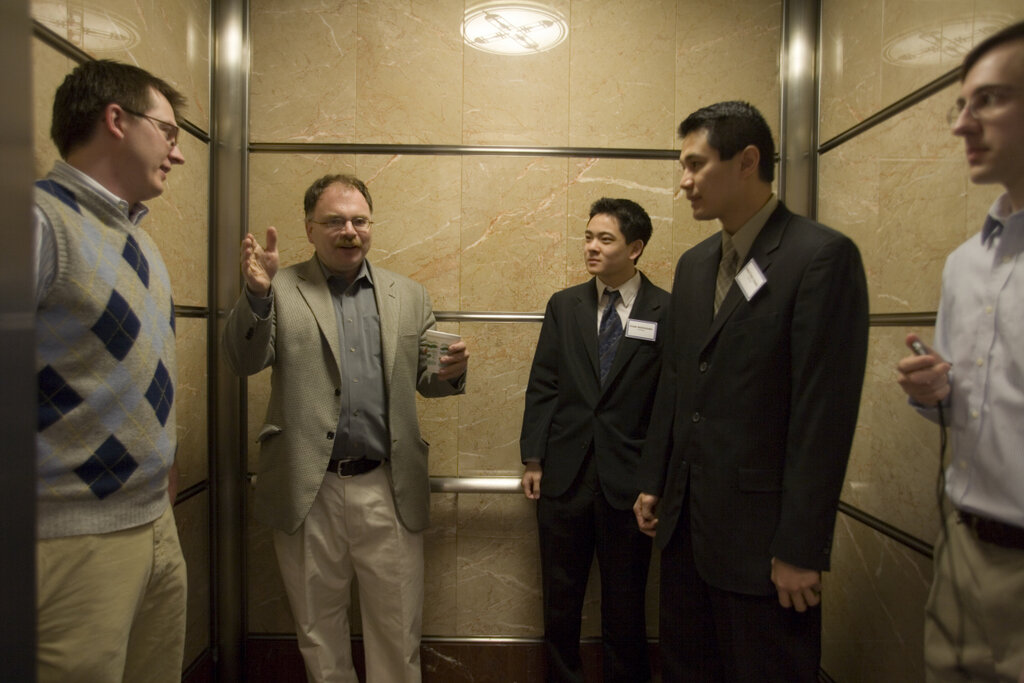
The goal isn't to tell your entire life story or close a major deal on the spot. It's about saying just enough to make someone intrigued. A successful pitch makes the listener think, "Tell me more," and opens the door for a longer conversation.
Why It Matters
You never know when an opportunity will present itself. You could meet a potential employer at a coffee shop, a future business partner at a conference, or an investor at a networking event. Being prepared with a clear and concise pitch means you're always ready to make a strong first impression.
Having a polished pitch also builds confidence. When you know exactly how to introduce yourself and your work, you come across as professional, prepared, and passionate about what you do. It's a fundamental tool for building your professional network and advancing your career.
An effective elevator pitch opens doors — it’s your introduction to professional acquaintances, colleagues, and potential employers.
The Core Components
While every pitch is unique, the most effective ones share a simple, three-part structure. Think of it as a blueprint for making a connection.
-
Introduction: Start by saying who you are. This is straightforward but essential. State your name and your current role or what you're passionate about. For example, "I'm a software developer specializing in mobile applications."
-
Value Proposition: This is the core of your pitch. What problem do you solve, or what unique value do you offer? Explain what makes you or your idea special. It could be something like, "I help small businesses increase their online sales by creating user-friendly e-commerce apps."
-
Call to Action: End by suggesting the next step. What do you want to happen after the conversation? It should be a simple, low-commitment request. Examples include, "I'd love to tell you more about a recent project sometime," or "What's the best way to share my portfolio with you?"
Now that you understand the what, why, and how of an elevator pitch, you have the building blocks to start thinking about your own.