Master Gardener Certification Preparation
Soil Microbiology
The Unseen City Beneath Your Feet
Beneath every garden, farm, and forest lies a bustling, microscopic metropolis. This is the soil food web, a complex community of organisms that dictate the health and fertility of the ground. Instead of thinking of soil as inert dirt that simply holds plants up, we must see it as a living ecosystem. The key players in this system are bacteria and fungi, the tireless engines that drive nutrient cycling.
The soil food web is the complex community of soil organisms that interact with each other, the soil parent material (which is made up of rocks, pebbles, sand, silt and clay) and plants.
Bacteria are the primary decomposers. They break down simple organic compounds, like sugars and fresh plant residue. In doing so, they perform a critical service called nutrient mineralization. This is the process of converting nutrients locked in organic matter into inorganic, water-soluble forms that plants can absorb. Think of them as chefs, taking raw ingredients (dead leaves, roots) and preparing a meal (bioavailable nutrients) for the plants.
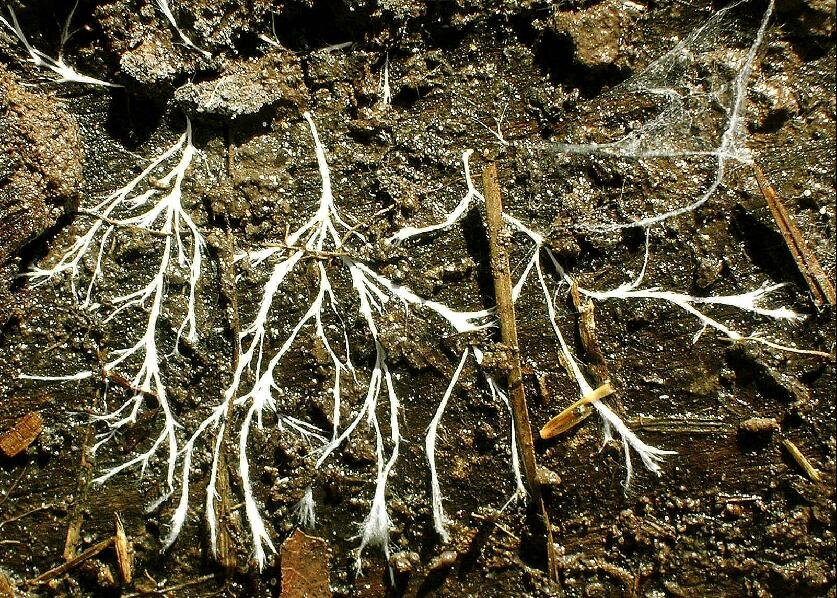
Fungi, with their long, thread-like structures called hyphae, tackle more complex materials like cellulose and lignin—the tough, woody components of plants. They act like the heavy-duty demolition crew of the soil. Some fungi form symbiotic relationships with plant roots, creating vast networks that extend the plant's reach for water and nutrients far beyond what its own roots could manage.
The Root Exudate Marketplace
Plants are not passive participants in this ecosystem. They actively cultivate the microbial community around their roots in a region called the rhizosphere. To do this, they release a cocktail of sugars, proteins, and other compounds from their roots. These substances are known as and they serve as a form of currency.
By releasing specific exudates, a plant can attract and feed particular types of beneficial bacteria and fungi. It’s a targeted recruitment process. If a plant needs more phosphorus, it might release an exudate that appeals to phosphorus-solubilizing bacteria. If it's under stress from a pathogen, it can signal for microbes that produce protective compounds. This is the scientific basis for the principle of 'feeding the soil, not the plant.' A healthy soil food web, cultivated by the plant itself, provides a steady stream of nutrients on demand.
The Importance of Air
The type of microbial community that thrives in soil is heavily dependent on the presence of oxygen. Soil can be either aerobic (oxygen-rich) or anaerobic (oxygen-poor).
In a well-structured, aerobic soil, beneficial bacteria and fungi dominate. As they decompose organic matter, their waste products act as alkaline glues. These sticky substances bind small soil particles together to form larger aggregates. This process creates pore spaces, improving soil structure, water infiltration, and aeration—a virtuous cycle.
Conversely, in compacted or waterlogged anaerobic soil, different microbes take over. These organisms don't need oxygen to survive. Their metabolic byproducts are often acidic, like alcohols and organic acids. These acids can lower the soil's pH, making essential nutrients less available to plants and sometimes creating compounds that are toxic to roots. This leads to poor soil structure, foul smells, and unhealthy plants.
| Condition | Dominant Microbes | Key Byproduct | Impact on Soil pH | Soil Structure |
|---|---|---|---|---|
| Aerobic | Beneficial Bacteria, Fungi | Alkaline Glues (Polysaccharides) | Tends toward neutral/alkaline | Builds aggregates, improves porosity |
| Anaerobic | Anaerobic Bacteria | Organic Acids, Alcohols | Tends toward acidic | Degrades structure, leads to compaction |
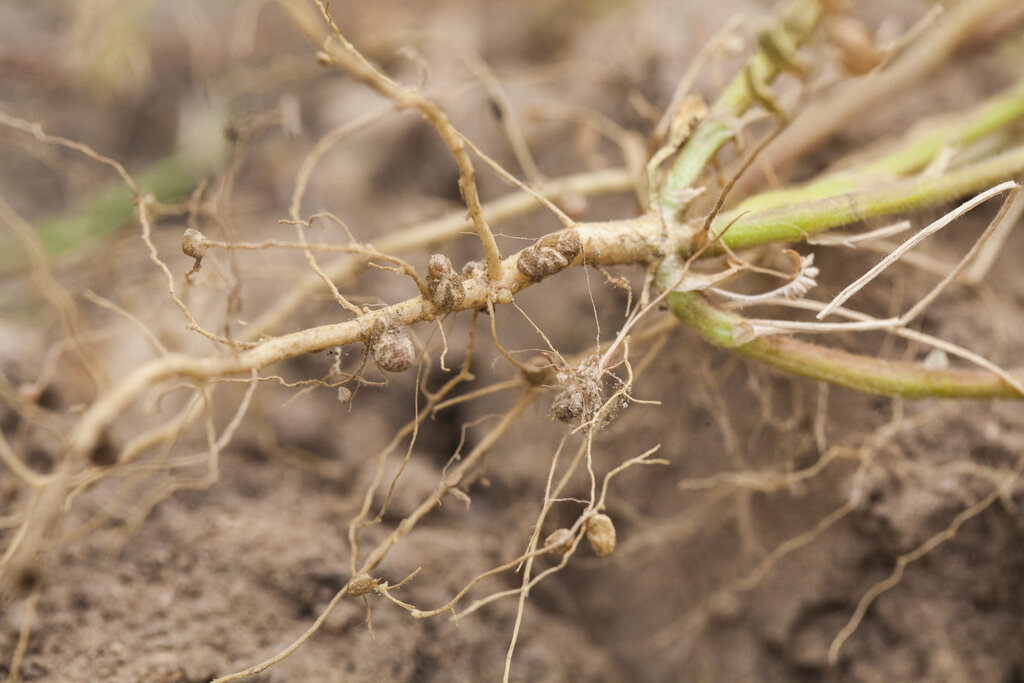
A key process that relies on this balance is biological nitrogen fixation. Certain bacteria, most famously those in the genus, can take inert nitrogen gas () from the atmosphere and convert it into ammonia (), a form of nitrogen that plants can use. This is one of the most important symbiotic relationships on the planet. These bacteria typically live in nodules on the roots of legume plants (like peas, beans, and clover). The plant provides the bacteria with sugars for energy, and in return, the bacteria provide the plant with a direct line of fertilizer. This process is highly energy-intensive and requires aerobic conditions to function efficiently.
Understanding these microbial dynamics is the key to advanced horticulture. By fostering a healthy, aerobic soil environment rich in organic matter, you encourage a thriving soil food web that builds its own fertility. This minimizes the need for external fertilizers and creates resilient, healthier plants.
Ready to test your knowledge?
What is the primary role of bacteria in the process of nutrient mineralization?
Plants release compounds called __________ from their roots to attract and feed specific beneficial microbes in the rhizosphere.