Master French Speaking in 12 Months
French Pronunciation
How to Sound French
Getting the hang of French pronunciation is more than just learning vocabulary. It's about understanding the music of the language. When you focus on the sounds from the start, you build a strong foundation that makes speaking and listening much easier. Accurate pronunciation is the key to being understood and understanding others.
Mastering French pronunciation is one of the most important steps in becoming fluent in the language.
French uses a set of sounds that are distinct from English. While some overlap, many are new. To talk about these sounds precisely, linguists use the International Phonetic Alphabet (IPA). You don't need to memorize it, but knowing it exists helps you look up the exact pronunciation of any word.
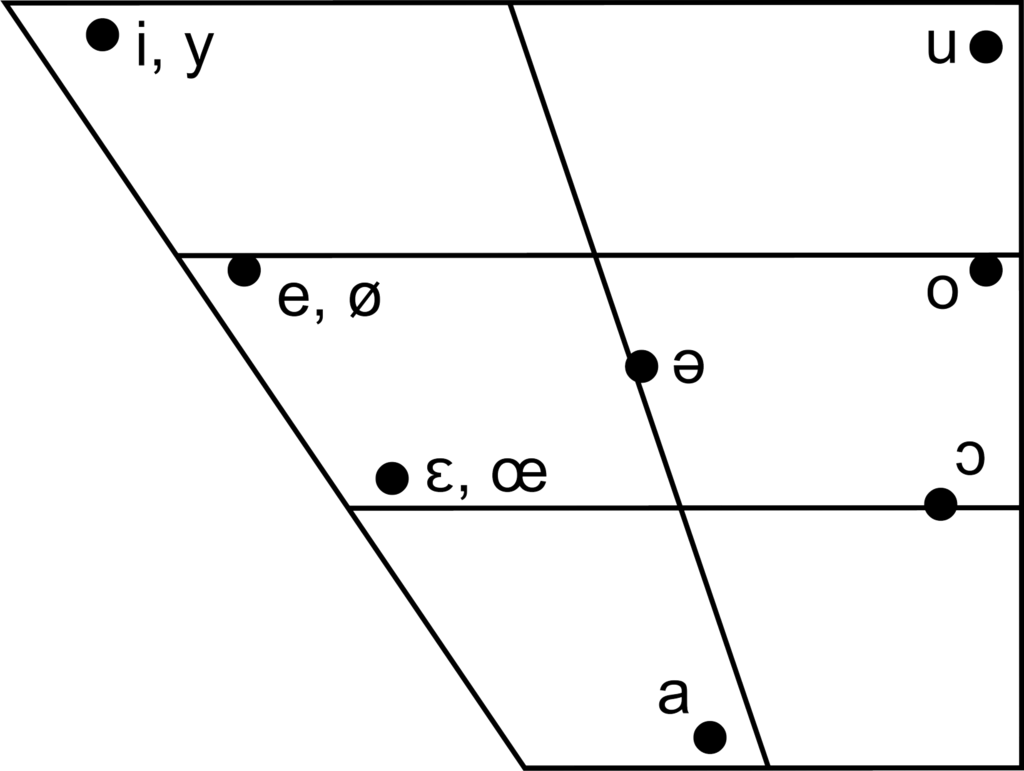
This chart shows where different vowel sounds are formed in the mouth. It looks complex, but it just illustrates that small changes in your tongue and lip position create entirely different sounds. Let's break down the most important ones.
Vowels, Consonants, and Nasals
French vowels are crisp and pure. Unlike in English, where a vowel like 'o' in "go" often glides into another sound (o-oo), French vowels hold a single, steady position. Think of the word beau (beautiful). The 'eau' is a clean /o/ sound, without the glide.
Many French consonants are similar to English, but a few stand out. The French 'r' is probably the most famous. It isn't rolled with the tongue like in Spanish. Instead, it's produced in the back of the throat, almost like a light gargle. Another key rule is that final consonants are often silent. Words like trop (too much), grand (big), and froid (cold) all end with a silent consonant.
A good way to practice the French 'r' is to try saying the 'ch' sound from a word like the Scottish "loch" and then add your voice to it.
Then there are the nasal vowels. These are signature sounds of French, created by letting air pass through both the mouth and the nose. There are no direct equivalents in English. Mastering them is a huge step toward sounding more authentic.
| Nasal Sound (IPA) | Common Spellings | Example Word(s) |
|---|---|---|
| /ɑ̃/ | an, en | maman, enfant |
| /ɛ̃/ | in, ain, ein | vin, pain, plein |
| /ɔ̃/ | on, om | bon, nom |
| /œ̃/ | un, um | brun, parfum |
Making It Flow
One of the most beautiful aspects of spoken French is its smooth, connected rhythm. This flow isn't accidental; it comes from two important rules: liaison and elision. They are the glue that holds sentences together.
liaison
noun
The linking of a normally silent final consonant of one word to the beginning of the next word if it starts with a vowel or a silent 'h'.
Liaison is why les amis (the friends) is pronounced "lez-ami." The silent 's' in les comes to life because the next word, amis, starts with a vowel. However, in les garçons (the boys), the 's' remains silent because garçons starts with a consonant.
Elision is a similar concept, but it involves dropping a vowel sound to avoid a clash between two words.
elision
noun
The omission of a final vowel sound before a following word that begins with a vowel sound.
Instead of saying le ami, which sounds clunky, the 'e' is dropped, and the words are combined into l'ami using an apostrophe. This happens with short words like le, la, je, and de when they come before a word starting with a vowel.
The Melody of French
Finally, let's talk about intonation, the melody of a sentence. In English, we often stress one syllable in a word to give it emphasis (like pro-nun-ci-a-tion). French is different. Stress is more evenly distributed across words, with a slight emphasis falling on the last syllable of a phrase or sentence.
This creates a rhythmic, wave-like pattern. For questions, the intonation typically rises at the end of the sentence, much like in English. For statements, it tends to fall.
Try saying a simple sentence like "C'est une bonne idée" (It's a good idea). Feel how the emphasis naturally lands on the final syllable of idée.
One common pitfall for learners is applying English stress patterns to French words, which can make them difficult to understand. Another is forgetting to pronounce nasal vowels, which can change the meaning of a word entirely. For example, bon /bɔ̃/ (good) is very different from bonne /bɔn/ (good, feminine).
Time for a quick review to see what you've learned.
What is a key difference between French vowels and many English vowels, like the 'o' in 'go'?
In French, a normally silent final consonant is pronounced when the next word begins with a vowel. What is this rule called?
Focusing on these core elements—the individual sounds, the flow between words, and the overall intonation—will dramatically improve how you speak and understand French.