Master Five Core Recipes
Kitchen Basics
Your Kitchen Toolkit
Every craft requires the right tools, and cooking is no different. You don't need a kitchen full of gadgets to make great food. A few high-quality essentials will handle the vast majority of recipes and make your time cooking much more enjoyable.
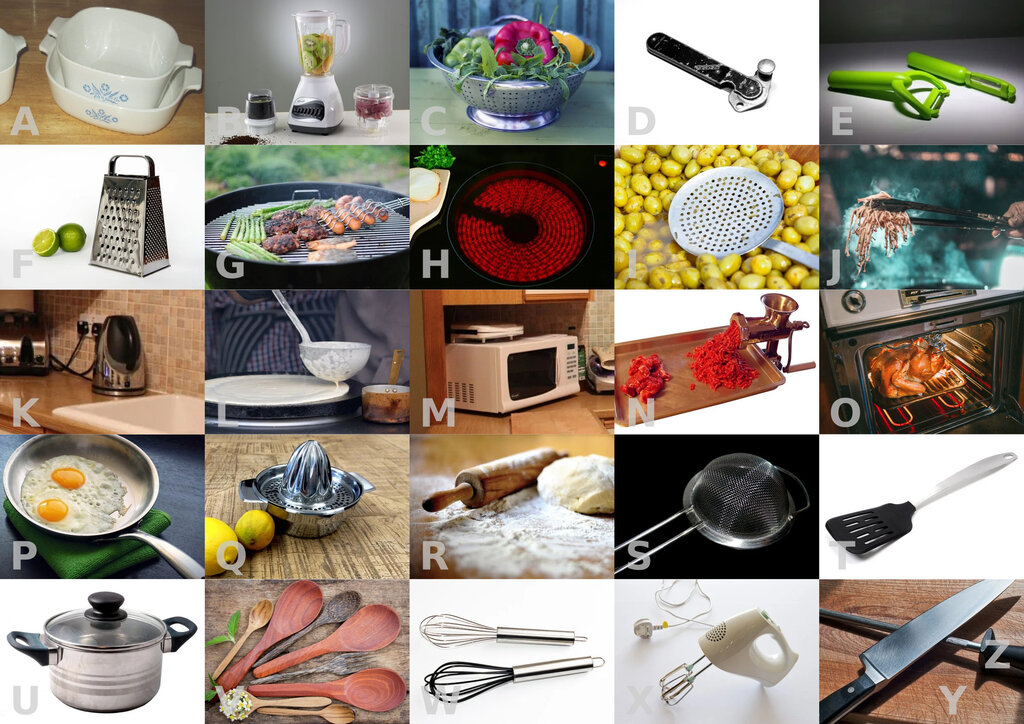
Let's start with the basics.
Chef's Knife: This is your most important tool. A good 8-inch chef's knife can be used for chopping, slicing, mincing, and dicing. Keeping it sharp is key for both safety and performance.
Cutting Board: You need a stable surface to cut on. A large wooden or plastic cutting board protects your counters and your knife. It’s a good idea to have at least two: one for raw meats and another for fruits, vegetables, and everything else.
Measuring Cups and Spoons: Baking is a science, and cooking often benefits from accuracy. A set of measuring cups (for dry and liquid ingredients) and measuring spoons ensures your ingredient ratios are correct.
Pots and Pans: You don't need a massive set. Start with a medium-sized saucepan for boiling, a larger pot for soups or pasta, and a skillet or frying pan for sautéing. A non-stick skillet is particularly helpful for beginners.
Core Cooking Techniques
With your tools ready, it's time to learn the actions. Cooking techniques are the verbs that turn a list of ingredients into a meal. Mastering a few fundamentals will allow you to follow almost any basic recipe with confidence.
Basic cooking techniques are the building blocks of culinary skills.
Here are four techniques you'll use constantly.
Chopping: This is how you prepare most vegetables and proteins. The goal is to create uniform pieces so they cook evenly. Take your time, hold the knife securely, and curl your fingertips on your guide hand to protect them.
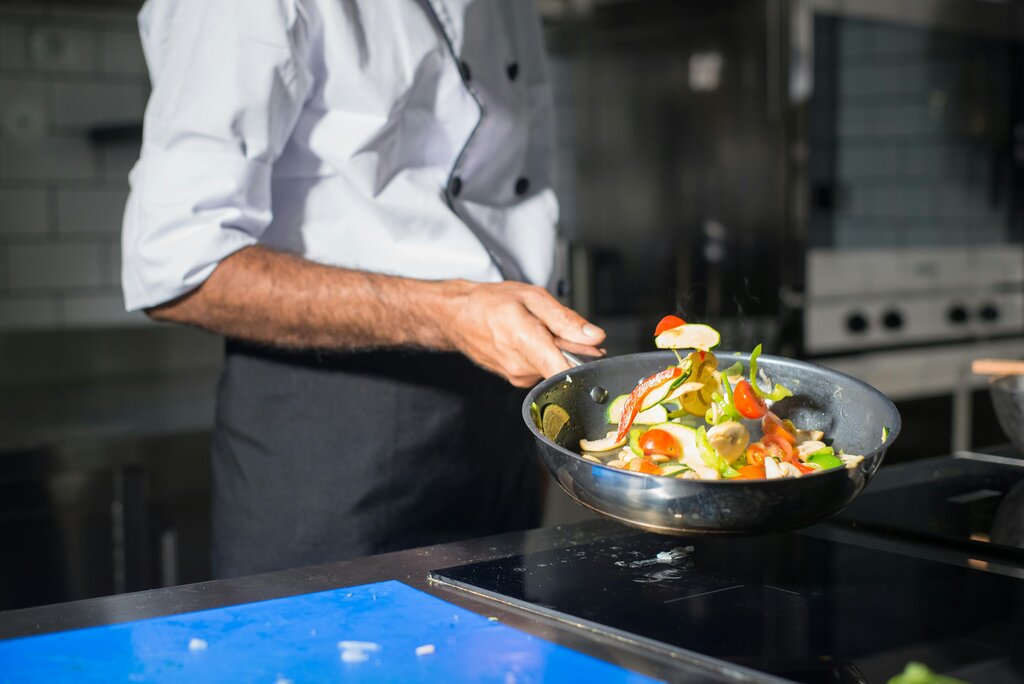
Sautéing: This means cooking food quickly in a hot pan with a small amount of fat, like oil or butter. It's perfect for browning ingredients to develop deep, rich flavors before adding liquids or other components.
Boiling: This is simply cooking food in water that has reached its highest possible temperature ($100°C$ or $212°F$ at sea level). You’ll use it for things like pasta, potatoes, and hard-boiled eggs. A rolling boil has large, vigorous bubbles, while a simmer is much gentler, with small bubbles just breaking the surface.
Baking: To bake something is to cook it with dry heat in an enclosed space, like an oven. While often associated with cakes and bread, baking is also a great way to cook savory foods like chicken, fish, and vegetables like potatoes or squash.
Safety and Hygiene
A clean kitchen is a safe kitchen. Good habits prevent foodborne illness and accidents.
First, always wash your hands with soap and water before you start cooking and after handling raw meat, poultry, or fish. This simple step is one of the most effective ways to prevent the spread of bacteria.
Next, avoid cross-contamination. This happens when bacteria from one food item spreads to another. Use separate cutting boards and utensils for raw meats and ready-to-eat foods like vegetables. After you're done, clean all surfaces, cutting boards, and tools thoroughly with hot, soapy water.
Finally, be mindful of your surroundings. Turn pot handles inward so they can't be knocked over. Be careful around hot surfaces and use oven mitts. And always treat your knives with respect; a sharp knife is safer than a dull one because it requires less pressure to cut, reducing the chance of it slipping.
Let's review these core concepts with some flashcards.
Ready to check your understanding? Let's tackle a few questions.
According to the provided text, which tool is considered the most important in the kitchen for tasks like chopping, slicing, and dicing?
You are cooking pasta in water that has large, vigorous bubbles. This cooking technique is best described as:
With these essentials, you have a solid foundation for your cooking journey. You're now ready to start practicing and building your confidence in the kitchen.