Master English A1 to B2
Basic English Foundations
The Building Blocks
Every language starts with its basic sounds and symbols. In English, this foundation is the alphabet. It's a set of 26 letters that combine to form every word you'll read, write, and speak.
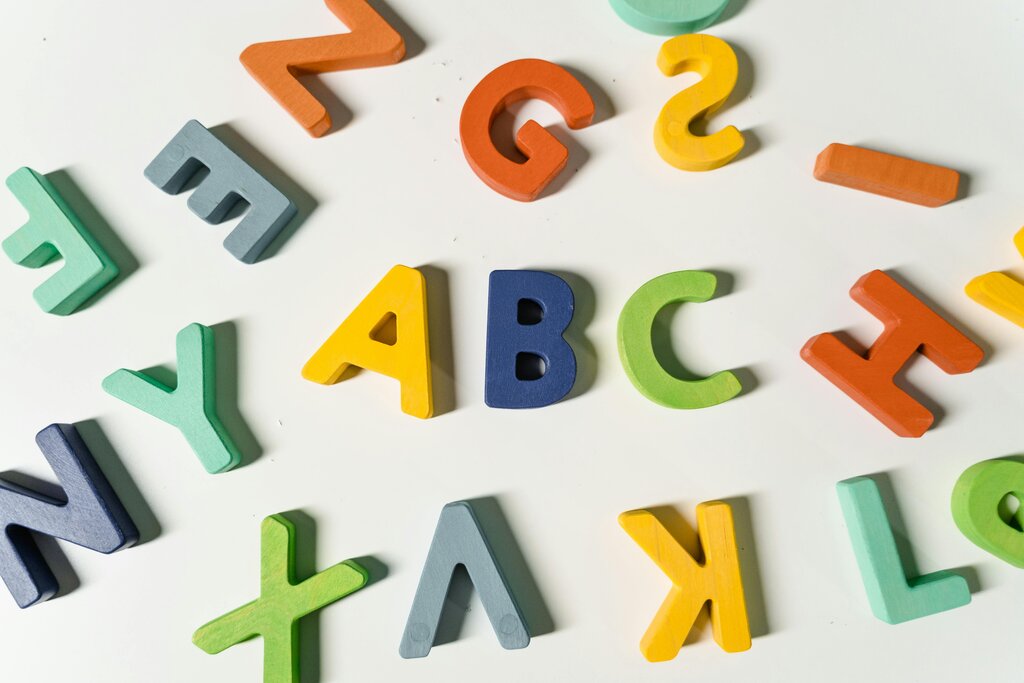
Each letter has an uppercase (big) and a lowercase (small) form. For example, 'A' is uppercase, and 'a' is lowercase. They represent the same letter and sound.
These letters are divided into two main groups: vowels and consonants. Vowels are the core of syllables, and you can't make a word without one.
vowel
noun
A speech sound made with your mouth fairly open, the center of the tongue not touching the top of the mouth, teeth, etc. The English vowels are A, E, I, O, U.
consonant
noun
A basic speech sound in which the breath is at least partly obstructed and which can be combined with a vowel to form a syllable. All letters that are not vowels are consonants.
Here is the complete English alphabet.
| Uppercase | Lowercase | Pronounced like... |
|---|---|---|
| A | a | apple |
| B | b | ball |
| C | c | cat |
| D | d | dog |
| E | e | egg |
| F | f | fish |
| G | g | goat |
| H | h | hat |
| I | i | igloo |
| J | j | jam |
| K | k | kite |
| L | l | lion |
| M | m | moon |
| N | n | nose |
| O | o | octopus |
| P | p | pig |
| Q | q | queen |
| R | r | rat |
| S | s | sun |
| T | t | tree |
| U | u | umbrella |
| V | v | van |
| W | w | water |
| X | x | box |
| Y | y | yes |
| Z | z | zebra |
Counting in English
After letters come numbers. They are essential for talking about age, time, and prices. Let's start with the first ten numbers. Learning to recognize and say them is a key first step.
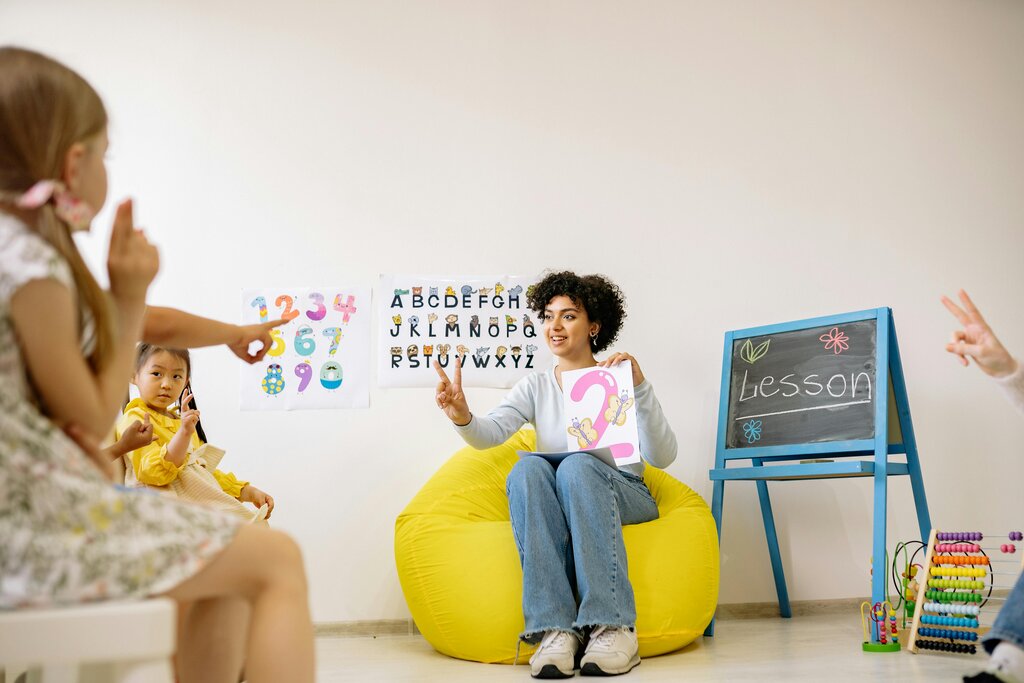
Here are the numbers one through ten.
| Number | Word |
|---|---|
| 1 | One |
| 2 | Two |
| 3 | Three |
| 4 | Four |
| 5 | Five |
| 6 | Six |
| 7 | Seven |
| 8 | Eight |
| 9 | Nine |
| 10 | Ten |
First Conversations
Now that you know some letters and numbers, let's learn how to start a conversation. Simple greetings are the best way to connect with people.
'Hello' and 'Hi' are the most common ways to greet someone. 'Goodbye' and 'Bye' are used when you leave.
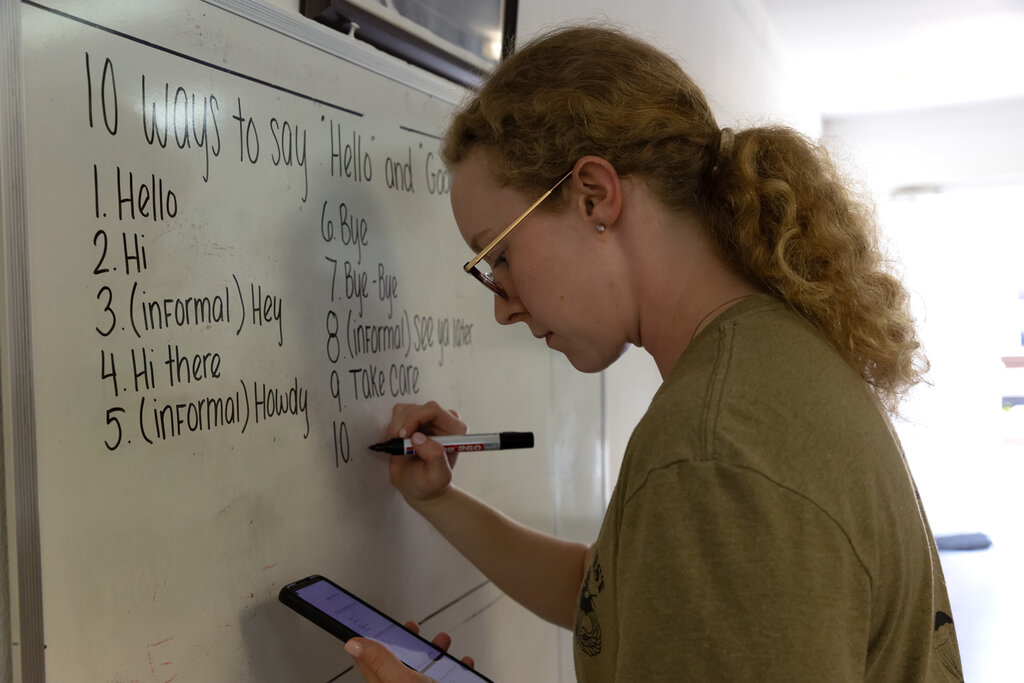
When you meet someone for the first time, you'll want to introduce yourself. The most common way to do this is by saying "My name is..." followed by your name.
After you introduce yourself, you can ask for the other person's name. A simple way is to ask, "What is your name?"
Hello, my name is Maria. What is your name? My name is John.
Notice the simple structure of these sentences. The basic pattern in English is often Subject + Verb + Object. For example, in the sentence "I like English," the subject is 'I', the verb is 'like', and the object is 'English'. We'll explore this more later, but for now, focus on these simple phrases.
Ready to check your understanding? Let's try a few questions.
How many letters are in the English alphabet?
Which of the following letters is a vowel?
Learning a new language starts with these small steps. Practice the alphabet, numbers, and these first phrases. You're building a strong foundation.