Marxism Explained
Introduction to Marxism
The Man and His Time
Karl Marx wasn't just a philosopher sitting in an ivory tower. He was a journalist, an economist, and a revolutionary activist living through the dramatic upheaval of the 19th century. This was the era of the Industrial Revolution, a time when factories were sprouting up across Europe, cities were swelling with new workers, and society was being reshaped at a breathtaking pace.
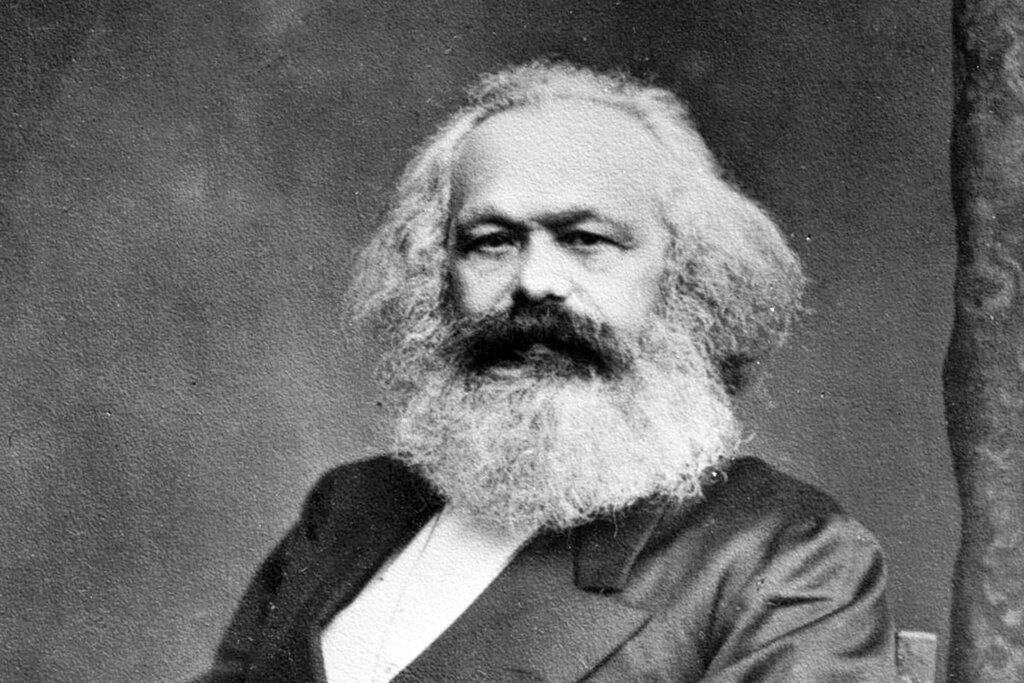
For many, this new world brought immense wealth and progress. For millions of others, it meant long hours, dangerous working conditions, and crushing poverty. Marx looked at this stark contrast and asked a fundamental question: Why? His entire body of work, known as Marxism, is an attempt to answer that question and propose a solution.
A Recipe for Revolution
Marx didn't pull his ideas out of thin air. His thinking was a powerful synthesis of the most advanced intellectual currents of his day. Think of it as a recipe with three main ingredients.
First, he drew from German philosophy, particularly the work of G.W.F. Hegel. Hegel proposed that history moves forward through a process of conflict and resolution called the dialectic. An idea (a thesis) is challenged by its opposite (an antithesis), and out of their clash, a new, more complex idea emerges (a synthesis). Marx loved this concept of change through conflict, but he gave it a twist. He argued that the conflict wasn't between ideas, but between real, material forces in society.
Marx flipped Hegel's dialectic on its head. Instead of ideas driving history, he argued that the material conditions of life drive history.
Second, he was inspired by French political theory. The French Revolution had shown that established social orders could be overthrown. It ignited ideas of liberty, equality, and radical change. Early French socialists were already talking about the injustices of private property and the need for a more cooperative society. This gave Marx a framework for thinking about revolution and the political power of the masses.
Finally, Marx immersed himself in British political economy. Thinkers like Adam Smith and David Ricardo had developed the first systematic analyses of capitalism. They explained concepts like value, wages, and profit. Marx took their tools but used them to build a critique. He agreed with their analysis of how capitalism worked, but he disagreed profoundly on whether it was a fair or sustainable system.
The Engine of History
At the core of Marxism is a concept called historical materialism. It sounds complicated, but the idea is simple. To understand any society, Marx argued, you first have to look at how it produces the things it needs to survive: food, shelter, clothing, and so on. This economic system—the
mode
noun
A specific system of organizing production.
of production—forms the base of society.
Everything else—the laws, the political system, the culture, the dominant ideas—is the superstructure, and it's built upon and shaped by that economic base. If you want to change society, Marx concluded, you can't just change the laws or the politicians. You have to change the fundamental economic system.
History as Class Struggle
If the mode of production is the engine of history, then class struggle is the fuel. Marx famously declared, "The history of all hitherto existing society is the history of class struggles."
In every society, he argued, there's a conflict between those who own the means of production (the tools, factories, and land) and those who don't. Under capitalism, this conflict plays out between two main classes:
- The Bourgeoisie: The capitalist class. They own the means of production and their goal is to maximize profit.
- The Proletariat: The working class. They own nothing but their ability to work, which they must sell to the bourgeoisie in exchange for a wage.
For Marx, these two classes have fundamentally opposing interests. The bourgeoisie wants to pay as little as possible for labor to increase profits. The proletariat wants to earn as much as possible for their labor to improve their lives. This is the central, unavoidable conflict of capitalism.
Marx believed this conflict would inevitably intensify. As capitalism developed, he predicted, wealth would become more concentrated in the hands of the few, while the working class would grow larger and more impoverished. Eventually, this tension would lead to a revolution in which the proletariat would overthrow the bourgeoisie and establish a new, classless society.
Ideology: The Invisible Chains
You might wonder: if the system is so unfair, why don't the workers just rise up? For Marx, part of the answer lies in ideology. Ideology isn't just a set of beliefs; it's the pervasive system of ideas and values that justifies the existing social order and makes it seem natural and inevitable. It's the
common
adjective
Occurring, found, or done often; prevalent.
sense" of an era.
Under capitalism, the dominant ideology serves the interests of the bourgeoisie. It promotes ideas like the sanctity of private property, the fairness of market competition, and the notion that anyone can get rich through hard work. These ideas, spread through schools, media, and religion, encourage workers to accept their situation. They create what Marx called a false consciousness, preventing the proletariat from seeing the true nature of their exploitation.
For a revolution to occur, the working class must break through this false consciousness and develop class consciousness—a clear, unified awareness of their shared interests and their collective power to change the system.
Let's test your understanding of these foundational ideas.
According to Karl Marx, the economic system of a society, such as its factories and farms, is known as the 'base'. What does this 'base' primarily determine?
In Marxist theory, what is the fundamental conflict that drives history forward under capitalism?
These concepts—historical materialism, class struggle, and ideology—are the bedrock of Marxist thought. They provide a powerful, if controversial, lens for analyzing society, understanding history, and imagining a different future.