Marty Cagan's Product Discovery Framework
Introduction to Product Discovery
What Is Product Discovery?
Before writing a single line of code or designing a user interface, every great product starts with a question: What problem are we actually trying to solve? Product discovery is the process of answering that question. It’s the work you do to understand your users, identify their needs, and validate that you're building the right thing for them.
Product discovery is the process of figuring out what needs to be built.
Think of it as the detective work of product development. The goal is to reduce the biggest risk in creating a new product: the risk of building something nobody wants. Instead of jumping straight to a solution, discovery forces you to fall in love with the problem. By deeply understanding the challenges your users face, you can brainstorm and test potential solutions before committing significant time and money.
Discovery vs. Delivery
The product development process is often split into two main phases: discovery and delivery. If discovery is about deciding what to build, delivery is about building it. Discovery focuses on the 'why,' while delivery focuses on the 'how' and 'when'.
During the discovery phase, the team is exploring, learning, and validating ideas. Activities include user interviews, market research, and prototyping. The output is a validated product backlog full of ideas that have been checked against user needs.
Once an idea is validated, it moves into the delivery phase. This is where engineers and designers execute on the plan. They write code, create designs, and ship the product. The output is a working, high-quality product that gets into the hands of users.
| Product Discovery | Product Delivery | |
|---|---|---|
| Key Question | What should we build? | How do we build it right? |
| Goal | Reduce risk, validate ideas | Build and ship a quality product |
| Activities | Research, interviews, prototyping | Coding, designing, testing |
| Outcome | A validated problem and solution | A finished, shippable product |
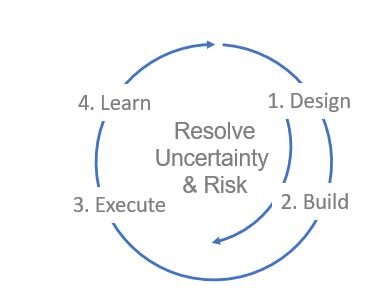
These two phases aren't completely separate. They form a continuous loop. What you learn after delivering a product feeds back into the discovery process for the next feature or improvement.
The Risk of Skipping Discovery
What happens when teams skip discovery and jump straight into building? They might get lucky, but more often than not, they build products that fail to meet user needs. This leads to wasted resources, frustrated teams, and a product that nobody uses.
Without discovery, you're essentially guessing what people want. You're building based on assumptions, not evidence. This might mean adding features that seem cool but don't solve a real problem, or designing a user experience that is confusing and inefficient.
Building a product is expensive. Building the wrong product is a disaster.
Effective discovery isn't a one-time checklist you complete at the start of a project. It’s a continuous mindset of learning and iteration. Markets change, user needs evolve, and new technologies emerge. The best product teams are always in discovery mode, constantly gathering feedback and using it to refine their direction. This iterative approach ensures the product stays relevant and continues to deliver value to its users over time.
Rather than a one-time step, product discovery is a continuous process that evolves along with the product.
Now, let's check your understanding of these core concepts.
What is the primary question that product discovery aims to answer?
The main goal of product discovery is to fall in love with the problem, not the solution.
Understanding these fundamentals sets the stage for creating products that truly resonate with users.