Martial Arts Systems and Tactical Application
Striking Systems Mechanics
Stance Dictates Strategy
The foundation of any striking art is the stance. It’s not just a fighting pose; it’s a physical statement of intent that dictates every offensive and defensive option available. In boxing, the classic bladed stance is preferred. A boxer stands sideways, presenting the shoulder to the opponent, which minimizes the available target area. Most of the weight is often biased toward the back foot, ready to spring forward for a jab or pivot into a powerful cross. This orientation is optimized for linear attacks and rapid head movement, turning the torso into a tightly coiled spring.
Muay Thai takes a completely different approach with its more squared-up stance. A Thai boxer faces their opponent more directly, with feet roughly shoulder-width apart and weight distributed evenly. This position isn't as mobile for darting in and out, but that's not its purpose. The squared hips allow for devastating roundhouse kicks from either leg with minimal telegraphing. More importantly, the even weight distribution allows a fighter to quickly lift either leg to check an incoming kick—a crucial defensive maneuver when leg kicks are a constant threat.
This fundamental difference creates a fascinating tactical trade-off. The boxer's stance is excellent for defending against punches but is highly vulnerable to leg kicks. The Thai stance is built to handle kicks but exposes more of the centerline to straight punches. It also presents a squarer target for takedowns, a vulnerability often exploited in Mixed Martial Arts. The fighter's stance is the operating system; every technique is an application that runs on it.
Rotational Power vs Snapping Speed
The mechanics of kicking also differ dramatically. While many martial arts use "snapping" kicks that generate speed from a rapid extension of the knee, the Muay Thai roundhouse kick is a lesson in rotational force. Power isn't generated from the leg alone; it comes from the entire body turning as a single unit.
The fighter pivots on their supporting foot, swinging their kicking leg and hip through the target as if they were a baseball bat. The point of impact is the hard part of the shin, not the foot. This method transfers the momentum of the body's entire center of mass into the strike, creating a devastating impact designed to damage and disable rather than simply score points.
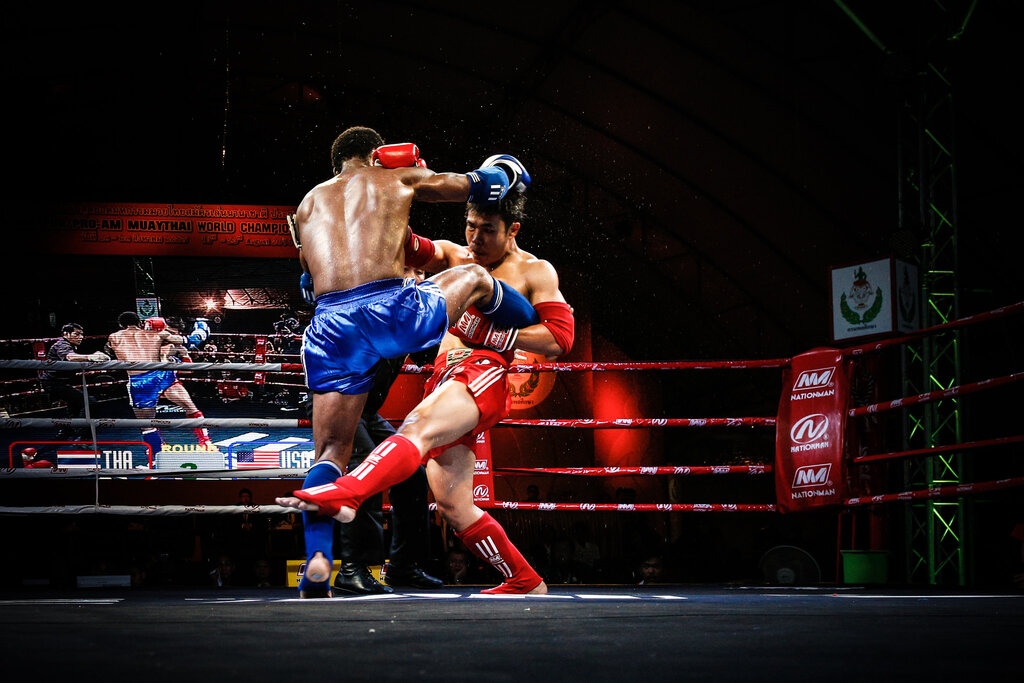
This commitment to rotation is why the kick is so powerful, but it also means it's slower to retract than a snapping kick. A missed Thai kick can leave a fighter off-balance and exposed to counters. The trade-off is clear: sacrifice a degree of speed and recovery time for a massive increase in impact force.
Guards, Clinches, and Close Quarters
Defensive postures of the upper body also reflect the different threats. Boxers traditionally use a high guard, keeping their gloves tight to their temples and chin to protect against hooks and uppercuts. It's a compact, efficient shell for defending against punches.
Muay Thai fighters often employ a longer, more open guard. Their hands are held further from their face, acting more like posts to parry, frame, and control an opponent's arms. This long guard helps manage distance against kicks and serves as an entry into the clinch—a signature range of Muay Thai combat. In the clinch, fighters grapple for head control to deliver powerful knees and short, slicing elbows. The mechanics here are about leverage and breaking an opponent's posture, using their head as a handle to create openings for strikes.
The boxer's high guard is a fortress against punches. The Thai long guard is a gateway to the clinch.
The clinch is where the "Art of Eight Limbs" truly shines. While a boxer is only concerned with punches, a Thai boxer must defend against fists, feet, knees, and elbows. The long guard and squared stance are adaptations to this complex environment. Every element of the system, from the way a fighter stands to how they hold their hands, is a direct answer to the questions posed by the art's wide array of weapons.
Time to see how well you've grasped these mechanical differences.
What is the primary reason for a Muay Thai fighter's squared-up stance?
A traditional boxer's bladed stance, while excellent for defending against punches, is highly vulnerable to what common attack?
Understanding these mechanical principles is key to appreciating the strategic depth of striking arts. Stance, movement, and technique are all interconnected, each shaping the others in a constant dance of action and reaction.