Martial Arts Systems and Applications
Striking vs Grappling
The Physics of Impact
Striking and grappling are often seen as two sides of the same martial arts coin. While one focuses on impact from a distance, the other aims to control an opponent up close. The core difference lies not just in technique, but in physics. Striking is about creating and transferring explosive energy. Grappling is about hijacking an opponent's energy and structure.
In striking arts like Muay Thai or boxing, power doesn't come from just the arm or leg. It originates from the ground and travels through the body in a sequence called kinetic linking. A punch starts with the rotation of the foot, which turns the hip, which rotates the torso, which extends the shoulder, and finally, snaps the fist forward. Each segment adds momentum to the next, like cracking a whip. The goal is to maximize the transfer of this kinetic energy into a target in the shortest possible time.
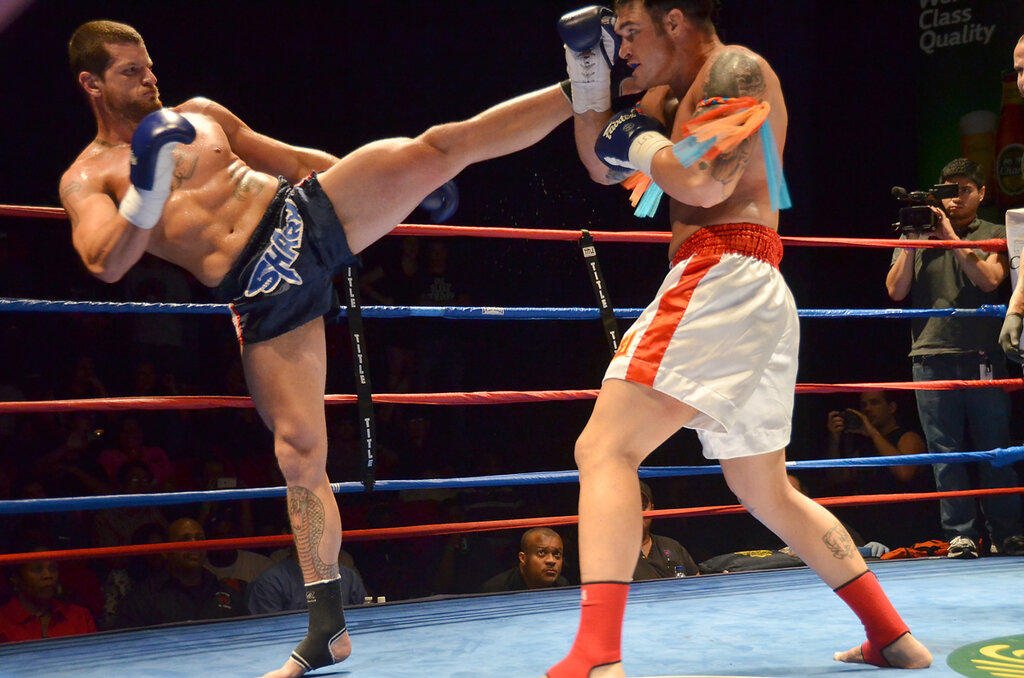
This process generates force through the formula (Force = mass acceleration). A striker's training is dedicated to increasing both the effective mass behind a strike (by engaging the whole body) and the acceleration of the striking limb. The most effective strikes are born from perfect timing and a stable, grounded structure that allows for this efficient energy transfer.
The Art of Control
Grappling, on the other hand, operates on the principles of leverage and control. Arts like Brazilian Jiu-Jitsu (BJJ) and Judo are less about generating their own force and more about manipulating the opponent's. If striking is a lesson in explosive power, grappling is a masterclass in applied physics, specifically using levers and fulcrums.
Grappling techniques, including takedowns, submissions, and ground control, heavily rely on biomechanical principles.
Imagine trying to lift a heavy rock with your bare hands. It's difficult. Now, imagine using a long crowbar with a small stone as a pivot. The task becomes manageable. In grappling, your opponent's joints (elbows, shoulders, knees) are the levers, and your limbs or body become the fulcrums. By applying a small amount of force at the end of a long lever, a grappler can generate immense pressure on a joint, forcing a submission. This is why a smaller, skilled practitioner can control a much larger opponent.
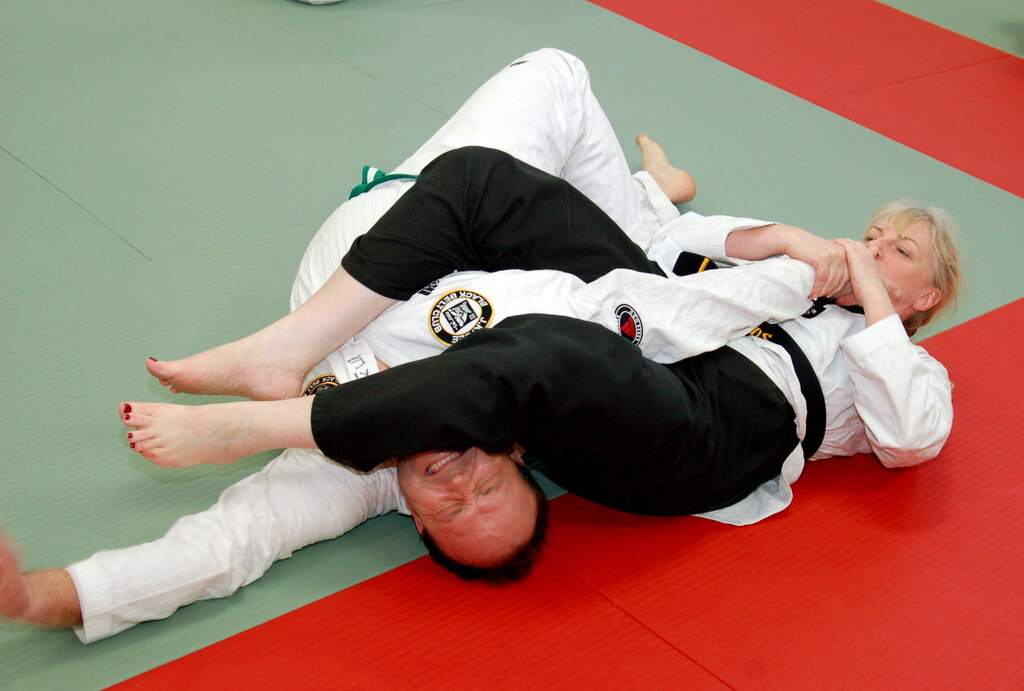
A key concept is the manipulation of the shared center of gravity. When two people are standing apart, they each have their own stable center of gravity. The moment they clinch, they create a new, shared center of gravity. A grappler's primary goal is to control this new point, moving it to a position where the opponent is off-balance and vulnerable to being thrown or taken down. Every throw in Judo, for example, is an exercise in getting your center of gravity lower than your opponent's and using their momentum against them.
Distance, Range, and Energy
The tactical differences between striking and grappling are dictated by the ideal range of engagement. Combat is often broken down into four primary ranges:
| Range | Description | Primary Discipline |
|---|---|---|
| Kicking | The furthest range, where only kicks can land. | Muay Thai, Taekwondo |
| Punching | Close enough for punches, but often too close for powerful kicks. | Boxing, Karate |
| Clinch | Body-to-body contact while standing. | Muay Thai, Wrestling, Judo |
| Ground | When one or both fighters are on the mat. | BJJ, Wrestling |
A striker's goal is to manage distance to stay in kicking or punching range, avoiding the clinch and the ground. A grappler's goal is the opposite: close the distance, survive the strikes to enter the clinch, and bring the fight to the ground where their leverage-based techniques are most effective.
This creates a strategic trade-off. Closing the distance is risky for a grappler, as they must weather a storm of strikes. But maintaining distance is draining for a striker, who must constantly move to avoid being cornered and taken down. Modern mixed martial arts is a dynamic blend of these two philosophies, with fighters learning to transition between ranges to exploit their strengths and their opponent's weaknesses.
Ready to test your understanding?
What is the primary principle behind generating power in striking arts like Muay Thai?
In grappling, an opponent's elbow can be conceptualised as a lever. To apply maximum pressure, where should a grappler apply force?