Martial Arts Synthesis and Application
Striking vs Grappling Mechanics
The Physics of Impact vs. Control
In combat sports, every action boils down to a choice: create distance to strike, or close distance to grapple. These aren't just tactical preferences; they are fundamentally different applications of physics. Striking is about generating and transferring maximum kinetic energy in a short burst. Grappling is about systematically dismantling an opponent's ability to move by controlling their body as a series of levers.
Striking techniques, such as punches and kicks, rely on principles of leverage, momentum, and transfer of kinetic energy.
A Muay Thai practitioner, for instance, doesn't just swing their leg to kick. They initiate the movement from the ground up, rotating their hip and torso to create a whip-like effect. This process, known as , connects the entire body into a single chain to generate massive torque and velocity. Each joint and muscle group adds its energy to the system, culminating in a devastating impact delivered by one of the 'eight limbs'—fists, elbows, knees, or shins.
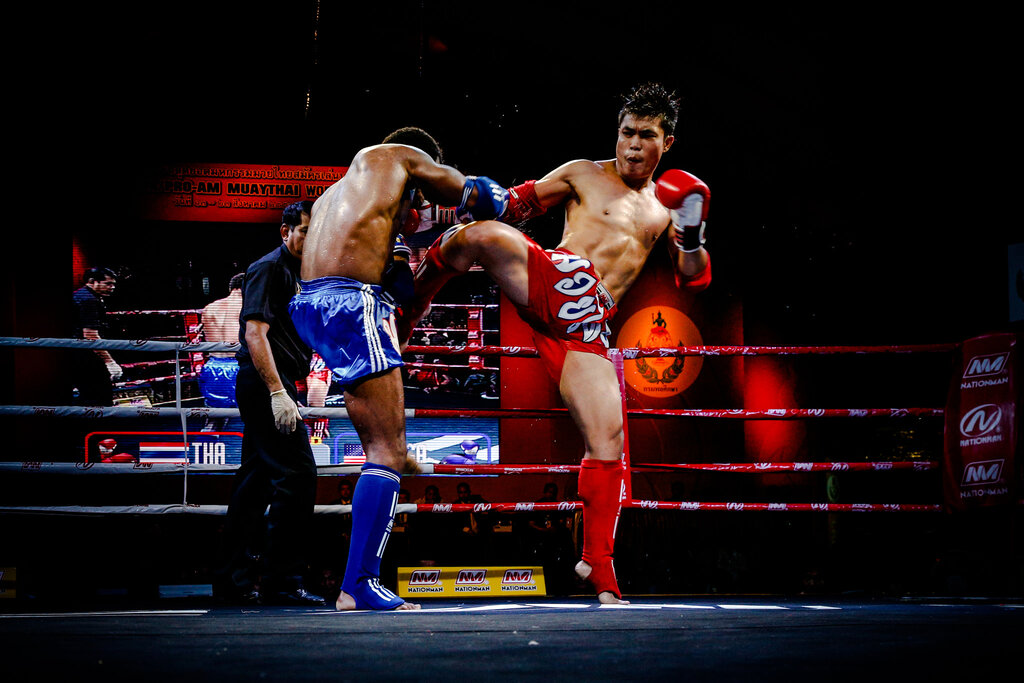
The goal is to deliver a massive amount of force over a very brief period. This relationship is called impulse.
This is why striking systems prioritize maintaining space. They need room to build momentum and unleash the full power of their kinetic chain.
Levers, Fulcrums, and Control
Grappling, particularly Brazilian Jiu-Jitsu (BJJ), operates on the opposite principle. Instead of creating space, a BJJ practitioner aims to close it, eliminating the striker's range and turning the fight into a contest of leverage. Once in close, the grappler treats the opponent's body not as a target for impact, but as a system of levers and fulcrums to be manipulated.
An armbar isn't about strength; it's about using an opponent's elbow as a fulcrum and their arm as a lever to apply force precisely where the joint is weakest.
The goal is to systematically remove the opponent's —their ability to move their limbs through a full range of motion. By isolating a limb and creating a mechanical advantage, a smaller person can generate immense pressure on a joint. Unlike the explosive force of a strike, a submission hold applies a steady, increasing force to a very small area.
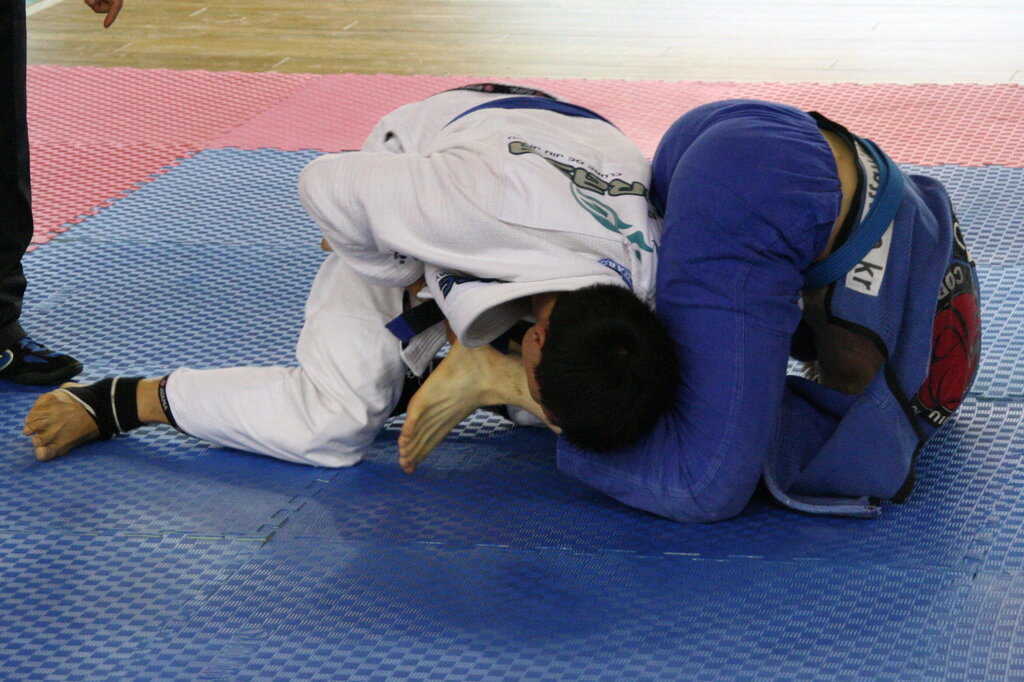
This highlights the core trade-off. Striking concentrates force over time. Grappling concentrates force over area.
Strategic Divergence
The choice between striking and grappling is a constant calculation of risk and reward based on these physical principles. A striker knows they are most dangerous at range, where they can execute their kinetic chain. A grappler knows they are most effective in a clinch or on the ground, where those strikes are neutralized and replaced by a game of human chess.
| Tactic | Primary Goal | Key Mechanic | Ideal Range |
|---|---|---|---|
| Striking | Percussive Impact | Kinetic Linking | Long to Medium |
| Grappling | Kinetic Control | Levers & Fulcrums | Clinch to Ground |
When a fighter transitions from striking to grappling, they are making a conscious decision to change the physical problem their opponent must solve. They move from a world of impulse and momentum to one of pressure and leverage. This is the central drama of mixed martial arts: a dynamic battle between two fundamentally different approaches to controlling a fight, rooted in the principles of applied through the human body.
Ready to test your understanding of these mechanics?
What is the primary physical principle behind striking in combat sports like Muay Thai?
A Brazilian Jiu-Jitsu practitioner's primary goal is to close the distance with a striker. From a physics perspective, why is this so critical?
Understanding these core principles is the first step to analyzing any fight.