Martial Arts Evolution and Tactics
Striking Systems Mechanics
The Engine of Impact
A powerful strike isn't just about arm strength. It's a chain reaction that starts from the ground up. This process, called kinetic linking, is how fighters transfer energy through their body to a single point of impact. Think of it like cracking a whip. The energy begins in the handle (your legs and hips) and accelerates as it moves up through your torso and shoulder, finally culminating in the explosive speed of the tip (your fist).
The sequence is crucial. A punch begins with a forceful push from the ball of the foot, driving rotational energy into the hips. The hips and torso twist, pulling the shoulder forward. This rotation launches the arm, which stays relatively relaxed until the final moment of impact. Each link in the chain adds momentum and velocity. A breakdown anywhere in this sequence—stiff hips, a slow shoulder turn—leaks energy and robs the strike of its power.
Stance and Strategy
A fighter's stance is their foundation, dictating both offensive options and defensive vulnerabilities. It's a constant trade-off between stability, mobility, and power. Let's compare two classic examples: the squared-up stance of Muay Thai and the bladed stance of Western Boxing.
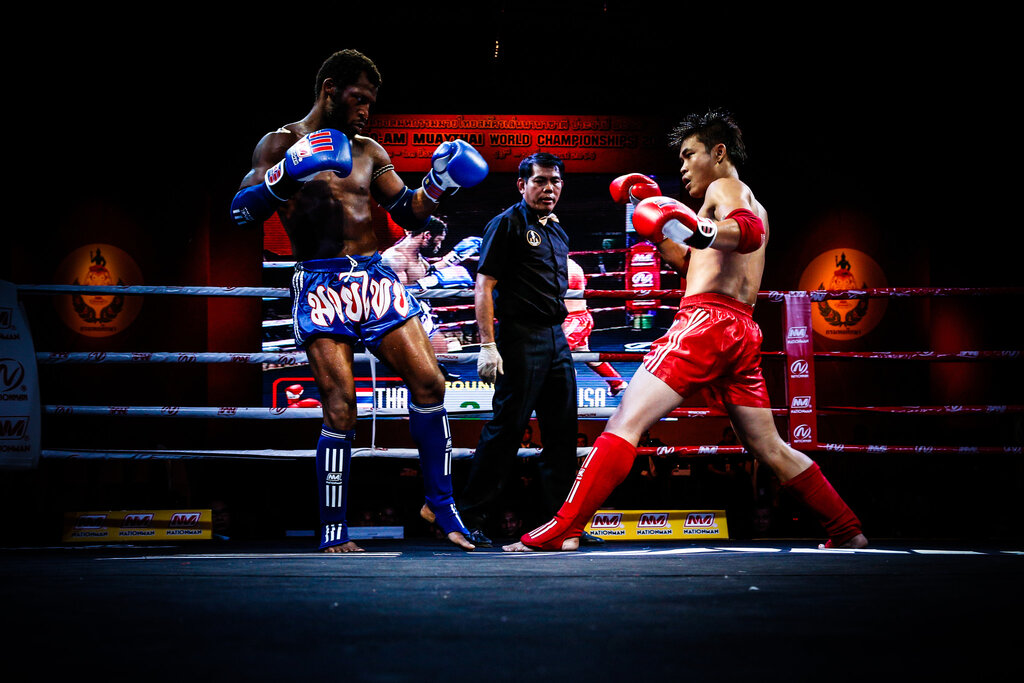
The Muay Thai stance is relatively square, with feet about shoulder-width apart and weight distributed evenly or slightly on the back foot. This posture is a brilliant solution for a sport known as "the art of eight limbs." A square base allows a fighter to quickly fire powerful roundhouse kicks from either leg without much pre-telegraphing. It also makes it easy to lift a leg to "check" an incoming low kick. However, this stability comes at a cost. The broad, open chest and centerline present a large target for a boxer's linear punches, like the jab and cross. The stance's structure is less optimized for rapid head movement and slipping punches.
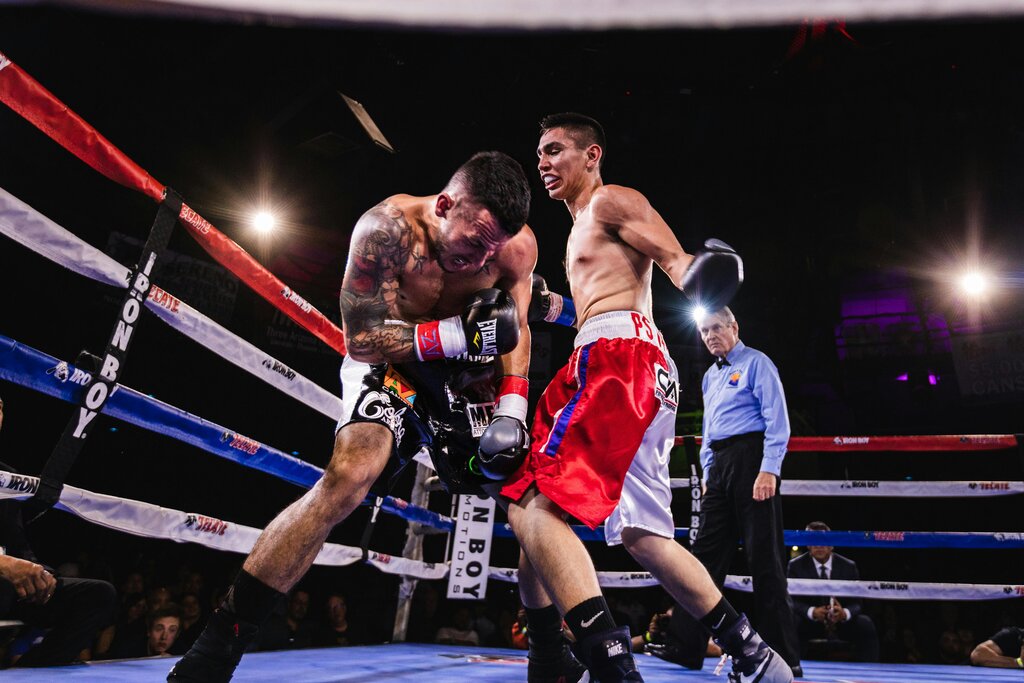
In contrast, a boxer adopts a more bladed stance. The lead foot and shoulder point toward the opponent, creating a narrower profile that minimizes the available target area. Most of the body is hidden behind the lead shoulder. This alignment is perfect for firing a quick, long-range jab and for using head movement to evade incoming strikes. The downside? This stance makes it difficult to throw powerful kicks with the rear leg and leaves the lead leg highly vulnerable to the low kicks common in Muay Thai or MMA. It is a specialized platform for a hands-only arsenal.
| Stance | Primary Advantage | Primary Vulnerability |
|---|---|---|
| Muay Thai (Square) | Power kicks & leg checks | Large centerline target for punches |
| Boxing (Bladed) | Small target & quick jab | Exposed lead leg & limited kicking |
Snap vs. Drive
Not all strikes are designed to do the same thing. The mechanics of impact can be broadly categorized as either "snap" or "drive-through" strikes. The choice depends on the weapon, the target, and the desired effect.
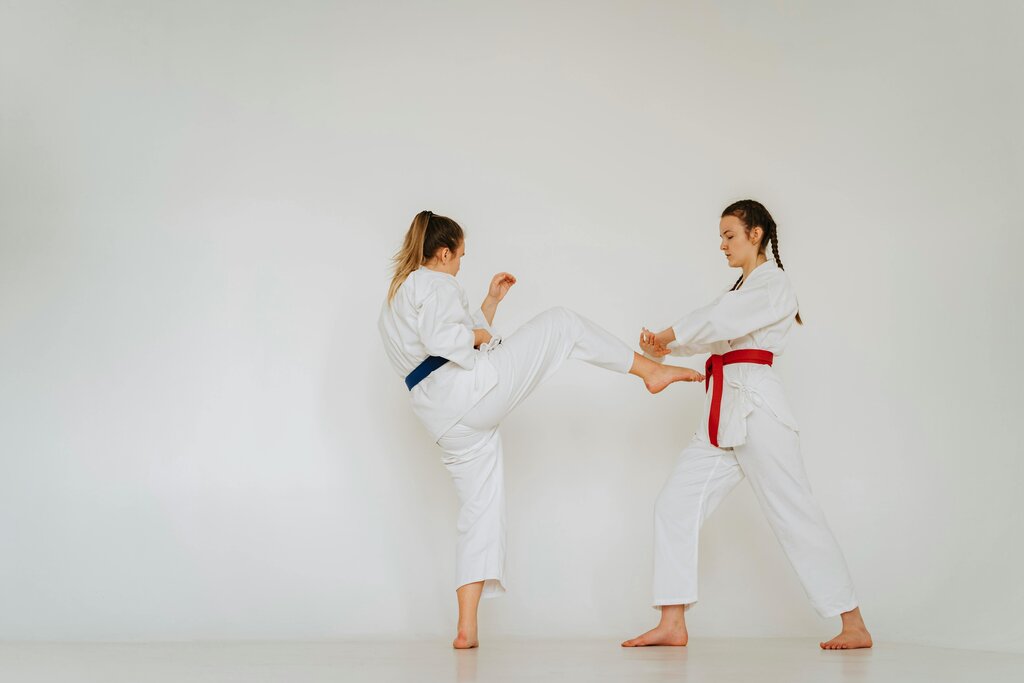
Strikes in arts like Karate and Taekwondo often emphasize a 'snap' mechanic. Think of a front kick that whips out and immediately retracts. The goal is speed and precision. Power is generated by the rapid extension and recoil of the limb. This is highly efficient and allows for quick follow-up attacks. The force is delivered in a sharp pulse, designed to stun or score a point. This mechanic evolved partly from the context of bare-knuckle fighting, where driving a fist through a hard target like a skull could easily result in a broken hand. A snapping strike minimizes contact time and reduces the risk of self-injury.
Muay Thai and boxing, however, favor 'drive-through' mechanics. A Muay Thai roundhouse kick is often compared to swinging a baseball bat; the intent is to transfer the body's full weight through the target. Similarly, a boxer's cross isn't meant to just tap the opponent; it's designed to land with body weight behind it, driving through the point of contact. This approach is maximized by modern equipment. Padded and gloves protect the small bones of the hand, allowing a fighter to commit their full power without the same risk of fracture. The goal is not a quick pulse of force, but sustained momentum transfer to cause maximum displacement and damage.
Understanding how to optimize the transfer of energy from the ground through the body can enhance the power and effectiveness of strikes and kicks.
Ultimately, the mechanics of each striking system are a beautiful and logical response to a specific set of rules, goals, and environmental factors. Whether it's the snapping precision of a Karate punch or the bone-crushing power of a Muay Thai kick, each movement is a masterclass in applied physics.
Let's test what you've learned about these striking mechanics.
What is the primary purpose of the process known as "kinetic linking" in striking?
A fighter facing an opponent who throws a lot of low kicks would find a bladed boxing stance to be a significant disadvantage.