Martial Arts Evolution and Mechanics
Historical Evolution and Philosophy
Forged in Conflict
The philosophy of a martial art is a direct reflection of its history. For Muay Thai and Karate, those histories were born from necessity.
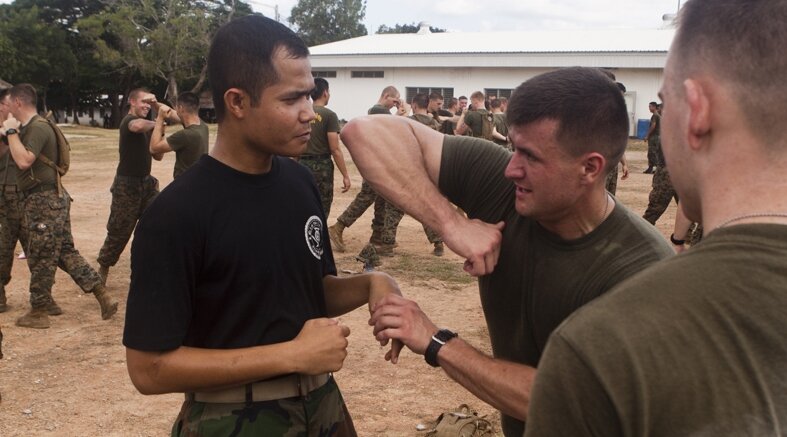
Muay Thai, the “Art of Eight Limbs,” was developed on the battlefields of ancient Siam (modern-day Thailand). Soldiers needed a brutal, effective system for close-quarters combat when their primary weapons were lost. The result is a system that uses fists, elbows, knees, and shins to create a continuous, overwhelming assault. Its philosophy isn’t about a single, perfect strike but about attrition—weathering the storm and breaking an opponent down with relentless pressure.
Karate, on the other hand, developed on the island of Okinawa as a method of self-defense for a largely unarmed populace under the rule of armed samurai. This context fostered the philosophy of Ikken Hissatsu, or “to annihilate with one blow.” The goal was to end a confrontation immediately, as a prolonged fight against a weaponed opponent was a losing proposition. This mindset emphasizes explosive power, precise targeting, and a commitment to every single technique as a potential fight-ender.
The Gentle Way Reimagined
While striking arts were being honed in Thailand and Okinawa, a different evolution was taking place in Japan. Jigoro Kano created Kodokan Judo from older Jujutsu styles, emphasizing the principle of using an opponent's momentum against them. One of his star pupils, Mitsuyo Maeda, traveled the world, eventually landing in Brazil.
There, he taught his art to the Gracie family, who began refining it through constant, no-holds-barred challenge matches. They stripped away techniques impractical for a real fight and relentlessly focused on one key insight: most real fights end up on the ground. This led to the development of Brazilian Jiu-Jitsu (BJJ), a system built entirely around leverage, positioning, and submissions. BJJ’s philosophy is patient and strategic. It assumes you will be on your back, facing a larger, stronger opponent, and provides a clear pathway to control and overcome them not with strength, but with technique.
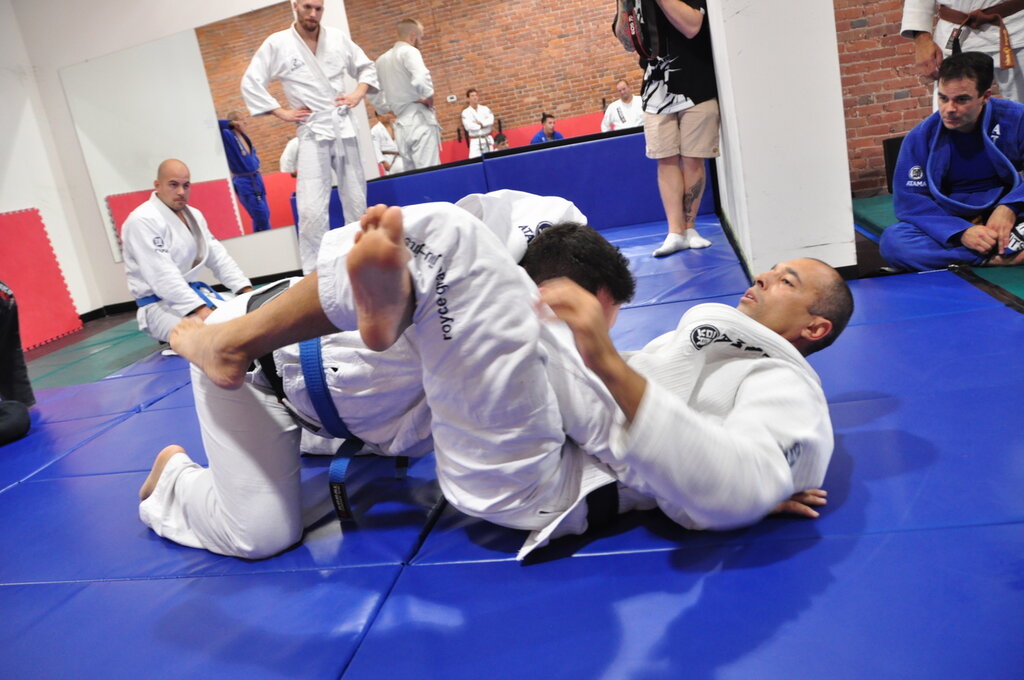
The contrast between these philosophies is stark. A Karate practitioner seeks to maintain distance and land a decisive blow. A Muay Thai fighter closes that distance to unleash a barrage from their eight limbs. A BJJ practitioner, however, welcomes the clinch and seeks to take the fight to the ground, where their leverage-based grappling gives them the advantage.
From Battlefield to Sport
The transition to modern combat sports forced each art to adapt. Karate competitions often use a point system, rewarding clean, fast techniques over knockout power. This has shifted the training focus in many schools toward speed and timing, sometimes at the expense of the devastating power central to its original philosophy.
Muay Thai was standardized with boxing gloves, rounds, and a ring, moving it away from its more lethal battlefield ancestor, Muay Boran. While it remains a devastatingly effective striking art, the ruleset removed certain techniques like headbutts and groin strikes, civilizing it for sporting competition.
BJJ's evolution was different. Its sporting application, with points for dominant positions and a focus on submissions, became a direct driver of technical innovation. However, it was BJJ’s performance in early no-rules events and the UFC that cemented its reputation. It forced the martial arts world to confront the reality of grappling, directly leading to the birth of modern Mixed Martial Arts (MMA), where striking and grappling are no longer separate philosophies but integrated components of a complete fighter.
Time to see how these concepts fit together.
What is the central philosophy of traditional Karate, known as "Ikken Hissatsu"?
Muay Thai's philosophy of overwhelming an opponent with a continuous assault from fists, elbows, knees, and shins stems from its origin as...
Each art carries the DNA of its origins. Whether it's the single-strike commitment of Karate, the grinding attrition of Muay Thai, or the patient leverage of BJJ, understanding their history reveals the strategic mindsets they require.