Marsalis Jazz and Visual Aesthetics
Neo-traditionalist Aesthetics
The Return to Tradition
By the end of the 1970s, jazz was in an electric haze. Jazz-fusion, with its rock rhythms and amplified instruments, had dominated the decade. But as the 1980s dawned, a new generation of musicians staged a quiet rebellion. Known as the 'Young Lions', these were prodigiously talented players who turned their backs on fusion. Instead, they looked to the past, championing a return to the acoustic, swinging heart of jazz.
At the forefront of this movement was a trumpet player from New Orleans: Wynton Marsalis. Possessing virtuosic technique and a commanding stage presence, Marsalis became the public face and leading ideologue of this new wave. The Young Lions argued that jazz had lost its way, straying too far from its essential elements. Their mission was to restore the music's dignity and discipline, moving it from rock arenas back into concert halls.
Blues, Swing, and the Tuxedo
Wynton Marsalis didn't just advocate for a return to tradition; he sought to define it. Drawing heavily on the ideas of his mentors, the writer Albert Murray and critic Stanley Crouch, Marsalis developed a clear set of criteria for what he considered authentic jazz. For him, the music had to be rooted in two core principles: the blues and swing. This philosophy suggested that any jazz that didn't swing or lacked a connection to the blues tradition was, in essence, not jazz at all.
This strict definition effectively excluded much of the 1970s avant-garde and fusion movements. It was a controversial stance, but one that came with a powerful vision. The philosophy wasn't just auditory; it was visual. Marsalis and his contemporaries rejected the casual, anything-goes attire of the fusion era. Instead, they adopted what became known as the 'tuxedo aesthetic'.
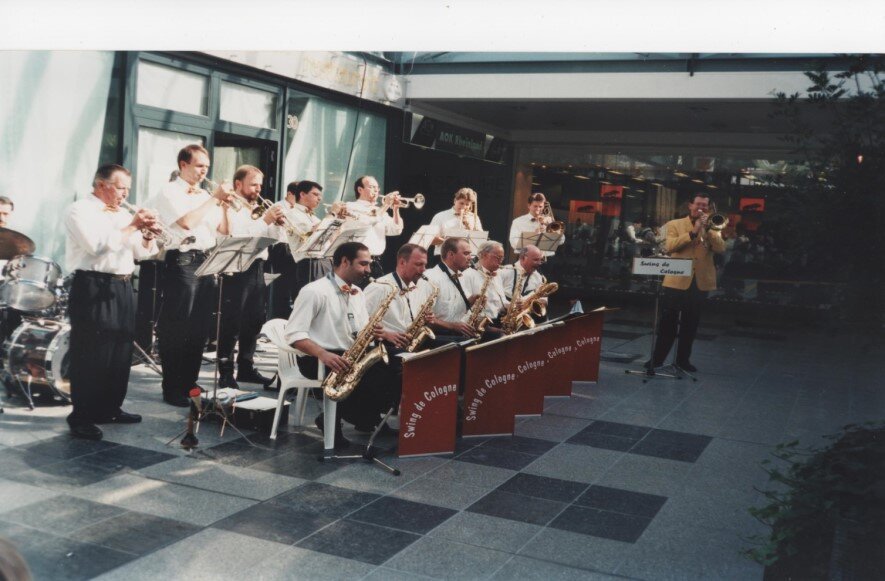
Dressing in sharp suits and tuxedos on stage was a deliberate statement. It aligned the presentation of jazz with that of classical music, signalling that this was a serious American art form deserving of respect and institutional support. The image projected authority, discipline, and a deep reverence for the music's history. This carefully crafted visual identity became as influential as the music itself, shaping how a new generation of listeners and photographers saw jazz: not as loose popular music, but as a refined art.
Building a Home for Jazz
Marsalis's influence extended beyond the stage and recording studio. He aimed to institutionalise his vision of jazz. In 1987, he co-founded a programme that would eventually become Jazz at Lincoln Center (JALC), one of the world's most prominent jazz institutions. As artistic director, Marsalis had a platform to curate a specific version of jazz history for a global audience.
JALC's programming, particularly through its flagship orchestra, has largely mirrored the 'swing and blues' philosophy. The focus is on the lineage of artists from Louis Armstrong and Duke Ellington to Charlie Parker and John Coltrane, presented with the precision and formality of a classical symphony. This institutionalisation cemented the neo-traditionalist aesthetic, creating a powerful standard for performance, education, and public perception that continues to shape the jazz world today.
The 'Young Lions' movement of the 1980s was a reaction against which dominant style of the previous decade?
According to the philosophy promoted by Wynton Marsalis, what two principles were essential for music to be considered authentic jazz?