Marriage Preparation Essentials
Understanding Personal Values
Your Personal Compass
Before you can build a life with someone else, you need to know yourself. The foundation of who you are is built on your personal values. Think of them as your internal compass. They are the fundamental beliefs that quietly guide your choices, actions, and reactions every single day.
Your personal values are your core beliefs and guiding principles.
These aren't just vague ideas. They are the principles you find most important. When your life is aligned with your values, you feel a sense of rightness and contentment. When it's not, you might feel frustrated, stressed, or unfulfilled, even if you can't pinpoint why. Understanding these core drivers is essential because they influence your priorities, your decisions, and ultimately, your happiness in a relationship. A partner doesn't need to have identical values, but understanding and respecting each other's is crucial for long-term compatibility.
Discovering Your Core Values
Identifying your values requires a bit of self-reflection. It's not about what you think you should value, or what your family or society values. It's about discovering what truly resonates with you.
Here are a few questions to get you started. Don't overthink them. Just write down what comes to mind:
- Think about a time you felt really happy. What were you doing? Who were you with?
- Recall a moment when you felt proud of yourself. What had you accomplished?
- What topics or activities make you forget about time?
- What kind of injustice makes you feel angry or fired up?
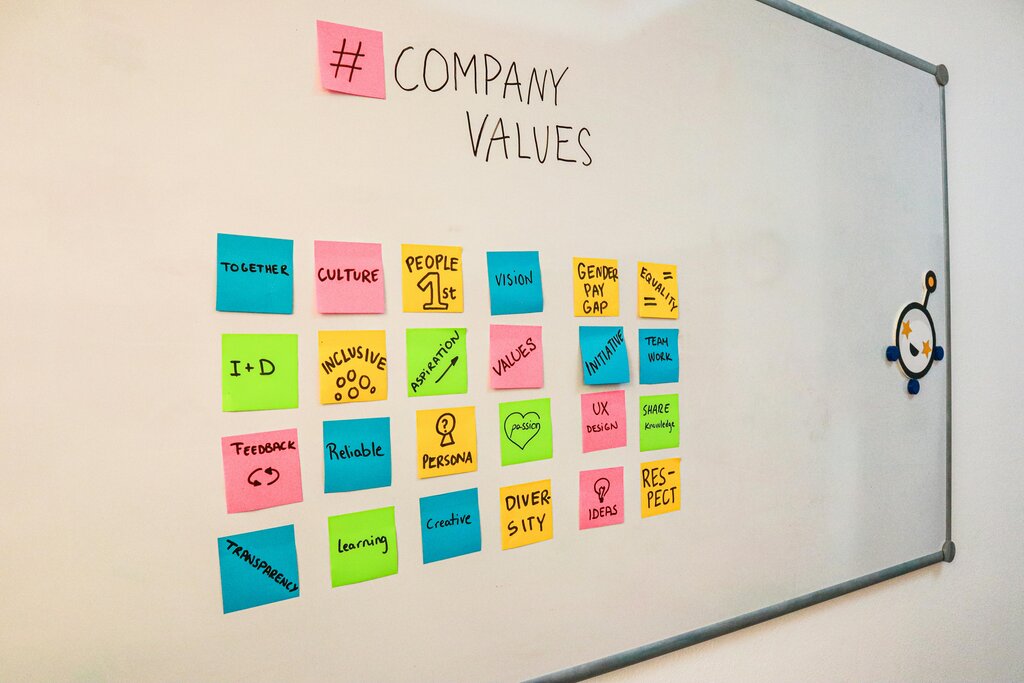
Your answers to these questions point toward your core values. The experiences that bring you joy, pride, and a sense of purpose are deeply connected to what you value most.
Look for themes in your answers. Maybe you see a pattern of helping others (Compassion), learning new things (Curiosity), or creating things (Creativity). To help, here is a list of common values.
Achievement, Adventure, Authenticity, Community, Compassion, Creativity, Fairness, Family, Financial Security, Growth, Honesty, Humor, Independence, Justice, Knowledge, Loyalty, Order, Personal Growth, Security, Spirituality, Stability, Wisdom.
From this list and your own reflections, try to narrow it down.
Try writing down your top five values and reflect on how they show up in your life.
Values in a Relationship
Once you have a clearer picture of your own values, you can see how they shape what you need in a partnership. Your values influence your life goals. If you value 'Adventure', your goal might be to travel the world. If you value 'Stability', your goal might be to buy a house and put down roots in one community.
Neither of these is right or wrong, but a mismatch could create conflict. If one partner's life goals pull in a completely opposite direction from the other's, it will be difficult to build a shared future. This isn't about finding a clone of yourself. It's about finding someone whose values and goals are compatible with yours. Open discussion about these fundamental beliefs is key.
Shared values constitute the bedrock of trust and mutual understanding within a marital relationship.
When you and a partner share core values, decision-making becomes easier. You're both navigating with a similar compass. You agree on the big things, like how to spend money, how to raise children, and what you want your life together to look like. This alignment creates a strong foundation for a lasting, fulfilling partnership.
Let's check your understanding of these concepts.
What is the primary function of personal values as described in the text?
According to the article, which of the following is an effective way to identify your core values?
Knowing what matters most to you is the first step in building a life that feels authentic, and in finding a partner who can share that journey with you.