Marketing Organizational Unit Structure and Function
Marketing Organizational Structures
Structuring for Success
How a marketing team is organized isn't just a detail for an org chart. It's the blueprint for how work gets done, how ideas flow, and how the company connects with its customers. The right structure can accelerate growth, while the wrong one can create friction and silos. There's no single best way to organize; the ideal structure depends entirely on a company's goals, its products, and the customers it serves. Let's explore four common models.
The Functional Structure
The most traditional approach is the functional structure. Here, the marketing department is organized by specialized skills or functions. You'll have a team for content creation, another for social media, a third for search engine optimization (SEO), and so on. Everyone on a team shares a similar expertise, reporting up to a manager who is an expert in that specific domain.
This model is popular for a reason. It fosters deep expertise. The SEO team lives and breathes search algorithms, while the content team becomes masterful at storytelling. This focus leads to high-quality work within each specialty and provides a clear career path for team members who want to grow in their field.
However, this structure can create silos. The different functional teams might not communicate well, leading to disjointed campaigns. The social media team might promote a blog post that the SEO team hasn't optimized, or the email team might be unaware of a new paid advertising campaign. This can slow things down, as projects have to be passed from one specialized team to another.
Functional structures excel at building deep expertise but can struggle with cross-team collaboration and speed.
The Product-Based Structure
For companies with multiple distinct products or services, a product-based structure can be a great fit. In this model, marketing teams are built around specific product lines. Each team is like a mini-marketing department responsible for all marketing activities related to its assigned product.
The major advantage here is focus. The team dedicated to Product A develops an incredibly deep understanding of that product, its market, and its customers. This allows for highly relevant and effective marketing campaigns. Collaboration with the product development team is also much tighter, ensuring that marketing efforts are always aligned with the product's features and roadmap.
The main challenge is potential redundancy. You might have three separate content marketers, one for each product, duplicating efforts and leading to higher costs. It can also be difficult to maintain a consistent overall brand voice and strategy when different teams are operating independently. The product teams might even end up competing with each other for budget and attention.
Customer and Geographic Structures
Some companies find it's better to organize not by function or product, but by the customers they serve. In a customer segment structure, teams are aligned with specific customer groups, such as "small businesses," "enterprise clients," or "individual consumers." This model allows marketers to become experts on a particular audience, tailoring messages, channels, and strategies to their unique needs and behaviors.
This is powerful for companies where different customer segments have vastly different buying journeys. The challenge, similar to the product-based model, is the risk of duplicated roles and inconsistent messaging across the entire company.
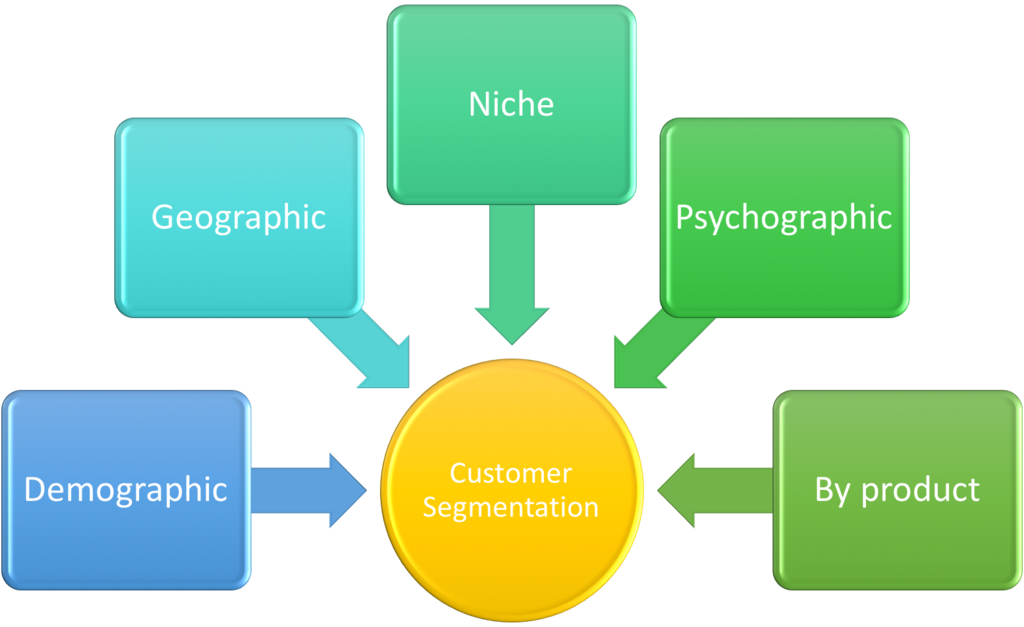
A geographical structure is a variation of this, used by companies with a significant international or regional presence. Marketing is organized by location, with teams for North America, Europe, Asia, and so on. This structure is essential when marketing needs to be adapted to local cultures, languages, and market conditions.
The benefit is deep local market relevance. The marketing team in Japan understands the nuances of that market far better than a team based in New York. The main drawback is the difficulty in coordinating a cohesive global brand strategy. It also adds complexity and can be costly to maintain separate marketing teams in multiple regions.
Customer and geographic structures prioritize market relevance, but require careful management to ensure brand consistency.
Many organizations don't stick rigidly to one model. They often create a hybrid, or matrix, structure that combines elements of different approaches. For example, a company might have product-based teams that draw on a centralized, functional team for specialized skills like SEO or creative design. The key is to choose a structure that best supports the company’s strategic goals, and to be willing to adapt it as the business grows and changes.
What is the primary advantage of organizing a marketing team into a functional structure?
A global company sells the same software worldwide but finds that campaigns successful in North America are ineffective in East Asia. Which organizational structure would best address this challenge?