Marketing Fundamentals For Everyone
Marketing Fundamentals
The Marketing Mix
At the heart of any marketing strategy is a simple but powerful framework known as the marketing mix. Think of it as a recipe with four main ingredients that you can adjust to appeal to your customers. These ingredients are often called the “4 Ps”.
The 4Ps, often referred to as the marketing mix, are the fundamental tools that marketers can leverage to bring their products or services to the market.
Getting the balance right is key. Let's break down each element.
Product: This is what you're offering. It's more than just the physical item or the service itself. It includes the design, features, branding, packaging, and overall quality. A strong product solves a problem or satisfies a need for the customer. Is it a luxury item or a budget-friendly option? Is it easy to use? All these questions fall under the 'Product' category.
Price: This is what the customer pays. Setting the right price is a balancing act. It needs to cover your costs and generate a profit, but it also has to feel right to the customer. The price sends a powerful message. A high price might suggest quality and exclusivity, while a low price can attract bargain hunters. It also includes discounts, payment plans, and credit terms.
Place: This refers to where and how customers can buy your product. It’s about distribution. Are you selling in a physical store, online, or both? Are you selling directly to customers or through wholesalers and retailers? The goal is to make it as easy as possible for customers to find and purchase your offering.
Promotion: This is how you communicate with your customers. It's all the activities you undertake to make people aware of your product and persuade them to buy it. This includes advertising, public relations, social media, and sales promotions like special offers. Effective promotion delivers the right message to the right people at the right time.
These four elements are interconnected. A change in one P often requires a change in the others. For instance, a high-end product (Product) would likely have a high price tag (Price), be sold in exclusive boutiques (Place), and be advertised in luxury magazines (Promotion).
Finding Your Audience
You can have the perfect mix of product, price, place, and promotion, but it won't matter if you're talking to the wrong people. A message meant for everyone often resonates with no one. That's why smart marketing starts with two key steps: market segmentation and target audience identification.
Segmentation
noun
The process of dividing a broad market into smaller, distinct groups of consumers who have similar needs, characteristics, or behaviors.
Think of the entire market as a large crowd of people. Segmentation is like organizing that crowd into smaller groups based on shared traits. This makes the market easier to understand and approach. There are several common ways to segment a market:
| Segmentation Type | Description | Example |
|---|---|---|
| Demographic | Based on measurable statistics | Age, gender, income, education, occupation |
| Geographic | Based on location | Country, city, climate, urban/rural area |
| Psychographic | Based on lifestyle and personality | Values, interests, attitudes, personality traits |
| Behavioral | Based on actions and patterns | Buying habits, brand loyalty, product usage rate |
Once you've divided the market into segments, the next step is to choose which group (or groups) to focus on. This is called target audience identification.
A company can't be all things to all people. By selecting a specific target audience, a business can tailor its marketing mix—its product, price, place, and promotion—to the specific needs and desires of that group. This focused approach is far more effective and efficient than trying to appeal to everyone.
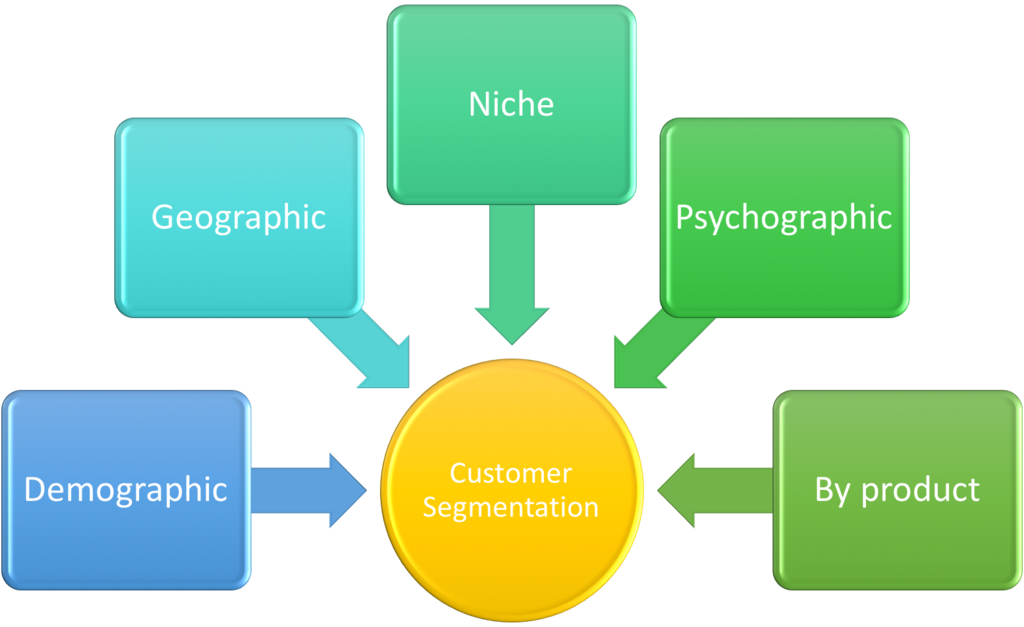
For example, a company selling high-performance hiking boots wouldn't market to the entire population. Through segmentation, they might identify a group of outdoor enthusiasts aged 25-45 with a passion for adventure (psychographic) who live near mountainous regions (geographic). This becomes their target audience. All their marketing efforts, from the boot's design to the ads they run in outdoor magazines, will be aimed squarely at this group.
By understanding who your customer is, you can create a marketing strategy that speaks directly to them, building a stronger connection and driving better results.
Ready to test your knowledge?
Which of the following lists the four core components of the marketing mix, often called the "4 Ps"?
A coffee shop decides to start selling its beans through a subscription service on its website, in addition to its physical cafe. Which element of the marketing mix is being changed?
By mastering the 4 Ps and learning to identify your target audience, you have the foundational tools for building an effective marketing plan.