Marginal Cost vs Demand
Introduction to Cost and Demand Curves
What It Costs to Make Something
Every business, whether it's a giant car manufacturer or a local bakery, has to deal with costs. Understanding these costs is the first step in making smart decisions about how much to produce and what price to charge.
Let's think about a small company that makes wooden chairs. The most basic way to think about their expenses is to add everything up. This is the total cost.
Total Cost
noun
The sum of all expenses incurred by a company to produce a certain level of output. This includes everything from raw materials and labor to rent and electricity.
Total cost is useful, but it doesn't tell the whole story. If the company makes 100 chairs for a total cost of $5,000, how much did each chair cost to make, on average? This is the average cost.
In our example, the average cost per chair is $5,000 / 100 = $50. This number helps set a baseline for pricing. You need to sell each chair for more than $50 to make a profit.
But here's a more interesting question for the business owner: should we make one more chair? To answer that, we need to know the marginal cost.
Marginal Cost
noun
The extra cost incurred to produce one additional unit of a product.
Marginal cost is often the most important factor in day-to-day business decisions. Initially, the marginal cost might decrease as production becomes more efficient. But at some point, it will start to rise. Maybe you need to pay workers overtime or buy more expensive wood because your usual supplier is out. When plotted on a graph, these costs form curves that tell a story.
What People Will Pay
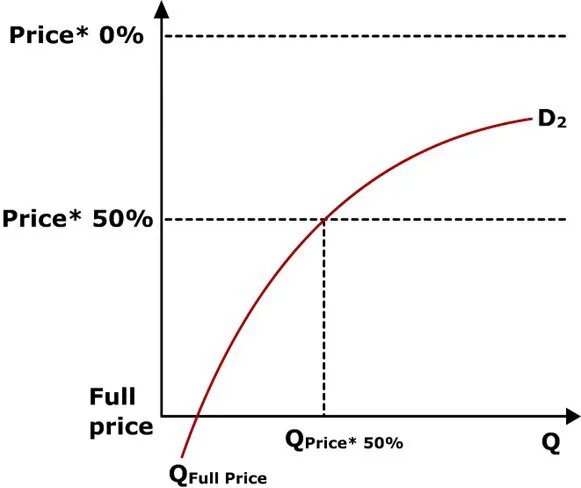
Now let's switch from the producer to the consumer. A demand curve is a simple graph that shows the relationship between the price of a product and how much of it people are willing to buy.
The defining feature of a demand curve is that it slopes downward.
As the price of something falls, the quantity people demand generally rises. As the price rises, the quantity demanded falls.
This is intuitive. If your favorite coffee shop drops the price of a latte from $5 to $3, you might decide to buy one every day instead of just twice a week. On the other hand, if the price jumps to $7, you might cut back. This relationship holds true for most goods and services.
Finding the Sweet Spot
So, we have businesses trying to cover their costs and make a profit, and we have consumers looking for a good price. How does the market sort this out? This is where cost and demand curves meet.
A company's marginal cost curve is a key part of its supply curve. It tells us the minimum price the company would be willing to accept to produce one more item. To maximize profit, a company will produce up to the point where the price it can charge is equal to its marginal cost.
The interaction of all producers' supply curves and all consumers' demand curves creates a market equilibrium. This is the price and quantity where everyone is satisfied. Buyers can get what they want at that price, and sellers are selling all they want to produce at that price.
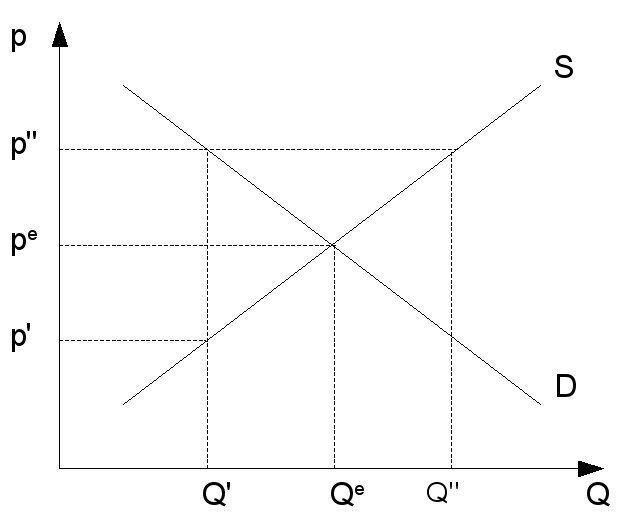
This equilibrium point is the market's answer to two questions: How much should be produced, and at what price? Understanding these curves helps businesses make crucial decisions. By analyzing their cost structure, they can figure out how to produce efficiently. By studying the demand curve, they can estimate how a price change might affect their sales.
For example, if a company lowers its marginal cost through a new technology, it can afford to lower its price, which will likely increase the quantity demanded. These simple curves are the foundation for the strategic decisions that shape our entire economy.
Ready to check your understanding? Let's see what you've learned.
A company produces 200 widgets for a total cost of $8,000. What is the average cost per widget?
Which of the following costs is the most crucial for deciding whether to produce one additional unit of a product?
Understanding how costs and consumer desires interact is the first step to seeing the logic behind the prices you see every day.